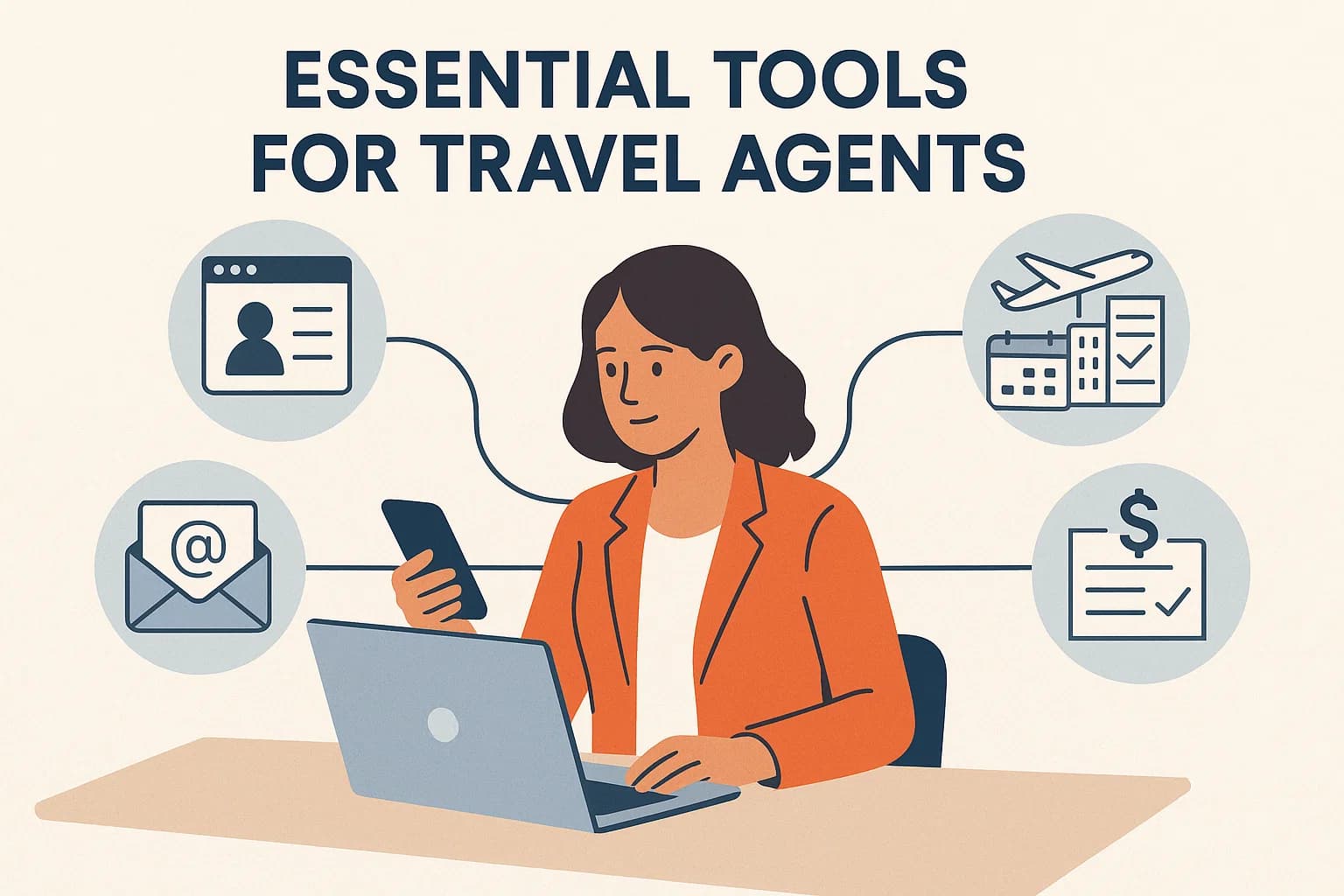
The best travel agent tools in 2026 fall into five buckets: a CRM (Zoho or a travel-specific CRM) to manage clients and leads, booking and itinerary software (like Ezus) to build proposals, financial tools for invoicing and payouts, marketing tools to fill your pipeline, and — if you sell group trips or retreats — a group-payment platform like SquadTrip to collect deposits and run payment plans. The right stack depends on your niche: a solo advisor needs budget-friendly automation, while a group-travel host needs payments and guest coordination built in.
This guide breaks down each category, recommends tools, shows how they compare for the group-travel use case, and helps you choose a stack by agent type.
TL;DR
- A complete stack covers five jobs: client CRM, booking, itineraries, payments, and marketing.
- No single tool does everything well — most agents combine a CRM with specialized booking and payment tools.
- Group-trip and retreat hosts have the most to gain from a dedicated platform: payment plans, forms, and guest dashboards replace hours of manual chasing.
- Pick by niche: solo ICs optimize for cheap automation; agencies for scale and reporting; group hosts for payments and coordination.
Why your tool stack matters
Travel agents juggle flights, hotels, tours, insurance, vendors, and multiple clients at once. A good software stack lets you organize bookings in one place, manage payments and invoices, track client preferences, build itineraries and proposals, collect traveler documents, communicate in real time, and market your trips. The best tools in 2026 emphasize speed, automation, and flexible workflows for remote teams.
The five tool categories every travel agent needs
1. CRM and client management
A CRM stores client details, booking history, preferences, and lead information, and automates follow-ups. A strong travel CRM offers lead tracking, contact profiles with travel history, email and reminder automation, booking-tool integrations, and team collaboration. Picks for 2026: Zoho CRM (flexible and budget-friendly), Monday CRM (customizable team workflows), or a travel-specific CRM with built-in trip workflows for tour operators.
2. Booking and travel management software
Booking tools manage reservations, vendors, inventory, and itineraries — a huge time-saver on multi-day or complex trips. Look for a centralized booking engine, vendor integrations, an itinerary builder, budgeting and invoicing, and multi-currency support. Top options: Ezus (custom itineraries, proposals, budgeting) and multi-vendor tour-operator platforms. For group departures specifically, see group travel booking software for tour operators and group travel management software.
3. Financial and back-office tools
Financial tools manage cash flow, payouts, invoices, commissions, and taxes. You'll want invoice creation and tracking, payment processing, multi-currency support, revenue and profit tracking, vendor payouts, and expense tracking. Some booking platforms bundle these modules so everything lives in one place. (For trip-level pricing, see how to price a trip or retreat.)
4. Itinerary builders and trip planning tools
Modern travelers expect clean, mobile-friendly itineraries, and a polished proposal converts inquiries into bookings. Features that matter: drag-and-drop trip builder, custom templates, day-by-day breakdowns, shareable links and PDF exports, and a mobile client view. These are especially valuable for retreats, group travel, and luxury trips.
5. Communication and marketing tools
Marketing grows your business. Consider email marketing (newsletters and automated sequences), social scheduling and analytics, landing-page builders, lead-capture forms, and design tools like Canva to build awareness and drive bookings.
Plus: group travel and client-portal tools
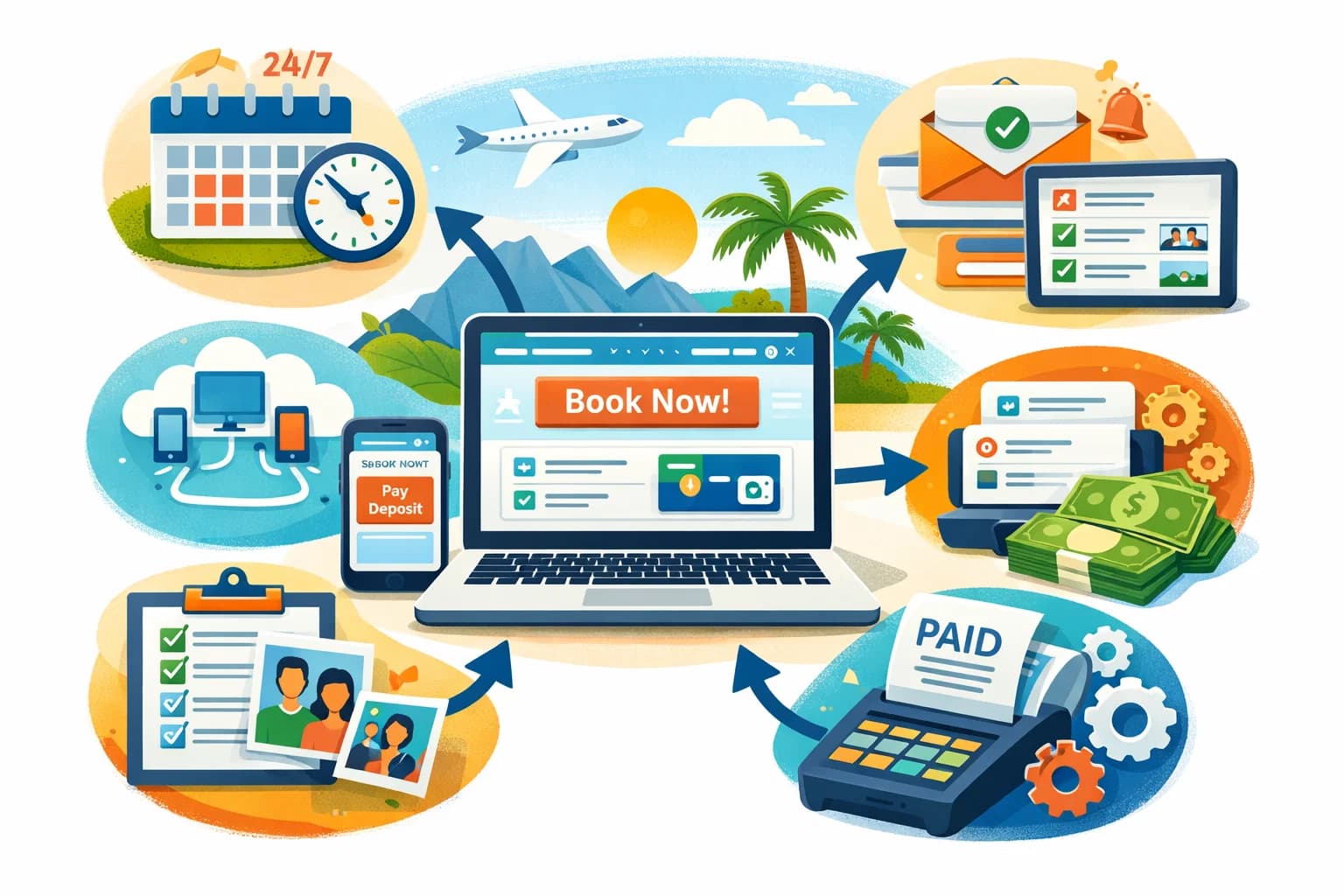
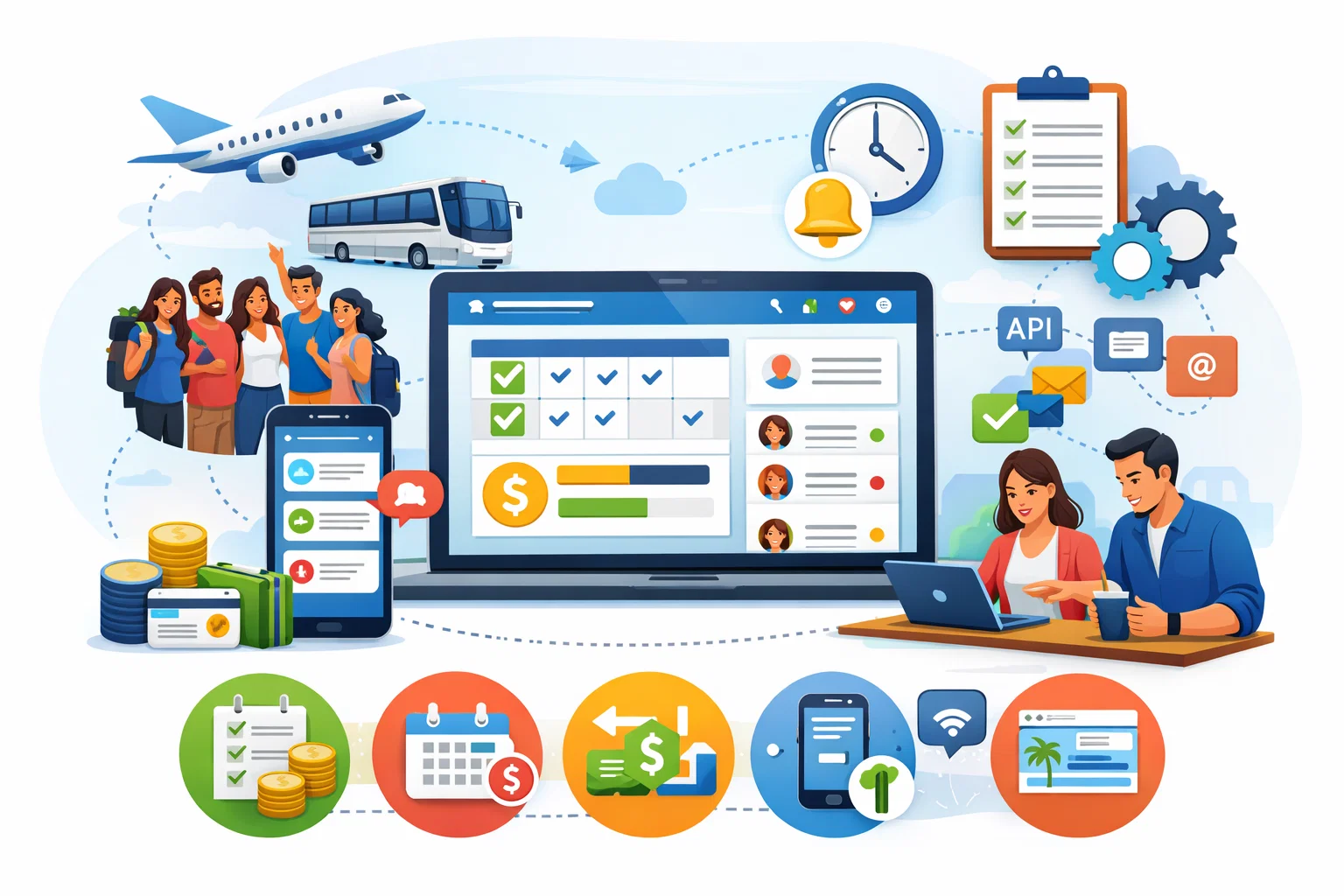
Group trips need more structure than individual bookings — you're handling payments from many people, collecting documents, answering questions, and keeping everyone aligned. The features that make this painless: group booking links, automated payment plans, traveler forms and document collection, guest dashboards, centralized communication, and deadline reminders. Platforms built for group travel eliminate the message pile-up. See our deep dive on the best tools for group trip planning.
How the main options compare for group travel
No single category tool covers every job — here's how representative options stack up for an agent who sells group trips:
| Job to be done | Generic CRM (Zoho) | Booking software (Ezus) | Spreadsheet + Venmo | SquadTrip |
|---|---|---|---|---|
| Client CRM / lead tracking | ✓ | ⚠ | ✗ | ⚠ |
| Itinerary builder | ✗ | ✓ | ✗ | ✓ |
| Booking pages for guests | ✗ | ⚠ | ✗ | ✓ |
| Collect deposits by card | ✗ | ⚠ | ⚠ Manual | ✓ |
| Automated payment plans | ✗ | ✗ | ✗ | ✓ |
| Guest dashboard + forms | ✗ | ⚠ | ✗ | ✓ |
| Payment reminders | ⚠ | ✗ | ✗ | ✓ Automatic |
The takeaway: a CRM and a booking tool handle the front office, but collecting money from a group is the gap most stacks leave open. That's where a purpose-built platform earns its place — see how payment plans work for group trips and the best way to collect money from a group.
Collect group payments without the spreadsheet
SquadTrip gives every traveler a payment link, runs deposits and installment plans automatically, and shows you who's paid in real time — so you can focus on selling trips, not chasing them. Free to use.
Try SquadTrip freeTrends shaping travel-agent tools in 2026
- All-in-one platforms. More tools combine CRM, payments, booking pages, and client portals in one dashboard, cutting subscription costs and app-switching.
- AI-assisted planning. Agents use AI to draft first-pass itineraries, generate proposals, write emails, and research destinations.
- Multi-currency growth. Travel is global again; tools that support international clients perform better.
- Remote, worldwide teams. Cloud-based tools make collaboration across distributed support teams easier.
- Niche travel growth. Retreats, wellness, cultural, luxury, and adventure trips are booming — customization-friendly tools help agents stand out.
- Client-experience focus. Travelers expect smooth communication, professional itineraries, and an organized portal.
How to choose your stack (by agent type)
- Solo IC / advisor: budget-friendly tools that automate repetitive work — a lightweight CRM plus a payment platform that handles group deposits when you need it.
- Group-trip organizer or retreat host: prioritize payment plans, traveler forms, and guest dashboards; this is where you'll save the most time. Consider Buy Now, Pay Later for group trips to lift booking conversion.
- Luxury travel: polished itinerary builders and deep vendor integrations.
- Large agency: scalable tools with strong reporting and team management.
Think about your clients, travel style, and long-term goals before committing to a stack — switching tools mid-season is costly. To compare more options in each category, Host Agency Reviews keeps a travel agency software directory with profiles of CRMs, booking, itinerary, and payment tools.
Final thoughts
Travel agents in 2026 need a setup that saves time, improves the client experience, and keeps workflows clean. Your CRM, booking platform, itinerary builder, marketing tools, and group-travel system should work together so you can focus on planning great trips instead of managing scattered apps. If you run retreats or group trips, a platform like SquadTrip gives you payment plans, forms, reminders, and guest dashboards in one place.
👉 Simplify your next group trip with SquadTrip
Frequently asked questions
What tools do travel agents need in 2026?
A core stack has five parts: a CRM for clients and leads, booking/reservation software, an itinerary builder, payment and invoicing tools, and — if you sell group trips — a group-travel platform with payment plans and guest dashboards. Many agents consolidate several into one all-in-one tool.
What is the most important tool for a travel agent?
For individual trips, a CRM is the backbone. For group trips or retreats, the payment-collection platform matters most, because chasing deposits across many travelers is the biggest time sink.
What is the best tool for group travel management?
A platform with group booking links, automated payment plans, traveler forms, guest dashboards, and deadline reminders in one place. SquadTrip is built specifically for this.
Do travel agents need a CRM?
Yes — it keeps inquiries, repeat clients, follow-ups, and communication organized. Solo agents can start with Zoho; larger agencies benefit from team and reporting features.
What is the best all-in-one tool for travel agents?
All-in-one tools combine booking pages, payments, client dashboards, itinerary sharing, and communication in one platform. For group-trip and retreat organizers, SquadTrip bundles payments, payment plans, forms, and guest dashboards together.