
TL;DR:
-
Planning a wellness retreat requires clear intention, structure, and thoughtful logistics.
-
Successful retreats balance healing activities, location, facilitators, and participant experience.
-
Clear pricing, communication, and payment options reduce drop-offs and stress.
-
Group wellness retreats are easier and more impactful when planned together.
-
SquadTrip simplifies retreat planning by managing bookings, payments, communication, and group logistics in one place.
Introduction
Planning a wellness retreat can be one of the most rewarding experiences for you and the people you bring together. Whether you’re organizing a yoga retreat, mindfulness getaway, healing experience, or holistic wellness journey, the process goes far beyond choosing a beautiful destination.
Within the first steps of planning, many organizers realize that logistics, payments, communication, and coordination can quickly become overwhelming. That’s why understanding how to plan a wellness retreat the right way from vision to execution is essential.
In this guide, you’ll learn how to plan a wellness retreat step by step, avoid common mistakes, and create an experience that feels intentional, restorative, and seamless. You’ll also see how SquadTrip helps retreat planners remove friction, reduce stress, and focus on what truly matters: transformation and connection.
What Is a Wellness Retreat?
A wellness retreat is a structured experience designed to support physical, mental, emotional, and sometimes spiritual well-being. Unlike a typical vacation, retreats are intentional. Every activity, environment, and interaction is designed to help participants reset, heal, and reconnect.
Common types of wellness retreats
-
Yoga retreats
-
Meditation and mindfulness retreats
-
Body and soul retreats
-
Emotional healing or trauma retreats
-
Detox and nutrition retreats
-
Corporate wellness retreats
-
Women’s or men’s wellness retreats
Each retreat type requires thoughtful planning to ensure it aligns with participants’ goals and expectations.
Why Planning a Wellness Retreat Requires More Than a Location
Many first-time organizers assume that finding a beautiful venue is enough. In reality, most challenges arise after the location is chosen.
Wellness retreat planning involves:
-
Managing group expectations
-
Coordinating schedules and activities
-
Handling payments and deposits
-
Communicating clearly with attendees
-
Ensuring a smooth arrival-to-departure experience
Without structure, even the most inspiring retreat concept can fall apart.
Want to skip manual planning headaches? Use SquadTrip to manage your wellness retreat logistics in one place.
Step 1: Define the Purpose and Intention of Your Wellness Retreat
Before booking anything, clarity is critical.
Ask yourself:
-
What transformation should participants experience?
-
Is this retreat focused on stress relief, healing, growth, or education?
-
Who is this retreat designed for?
A wellness retreat without a clear intention often feels scattered. A strong purpose shapes everything from the itinerary to the language on your retreat page.
Examples of clear retreat intentions
-
“Help burned-out professionals reset mentally and physically”
-
“Create a safe space for emotional healing and self-discovery”
-
“Support women in reconnecting with their bodies and intuition”
This clarity also helps you attract the right participants.
Step 2: Choose the Right Location for Your Wellness Retreat
Location directly affects the nervous system, energy, and overall experience of a wellness retreat.
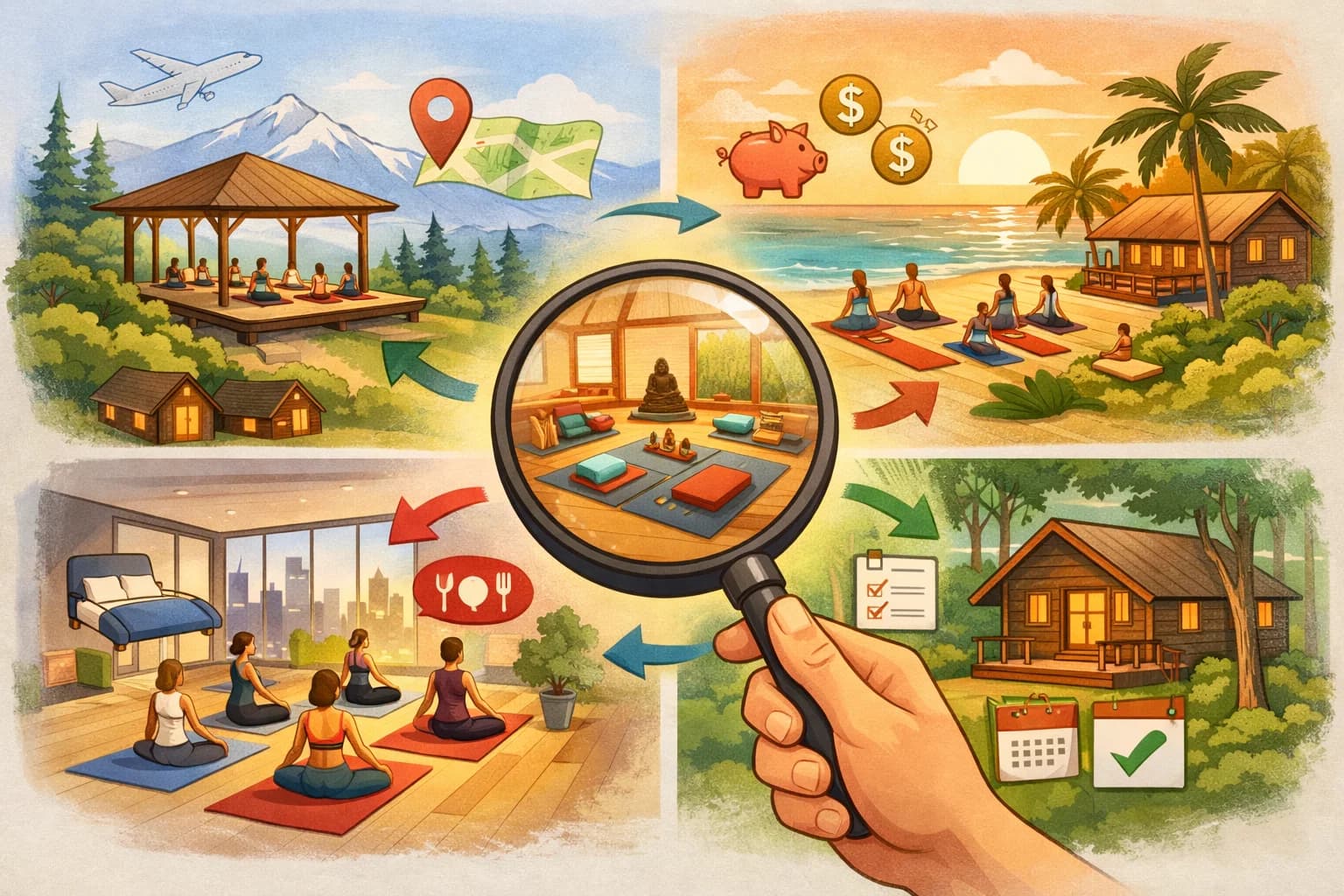
Popular wellness retreat settings
-
Mountains for grounding and introspection
-
Beaches for relaxation and emotional release
-
Forests for nervous system regulation
-
Remote destinations for digital detox
Factors to consider
-
Accessibility (travel time, airports)
-
Climate and seasonality
-
Accommodation comfort
-
Space for group activities and solitude
-
Budget alignment
The location should support not distract from the healing experience.
Step 3: Design a Balanced Wellness Retreat Itinerary
One of the most common mistakes in wellness retreat planning is over-scheduling.
Participants need:
-
Structured healing activities
-
Downtime for integration
-
Space for rest and reflection
A well-balanced wellness retreat includes:
-
Morning grounding practices (yoga, meditation, breathwork)
-
Educational or therapeutic workshops
-
Nourishing meals and nutrition guidance
-
Free time or optional activities
-
Evening reflection or group sharing
Avoid packing every hour. Transformation often happens in the quiet moments.
Step 4: Select Qualified Facilitators and Practitioners
The people guiding your retreat matter as much as the program itself.
Look for facilitators who:
-
Are trauma-informed (when applicable)
-
Have certifications or professional training
-
Can hold safe, inclusive group spaces
-
Communicate clearly and compassionately
Participants trust retreat organizers to vet facilitators carefully. This builds credibility and emotional safety.
Step 5: Set Clear Pricing and What’s Included
Unclear pricing is one of the biggest reasons people hesitate or drop off.
Your wellness retreat pricing should clearly explain:
-
What’s included (accommodation, meals, activities)
-
What’s not included (flights, optional sessions)
-
Payment deadlines
-
Refund and cancellation policies
Transparency builds trust and reduces follow-up questions.
Step 6: Offer Flexible Payment Options
Wellness retreats are rarely impulse purchases.
Many people want to attend but hesitate due to upfront costs.
Payment flexibility increases bookings by:
-
Allowing deposits to secure a spot
-
Spreading payments over time
-
Reducing financial pressure
-
Creating early commitment
With flexible payments, interest turns into action.
How SquadTrip helps
-
Accept deposits
-
Set up payment plans
-
Automate reminders
-
Track who has paid
No spreadsheets. No chasing people down.
Step 7: Create a Clear Wellness Retreat Booking Flow
Even the best retreat won’t fill if booking feels complicated.
A smooth booking flow includes:
-
One dedicated retreat page
-
Clear “Reserve Your Spot” CTA
-
Immediate confirmation after booking
-
Transparent next steps
If participants need to email multiple times just to understand the process, many will quietly walk away.
Step 8: Centralize Communication Before and During the Retreat
Wellness retreat participants often have questions:
-
What should I pack?
-
What happens after I book?
-
How do I prepare mentally and physically?
When communication is scattered across emails, DMs, and group chats, confusion grows.
Centralized communication builds confidence
Participants feel supported when:
-
Updates come from one place
-
Itineraries are easy to access
-
Everyone receives the same information
SquadTrip keeps all retreat details, updates, and payments in one shared space—so no one feels left out or confused.
Step 9: Prepare Participants Before the Wellness Retreat
The retreat experience begins before arrival.
Pre-retreat preparation can include:
-
Setting intentions
-
Reducing screen time
-
Journaling prompts
-
Light dietary suggestions
This helps participants arrive more open, grounded, and ready to engage.
Step 10: Create a Supportive Group Experience
Wellness retreats are powerful because of shared experience.
Group settings:
-
Reduce isolation
-
Normalize emotional experiences
-
Create accountability
-
Deepen healing
Encourage:
-
Optional sharing circles
-
Respect for boundaries
-
Confidentiality
-
Compassionate listening
Group energy often becomes one of the most memorable aspects of a retreat.
Step 11: Support Integration After the Retreat
A wellness retreat doesn’t end on the final day.
Post-retreat integration may include:
-
Follow-up emails
-
Reflection prompts
-
Online group spaces
-
Continued community connection
This reinforces transformation and long-term impact.
Common Mistakes to Avoid When Planning a Wellness Retreat
Even experienced organizers make these mistakes:
1. Overloading the schedule
Rest is not wasted time it’s essential.
2. Hiding pricing details
Transparency builds trust.
3. Relying on manual tools
Spreadsheets and email threads don’t scale.
4. Ignoring communication flow
Confusion creates anxiety.
5. Underestimating payment friction
Flexible payments dramatically improve conversions.
Why SquadTrip Is Built for Wellness Retreat Planning
SquadTrip isn’t a generic booking platform. It’s designed specifically for group travel, retreats, and transformational experiences.
With SquadTrip, you can:
-
Create professional wellness retreat pages
-
Accept deposits and payment plans
-
Centralize guest communication
-
Track bookings and payments in real time
-
Reduce admin work and burnout
Instead of juggling tools, everything lives in one place.
How SquadTrip Improves the Wellness Retreat Experience
For organizers:
-
Less admin stress
-
Fewer follow-ups
-
Better conversion rates
For participants:
-
Clear expectations
-
Easy payments
-
Confidence and trust
-
A smoother journey from interest to arrival
When logistics disappear, healing can take center stage.
Final Thoughts
Learning how to plan a wellness retreat is about more than schedules and locations. It’s about creating safety, clarity, and intention from the very first interaction.
The most successful wellness retreats:
-
Have a clear purpose
-
Communicate transparently
-
Reduce booking friction
-
Support group connection
-
Use tools that scale with growth
Most retreat organizers don’t struggle because of their vision they struggle because of logistics.
That’s where SquadTrip changes everything.
By simplifying bookings, payments, and group coordination, SquadTrip allows you to focus on what you do best: guiding meaningful, healing experiences.
Ready to plan your wellness retreat with ease? Try SquadTrip today and turn your retreat vision into a seamless reality.
FAQs
1. What exactly is a wellness retreat, and how is it different from a vacation?
A wellness retreat is an intentional experience designed to support physical, mental, or emotional well-being. Unlike a vacation, every activity, environment, and interaction is planned to promote healing, growth, or relaxation.
2. Do I need a special location to host a successful wellness retreat?
Not necessarily, but the right location can enhance the experience. Consider factors like accessibility, climate, space for group activities, and whether the environment supports relaxation or healing.
3. How do I choose the right type of wellness retreat to plan?
Start with your purpose and audience. Are you focusing on yoga, mindfulness, detox, corporate wellness, or emotional healing? A clear intention helps attract the right participants and shapes the itinerary.
4. How should I structure the schedule for a wellness retreat?
Balance structured activities like yoga, workshops, or meditation with downtime for reflection and integration. Overloading the schedule can reduce the impact and leave participants exhausted instead of rejuvenated.
5. Do I need certified facilitators for a wellness retreat?
Yes. Facilitators should have proper training or certification and be able to hold safe, inclusive spaces. Their guidance is key for participant safety and overall credibility.