TL;DR:
-
A guest packing list for a retreat sets expectations and reduces guest stress
-
The best packing lists match the retreat’s theme, location, and schedule
-
Guests need clarity on what is required, optional, and provided on-site
-
Packing lists should support wellness goals, not overwhelm guests
-
Timing matters. Send packing lists early and repeat key reminders
-
SquadTrip helps hosts share packing lists, updates, payments, and trip details in one organized place
Introduction
A clear guest packing list for a retreat is one of the simplest ways wellness hosts can reduce guest anxiety, avoid last-minute questions, and create a smoother retreat experience from the very start. When guests know exactly what to bring, what is provided, and what to leave at home, they arrive feeling prepared, relaxed, and ready to fully participate.
Many retreat organizers focus heavily on programming, venues, and marketing, but overlook how important preparation guidance is for guests. A poorly planned or vague packing list often leads to confusion, overpacking, forgotten essentials, or guests arriving unprepared for activities like meditation, yoga, hikes, or digital detox sessions.
In this guide, you will learn six practical wellness host tips for creating a guest packing list that supports your retreat goals, improves guest experience, and reduces operational friction. You will also see how tools like SquadTrip help hosts share packing lists, trip details, and updates in one place without chasing guests across emails and messages.
Want an easier way to share packing lists and trip updates? SquadTrip keeps everything in one place so your guests always know what to expect before they arrive.
Why a Guest Packing List Matters for Wellness Retreats
A wellness retreat is designed to help people slow down, reset, and focus inward. But that experience starts well before guests arrive at the venue. It begins the moment they book and start preparing.
When guests are unsure what to pack, they often feel anxious. They worry about forgetting essentials, bringing the wrong clothing, or not having what they need for specific activities. This mental load works against the calm and intentional experience you are trying to create.
A well-structured guest packing list for a retreat helps in three key ways:
-
It creates clarity and confidence for guests
-
It aligns guest expectations with the retreat experience
-
It reduces operational questions for hosts
Instead of answering individual messages like “Do I need yoga props?” or “Is there laundry on site?” your packing list answers those questions in advance.
Planning a retreat with multiple guests? SquadTrip lets you share packing lists, itineraries, and updates in one place so everyone stays aligned.
Tip 1: Align the Packing List With Your Retreat Theme
Not all wellness retreats are the same, and your packing list should reflect that. A mindfulness retreat, a yoga immersion, and a nature-based healing retreat all require different preparation.
Before writing your guest packing list for a retreat, ask yourself:
-
What is the primary focus of this retreat?
-
What activities will guests participate in daily?
-
What emotional and physical environment am I creating?
Examples by Retreat Type
Yoga Retreat
-
Yoga mats (if not provided)
-
Comfortable activewear
-
Light layers for morning sessions
-
Refillable water bottle
Mindfulness or Meditation Retreat
-
Comfortable loose clothing
-
Journal and pen
-
Shawl or blanket for longer sits
-
Minimal electronics
Nature or Outdoor Wellness Retreat
-
Hiking shoes or sturdy footwear
-
Weather-appropriate outerwear
-
Sunscreen and insect repellent
-
Backpack or day bag
Avoid generic packing lists copied from other retreats. Guests can sense when preparation guidance feels disconnected from the actual experience.
Want to keep all retreat expectations clear? SquadTrip helps hosts centralize packing lists, schedules, and retreat guidelines so guests don’t miss key details.
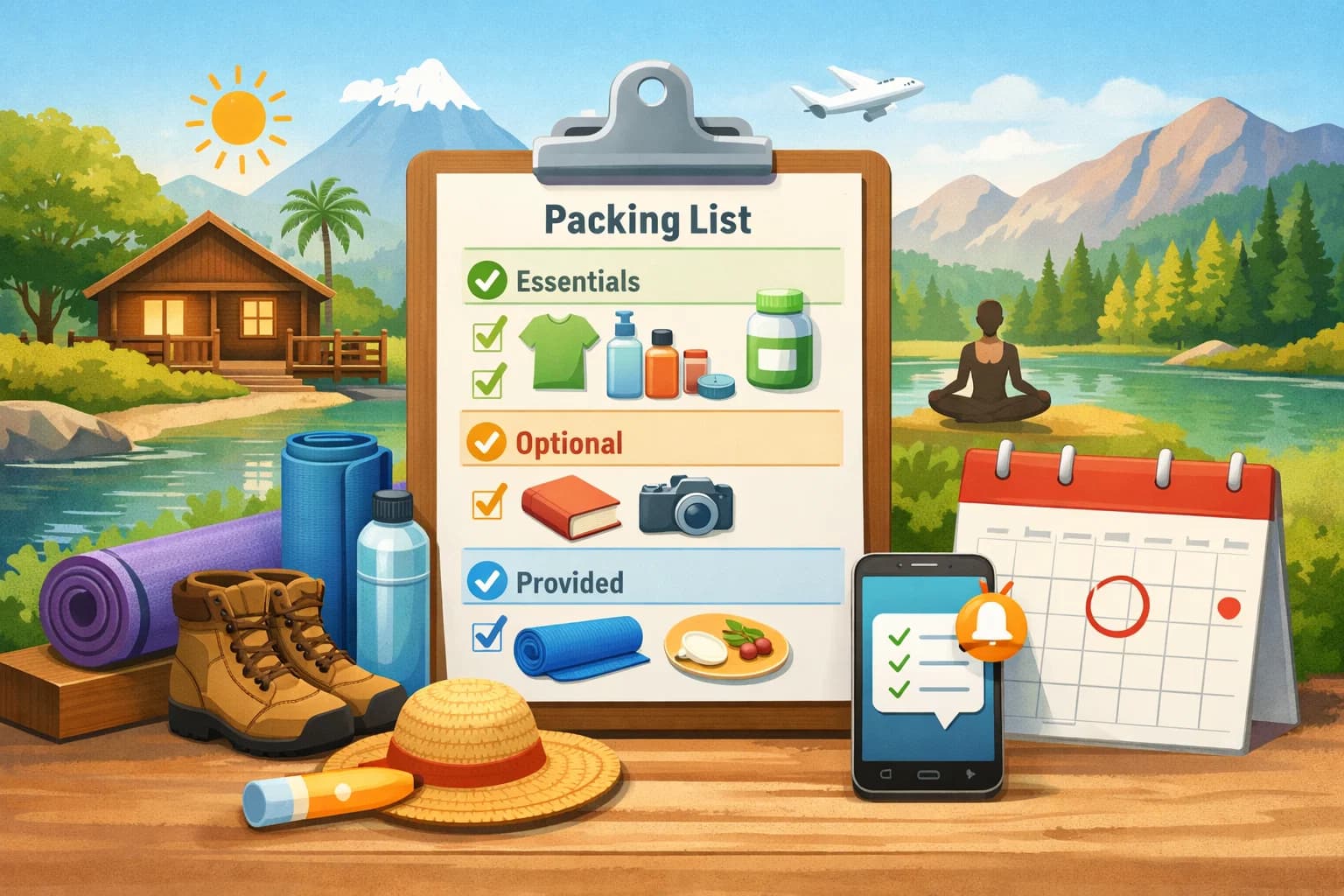
Tip 2: Separate Essentials, Optional Items, and Provided Items
One of the most common mistakes wellness hosts make is creating a long, unstructured packing list that overwhelms guests. When everything looks equally important, guests feel unsure what truly matters.
A better approach is to clearly categorize items.
Recommended Packing List Structure
Essentials (Must Bring)
These are items guests absolutely need to participate comfortably.
-
Personal medications
-
Comfortable clothing
-
Toiletries
-
Valid ID or travel documents
Optional (Nice to Have)
These items enhance the experience but are not required.
-
Personal yoga props
-
Favorite pillow
-
Books or journals
-
Reusable coffee cup
Provided by the Host
This section reduces overpacking and reassures guests.
-
Yoga mats and props
-
Towels and linens
-
Meals and snacks
-
Meditation cushions
This clarity instantly lowers guest stress and cuts down follow-up questions.
Hosting multiple retreats or group trips? SquadTrip allows you to reuse and customize packing list templates while keeping everything organized per trip.
Tip 3: Consider Location, Weather, and Accommodation Details
Your retreat’s location plays a major role in what guests should bring. A beachside retreat, mountain retreat, or urban wellness escape all require different preparation.
When building a guest packing list for a retreat, factor in:
-
Climate and seasonal weather
-
Elevation or terrain
-
Accessibility to nearby stores
-
Accommodation amenities
Location-Specific Additions
Cold or Mountain Locations
-
Warm layers
-
Thermal socks
-
Indoor slippers
-
Moisturizer for dry air
Warm or Tropical Locations
-
Breathable clothing
-
Swimwear
-
Sun protection
-
Lightweight rain jacket
Remote Locations
-
Flashlight or headlamp
-
Personal snacks
-
Portable charger
-
Offline reading material
Also clarify what accommodations include. Guests appreciate knowing whether hair dryers, towels, or laundry facilities are available.
Managing guest questions across email, WhatsApp, and DMs can get messy. SquadTrip keeps all trip details, including packing lists and accommodation info, in one shared space.
Tip 4: Support the Wellness Goals of the Retreat
A packing list is more than a logistical checklist. It is also a tool to guide guest behavior and mindset.
If your retreat includes elements like digital detox, mindfulness, or intentional rest, your guest packing list should gently reinforce those values.
Examples of Wellness-Aligned Guidance
-
Suggest leaving non-essential electronics at home
-
Encourage bringing a journal for reflection
-
Recommend comfortable clothing over fashion-focused outfits
-
Ask guests to pack reusable items to reduce waste
You can also include short notes explaining why certain items are recommended.
For example:
“Bringing a journal helps capture insights and reflections that often arise during group sessions.”
This framing makes guests feel supported rather than restricted.
Want to communicate expectations without sounding strict? SquadTrip lets you share notes, reminders, and guidelines alongside your packing list in a friendly, structured way.
Tip 5: Send the Packing List Early and Repeat Key Reminders
Timing matters as much as content. Sending a guest packing list for a retreat too late creates last-minute stress and increases the chance guests forget essentials.
Recommended Timeline
-
Send the full packing list immediately after booking confirmation
-
Reshare or highlight key items 1–2 weeks before the retreat
-
Send a short reminder 3–5 days before departure
Avoid sending packing lists as long email threads that get buried in inboxes. Guests should be able to access the list anytime without searching.
This is where many hosts struggle. Information gets scattered across emails, PDFs, and messages.
SquadTrip solves this by keeping packing lists, trip details, and updates accessible in one place so guests always know where to look.
Tip 6: Keep the List Simple, Human, and Reassuring
Finally, remember that many guests attending wellness retreats are stepping outside their routine. Some may be first-time retreat participants.
Your tone matters.
A good guest packing list for a retreat should feel:
-
Friendly, not formal
-
Clear, not overwhelming
-
Reassuring, not demanding
Writing Tips
-
Use simple language
-
Avoid long paragraphs
-
Use bullet points and headings
-
Add short reassurance notes like “If you forget something, don’t worry”
You can even include a closing line such as:
“If you have questions about what to bring, we’re here to help.”
Clear communication builds trust and sets the tone for the entire retreat experience.
Common Mistakes to Avoid When Creating a Guest Packing List
Even experienced wellness hosts can make small mistakes that impact guest experience.
Here are a few to watch out for:
-
Overloading guests with too many items
-
Not clarifying what is already provided
-
Ignoring weather or location specifics
-
Sending the list too late
-
Using vague language like “bring appropriate clothing”
Your goal is not to cover every possible scenario but to guide guests with clarity and care.
How SquadTrip Makes Guest Preparation Easier
Creating a great packing list is only half the job. Making sure guests actually see it, remember it, and trust it is the other half.
SquadTrip helps wellness hosts:
-
Share packing lists in one central place
-
Keep trip details, schedules, and updates organized
-
Reduce repetitive guest questions
-
Manage payments and RSVPs alongside preparation info
Instead of juggling spreadsheets, emails, and messages, you can focus on delivering a calm, intentional retreat experience.
Conclusion
A well-crafted guest packing list for a retreat does more than tell guests what to bring. It builds trust, reduces anxiety, and helps guests arrive ready to fully engage with the experience you’ve designed.
By aligning the list with your retreat theme, clarifying essentials, supporting wellness goals, and sharing information early, you create a smoother journey for both guests and hosts.
When preparation feels easy and organized, guests can focus on what truly matters: rest, connection, and transformation.
If you want a simpler way to manage packing lists, guest communication, and retreat logistics in one place, SquadTrip is built to support wellness hosts every step of the way.
FAQs
What should be included in a guest packing list for a retreat?
A guest packing list for a retreat should include essentials like clothing, toiletries, medications, and any activity-specific items such as yoga wear or hiking shoes. It should also clearly mention optional items and what the host provides on-site to avoid overpacking and confusion.
When should retreat hosts send the packing list to guests?
The packing list should be shared immediately after booking and then resurfaced closer to the retreat date. Sending reminders one to two weeks before the retreat helps guests prepare without last-minute stress.
How detailed should a retreat packing list be?
A packing list should be clear but not overwhelming. Focus on items guests truly need, separate essentials from optional items, and avoid vague instructions. Simple bullet points work best.
Should wellness retreat packing lists include digital detox guidance?
Yes, if digital detox is part of the retreat experience. Hosts can gently suggest limiting electronics and explain how it supports mindfulness and rest, without sounding strict or controlling.
Do retreat hosts need different packing lists for different locations?
Yes. Location, weather, and accommodation details all impact what guests should bring. Mountain, beach, urban, and remote retreats each require different preparation guidance.