TL;DR
-
Yoga retreats focus on physical movement combined with mindfulness.
-
Meditation retreats center on mental clarity and extended silent practice.
-
Yoga retreats are usually more social and flexible.
-
Meditation retreats often follow strict schedules and may include silence.
-
Choose yoga if you need physical renewal and gentle structure.
-
Choose meditation if you need mental reset and deep introspection.
-
Retreat organizers can simplify booking and payment collection using SquadTrip.
Introduction
If you’re comparing Yoga Retreats vs Meditation Retreats, you’re probably feeling one of two things: overwhelmed by options or unsure what your mind and body actually need right now. Both retreats promise relaxation, clarity, and transformation. But they deliver those outcomes in very different ways.
Whether you’re booking a solo reset or organizing a group wellness trip, understanding the difference will help you choose the right experience.
Planning a retreat with friends or clients? Create a free trip page on SquadTrip to collect payments and manage everything in one place.
Understanding Yoga Retreats vs Meditation Retreats
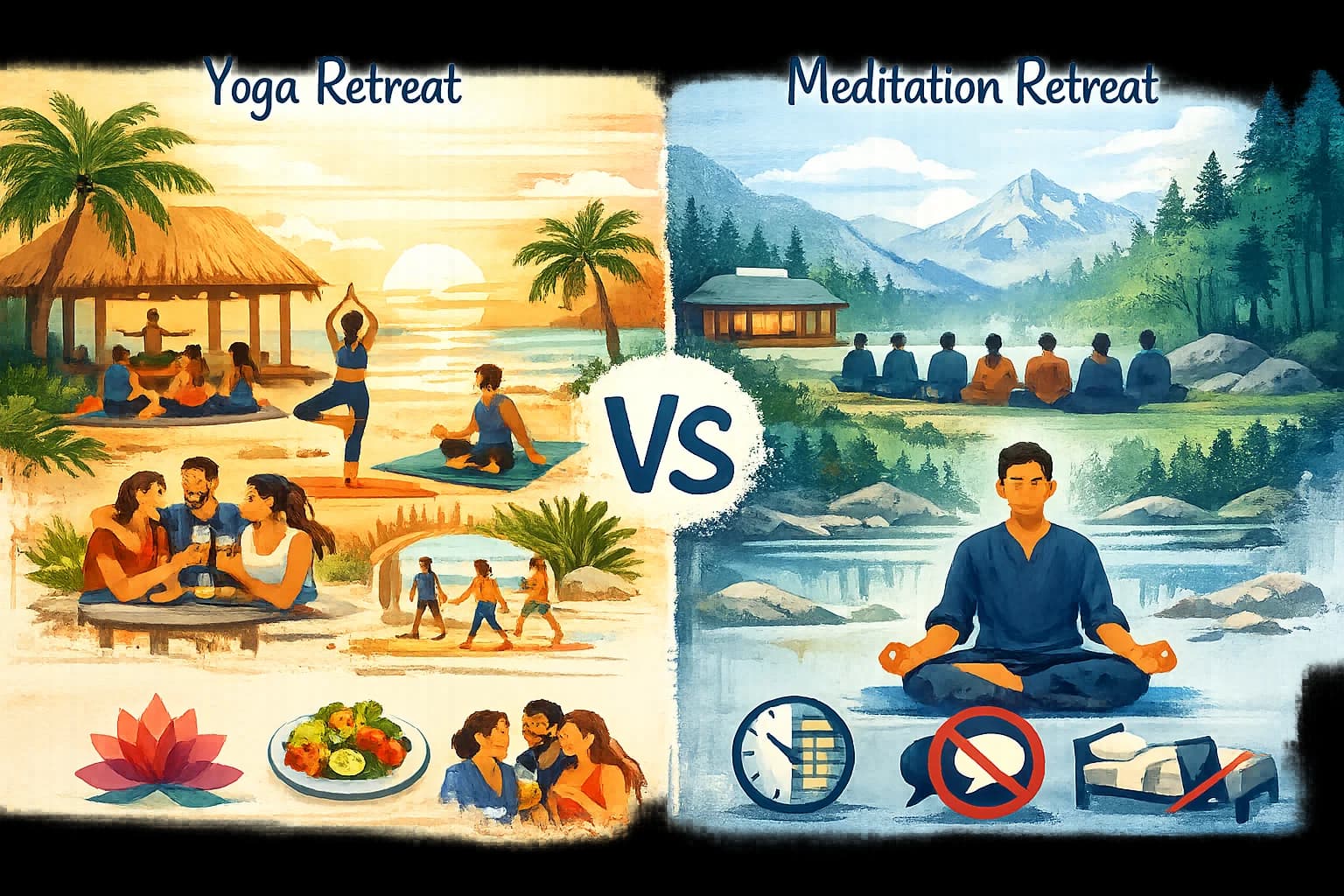
When comparing Yoga Retreats vs Meditation Retreats, the core difference comes down to body-first versus mind-first approaches.
What Is a Yoga Retreat?
A yoga retreat blends:
-
Daily yoga sessions (Vinyasa, Hatha, Ashtanga, Yin, etc.)
-
Breathwork practices
-
Light meditation
-
Workshops and community activities
-
Free time for exploration
Most yoga retreats are designed to balance structure and leisure. You’ll move your body in the morning, possibly attend workshops in the afternoon, and enjoy group dinners in the evening.
Yoga retreats often feel energizing, social, and uplifting.
What Is a Meditation Retreat?
A meditation retreat prioritizes:
-
Extended sitting meditation
-
Silent periods (sometimes fully silent retreats)
-
Structured schedules
-
Minimal distractions
-
Limited phone or technology use
-
Deep inner reflection
Some meditation retreats follow traditions such as Vipassana, Zen, or guided mindfulness formats. They can range from weekend experiences to 10-day silent immersions.
Meditation retreats tend to feel intense, introspective, and mentally focused.
If you’re planning to host either type, using SquadTrip helps you avoid spreadsheet chaos and manage bookings professionally.
The Core Differences: Yoga Retreats vs Meditation Retreats
1. Physical Movement vs Stillness
Yoga retreats include active sessions that engage the body. You’ll stretch, strengthen, and move daily.
Meditation retreats emphasize stillness. Long sitting sessions are common, sometimes lasting 45 to 90 minutes at a time.
If your body feels stiff, tired, or disconnected, yoga may be the better starting point.
If your mind feels overloaded or anxious, meditation may provide deeper relief.
2. Social Energy vs Quiet Reflection
Yoga retreats usually allow conversation and group bonding. Many attendees leave with new friends.
Meditation retreats may limit or completely eliminate conversation, especially during silent formats.
Ask yourself:
-
Do I want connection right now?
-
Or do I need quiet space away from everything?
3. Structure and Intensity
Yoga retreats often provide flexibility. You may choose optional workshops or excursions.
Meditation retreats are more rigid. The schedule is typically fixed, and attendance at sessions is expected.
If you prefer autonomy, yoga retreats may feel more comfortable.
Who Should Choose a Yoga Retreat?
Yoga retreats are ideal for:
-
Beginners looking to explore wellness
-
People recovering from stress
-
Travelers who want balance between relaxation and activity
-
Groups who want bonding experiences
-
Creatives seeking inspiration
Yoga retreats combine movement, community, and mindfulness. They feel rejuvenating without being overwhelming.
Signs You Might Need a Yoga Retreat
-
You feel physically tense.
-
You sit most of the day at work
-
You want wellness without strict silence.
-
You enjoy shared experiences.
-
You’re organizing a birthday, friends’ trip, or corporate wellness getaway.
If you’re organizing a yoga retreat, create a SquadTrip booking page so participants can pay in installments and access all trip details easily.
Who Should Choose a Meditation Retreat?
Meditation retreats are better suited for:
-
Individuals feeling mentally burned out
-
Those seeking deep emotional clarity
-
People navigating major life transitions
-
Experienced meditators
-
Individuals ready for disciplined self-reflection
Signs You Might Need a Meditation Retreat
-
Your mind feels constantly busy.
-
You struggle to disconnect from devices.
-
You want silence.
-
You’re seeking answers or emotional processing.
-
You feel mentally exhausted more than physically tired.
Meditation retreats can feel challenging at first, but many participants describe them as transformative.
Retreat Goals: What Are You Really Seeking?
When evaluating Yoga Retreats vs Meditation Retreats, your goal matters more than the format.
If Your Goal Is:
Physical Rejuvenation → Choose yoga
Mental Clarity → Choose meditation
Community Connection → Choose yoga
Deep Inner Work → Choose meditation
Stress Reduction with Movement → Choose yoga
Emotional Reset → Choose meditation
Sometimes, people assume they need meditation when they actually need movement. Others book yoga retreats but secretly crave silence.
Be honest about your current season of life.
Can You Combine Both?
Yes. Many modern retreats blend yoga and meditation elements.
Hybrid retreats often include:
-
Morning yoga
-
Afternoon workshops
-
Evening meditation sessions
-
Guided journaling
-
Breathwork
If you’re unsure, a blended retreat offers balance.
For retreat organizers, hybrid formats can attract a broader audience. Using SquadTrip makes it easy to collect deposits, manage room types, and communicate updates.
Budget Differences: Yoga Retreats vs Meditation Retreats
Costs vary widely based on location and duration.
Yoga Retreat Pricing Factors
-
Instructor reputation
-
Destination (Bali, Costa Rica, Mexico, etc.)
-
Luxury accommodations
-
Excursions included
-
Meals and amenities
Yoga retreats often include more amenities and activities.
Meditation Retreat Pricing Factors
-
Length of retreat
-
Traditional center vs luxury venue
-
Donation-based or fixed pricing
-
Simpler accommodations
Some meditation retreats operate on donation models, especially in traditional formats.
If you’re hosting a retreat and need structured payment plans, SquadTrip helps you:
-
Accept deposits
-
Offer installment plans
-
Track payments automatically
-
Avoid chasing participants manually
Group Dynamics: Hosting a Yoga or Meditation Retreat
If you’re an instructor or wellness facilitator, your audience matters.
Yoga Retreat Audience
-
Wellness enthusiasts
-
Social travelers
-
Influencer communities
-
Corporate teams
-
Friend groups
Yoga retreats are often easier to market because they feel accessible.
Meditation Retreat Audience
-
Mindfulness practitioners
-
Spiritual seekers
-
Individuals committed to personal growth
-
Repeat retreat participants
Meditation retreats typically attract smaller, more focused groups.
Planning to host your own retreat? Create a dedicated trip page on SquadTrip to manage everything without spreadsheets or payment confusion.
Emotional Readiness: An Honest Check-In
The biggest difference in Yoga Retreats vs Meditation Retreats is emotional intensity.
Meditation retreats can surface unresolved emotions. Sitting quietly often brings suppressed thoughts to the surface.
Yoga retreats can also be emotional, but movement softens the intensity.
Ask yourself:
-
Am I ready to sit with discomfort?
-
Or do I need gentle renewal first?
There is no right answer. Only timing.
Location Considerations
Some destinations suit one format better than the other.
Popular Yoga Retreat Locations
-
Bali
-
Tulum
-
Costa Rica
-
Thailand
-
Greece
These locations often emphasize community, beach settings, and excursions.
Popular Meditation Retreat Locations
-
Mountain monasteries
-
Forest retreat centers
-
Remote countryside settings
-
Dedicated meditation centers
Silence and nature are often prioritized.
If you’re organizing an international retreat, SquadTrip helps collect international payments and manage attendee information in one dashboard.
Duration Differences
Yoga retreats typically last:
-
3 to 7 days
-
Weekend getaways
-
Week-long immersive trips
Meditation retreats can range from:
-
2-day silent weekends
-
5-day immersions
-
10-day Vipassana retreats
-
Multi-week experiences
If you’re new to meditation, shorter formats may be more approachable.
Common Myths About Yoga and Meditation Retreats
Myth 1: Meditation Retreats Are Only for Advanced Practitioners
Many retreats welcome beginners with guided instruction.
Myth 2: Yoga Retreats Are Just Vacation
Well-designed yoga retreats include structured practice and workshops.
Myth 3: Meditation Is Easier Than Yoga
Sitting still for long periods can be physically and mentally demanding.
Myth 4: Yoga Retreats Don’t Offer Deep Transformation
Many participants experience significant emotional shifts during yoga retreats.
How to Decide Between Yoga Retreats vs Meditation Retreats
Here’s a simple decision filter:
-
Are you physically exhausted or mentally exhausted?
-
Do you crave movement or silence?
-
Do you want connection or solitude?
-
Are you a beginner or experienced practitioner?
-
How much structure are you comfortable with?
Your answers will usually make the choice clear.
For Retreat Organizers: Turning Interest into Booked Spots
Whether you’re hosting a yoga or meditation retreat, organization matters.
Common challenges:
-
Tracking who paid
-
Managing installment plans
-
Collecting room preferences
-
Sending updates
-
Avoiding last-minute confusion
Instead of juggling spreadsheets and payment apps, use SquadTrip to:
-
Build a professional booking page
-
Accept deposits
-
Track attendees
-
Send automated updates
It saves time and makes your retreat look organized and credible.
Final Thoughts: Choosing What You Truly Need
When deciding between Yoga Retreats vs Meditation Retreats, don’t choose based on trends. Choose based on your current reality.
If your body feels neglected and you crave movement, connection, and renewal, yoga may be your answer.
If your mind feels overloaded and you’re ready for deep reflection, meditation may be the path.
Both formats can be life-changing when chosen intentionally.
And if you’re organizing a wellness retreat of your own, make the logistics simple.
Create your retreat page on SquadTrip and manage bookings, payments, and guest communication without stress.
FAQs: Yoga Retreats vs Meditation Retreats
1. What is the main difference between yoga retreats and meditation retreats?
The main difference in Yoga Retreats vs Meditation Retreats is the focus. Yoga retreats combine physical movement with mindfulness practices, while meditation retreats emphasize extended sitting practice, silence, and mental clarity.
2. Are yoga retreats suitable for beginners?
Yes. Most yoga retreats welcome beginners and offer different levels of classes. You don’t need advanced flexibility or experience to attend.
3. Do meditation retreats require complete silence?
Not always. Some meditation retreats include full silence, especially Vipassana-style programs, while others allow limited conversation during certain times.
4. Which retreat is better for stress relief?
Both can reduce stress, but in different ways. Yoga retreats relieve stress through movement and relaxation. Meditation retreats help by calming mental overactivity and improving focus.
5. How long do yoga and meditation retreats usually last?
Yoga retreats typically last 3 to 7 days. Meditation retreats can range from weekend programs to 10-day silent immersions or longer.