TL;DR
- Retreat duration and length planning plays a major role in guest satisfaction, pricing, energy flow, and outcomes
- Short retreats work best for beginners and local audiences
- Mid-length retreats (3–5 days) offer the strongest balance of depth and flexibility
- Long retreats work only when pacing, rest, and support are planned carefully
- SquadTrip helps hosts manage payments, schedules, and communication for retreats of any length
Introduction
Retreat duration and length planning is one of the most important decisions a retreat host makes, yet it is often treated as an afterthought. Many hosts spend weeks choosing locations, themes, instructors, and branding, but decide retreat length based on instinct or convenience.
That choice can quietly shape everything.
The length of your retreat affects who books, how much guests pay, how engaged they feel, and whether they leave refreshed or exhausted. A two-day retreat can feel powerful and complete when planned well. A seven-day retreat can feel draining if poorly paced.
This guide breaks down retreat duration and length planning into three proven retreat models that consistently work across wellness retreats, yoga retreats, leadership retreats, creative retreats, and group travel experiences. You will learn when to use each model, who it is best suited for, and how to plan it without creating unnecessary stress for yourself or your guests.
Why Retreat Duration and Length Planning Matters
Retreat length is not just a logistical detail. It directly shapes the guest experience.
– It sets expectations from the first click
When someone sees a one-day retreat, they expect light commitment. When they see a seven-day retreat, they expect depth, transformation, and structure. If the experience does not match that expectation, even good content can feel disappointing.
– It affects booking decisions
Shorter retreats lower the barrier to entry. Longer retreats require stronger trust, clearer outcomes, and better communication.
– It controls energy and attention
Guests can only absorb so much in a day. Poor retreat duration and length planning often leads to rushed schedules or burnout.
– It increases or reduces admin work
Every additional day adds payments, reminders, schedules, meals, and coordination. Without the right system, complexity grows quickly.
Choosing the right retreat duration is easier when logistics are handled SquadTrip supports flexible schedules and payment plans.
The 3 Proven Retreat Duration Models That Work
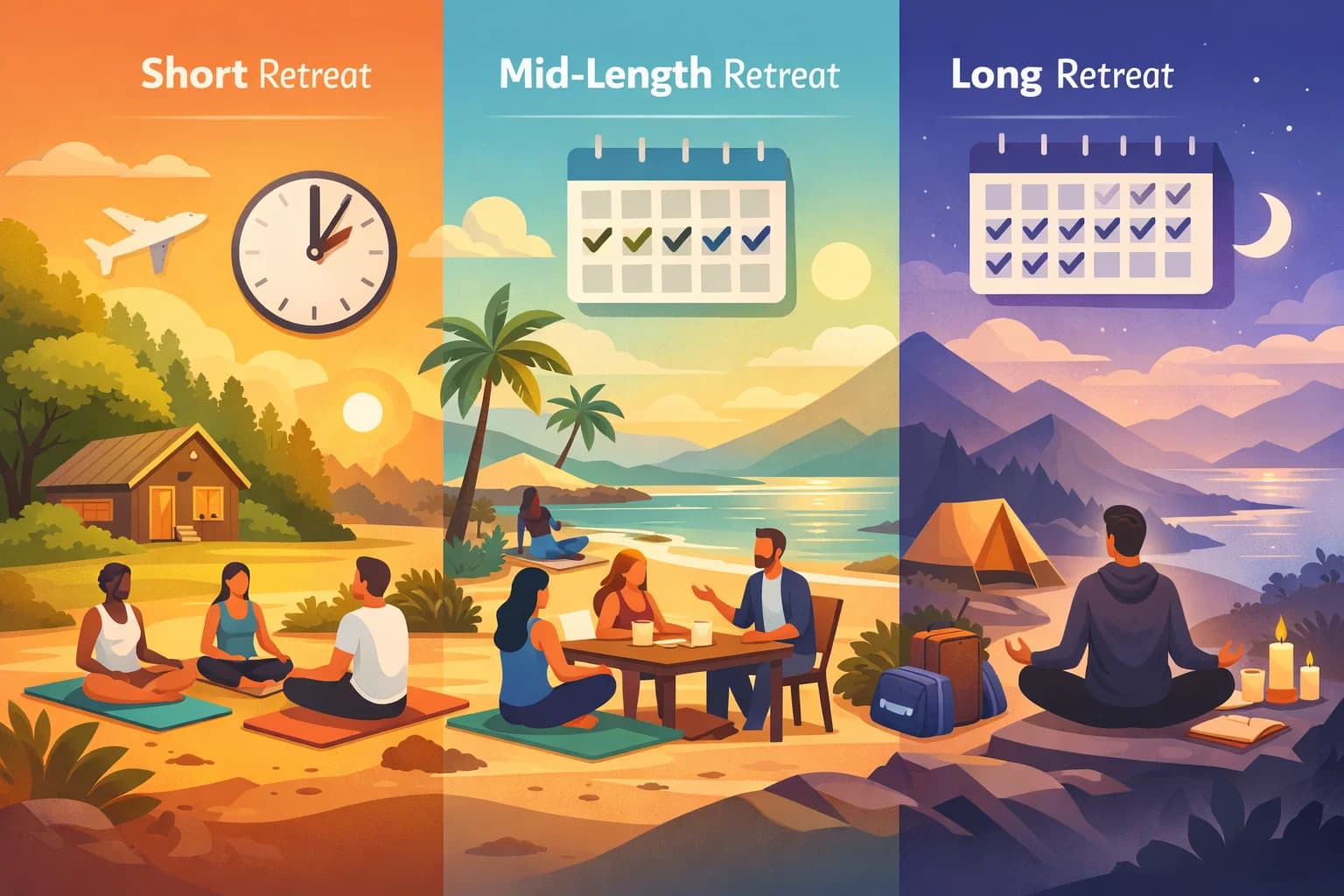
Most successful retreats fall into one of these three models. Each serves a different purpose and audience.
Model 1: The Short Reset Retreat (1–2 Days)
Best suited for
- First-time retreat hosts
- Local or regional audiences
- Weekend wellness or yoga retreats
- Corporate or leadership offsites
- Low-commitment introductory experiences
Why this model works
Short retreats are easy to say yes to. Guests do not need extended time off, long travel plans, or major financial commitment. This makes them easier to market and faster to fill.
When designed well, even a one-day retreat can create clarity, calm, and connection.
Typical structure
- Morning or evening arrival
- 2–4 guided sessions
- One focused group experience
- Reflection or journaling tim
- Same-day or next-day departure
What to avoid
- Overloading the schedule
- Trying to create deep transformation
- Removing all free time
Short retreats work best when they focus on one clear outcome.
Pricing notes
Short retreats are usually lower priced but benefit from repeat runs throughout the year.
Model 2: The Immersive Core Retreat (3–5 Days)
Best suited for
- Wellness and yoga retreats
- Leadership and coaching programs
- Creative or writing retreats
- Destination-based retreats
- Warm or returning audiences
Why this model works
The 3–5 day retreat is the most balanced format. It gives guests enough time to disconnect from daily life while maintaining energy and focus.
From a retreat duration and length planning perspective, this model offers the most flexibility.
Typical flow
Day 1
Arrival, orientation, grounding sessions
Days 2–4
Core workshops, guided practices, group activities, personal time
Final day
Integration, reflection, closing circle, departure
Benefits for hosts
- Higher perceived value
- Stronger group bonding
- Better testimonials and referrals
- Easier to price mid-range offerings
Common mistakes
- No downtime between sessions
- Repeating the same structure every da
- Ignoring energy dips
Each day should feel intentional and slightly different.
Model 3: The Deep Transformation Retreat (6–10 Days)
Best suited for
- Spiritual or healing retreats
- Advanced wellness programs
- Leadership intensives
- Destination group travel
- High-ticket experiences
Why this model works
Long retreats allow guests to fully step away from routine and distraction. This creates space for deeper reflection, emotional processing, and lasting change.
However, this model only works with careful planning.
Structural principles
- Slow arrival and grounding phase
- Alternating high-energy and low-energy days
- Built-in rest and integration tim
- Gradual closing instead of abrupt endings
Audience readiness
Long retreats work best for guests who:
- Have attended retreats before
- Are seeking specific outcomes
- Understand the commitment involved
Pricing and commitment
Long retreats require:
- Clear value communication
- Flexible payment plans
- Transparent cancellation policies
What to avoid
- Over-scheduling every day
- Ignoring emotional or physical fatigue
- Weak support systems
How to Choose the Right Retreat Length
Effective retreat duration and length planning always starts with your audience.
Ask yourself
- Are my guests new or experienced?
- Are they traveling locally or internationally?
- How much time off can they realistically take?
- Are they seeking rest or transformation?
Match length to readiness
- Beginners prefer shorter retreats
- Returning guests accept longer formats
- Corporate groups prefer fixed timelines
- Wellness audiences value pacing and rest
When unsure, start shorter and expand later.
Align Retreat Length With Retreat Goals
Your retreat length should match what you promise.
Retreat Goal
Recommended Length
Stress relief
1–2 days
Skill building
2–4 days
Habit change
3–5 days
Emotional healing
5–7 days
Deep transformation
7–10 days
Overpromising results in a short retreat often leads to disappointment.
Scheduling Tips for Any Retreat Length
– Plan by energy, not hours
Schedule focused sessions earlier in the day and lighter activities later.
– Build white space
Guests need time to process and rest.
– Respect arrival and departure days
Keep the first and last days lighter.
– Avoid repetition
Each day should have a distinct rhythm.
Payment Planning Based on Retreat Length
Longer retreats need smarter payment structures.
Best practices
- Short retreats: full payment upfront
- Medium retreats: deposit + one installment
- Long retreats: deposit + monthly installments
Clear payment plans reduce drop-offs and follow-ups.
SquadTrip helps automate these flows so hosts spend less time chasing payments.
Common Retreat Duration Mistakes
- Choosing length based only on venue availability
- Copying competitors without context
- Ignoring guest feedback
- Overloading short retreats
- Under-planning long retreats
Good retreat duration and length planning is intentional.
How SquadTrip Supports Retreats of Any Length
No matter which model you choose, logistics matter.
SquadTrip helps retreat hosts:
- Collect deposits and payments
- Offer flexible payment plans
- Share schedules and updates
- Manage group communication
- Reduce manual admin work
Conclusion
Retreat duration and length planning is not about guessing or copying others. It is about choosing what fits your audience, your goals, and your capacity as a host.
Short retreats create accessibility. Medium retreats create balance. Long retreats create depth. Each model works when designed with intention.
As your retreats grow, planning and coordination become more complex. SquadTrip helps you manage payments, schedules, and group communication so you can focus on delivering meaningful experiences.
If you are ready to plan your next retreat with clarity and confidence, start with the right length and let SquadTrip handle the rest.
FAQ
1. How do I decide the right retreat length for my audience?
Start by looking at your audience’s experience level, travel distance, and time availability. First-time attendees usually prefer shorter retreats, while returning guests are more open to longer formats. Retreat duration and length planning works best when the commitment matches what guests are realistically able to give.
2. Is a weekend retreat long enough to create real impact?
Yes, a weekend retreat can be very effective if it focuses on one clear outcome. Short retreats work well for stress relief, clarity, or introduction-level experiences. The key is not trying to fit too much into limited time.
3. What retreat length works best for destination retreats?
Most destination retreats perform best at 3–5 days. This gives guests enough time to justify travel, settle into the experience, and feel real value without exhaustion. Longer destination retreats should include more rest days and flexible schedules.
4. Should every day of a retreat be fully scheduled?
No. One of the biggest mistakes in retreat duration and length planning is over-scheduling. Guests need white space for rest, reflection, and integration. Well-paced retreats usually leave part of each day unstructured.
5. How does retreat length affect pricing?
Longer retreats usually cost more because they include accommodation, meals, and programming over several days. However, higher prices convert better when hosts offer deposits or payment plans instead of full upfront payments.