TL;DR:
-
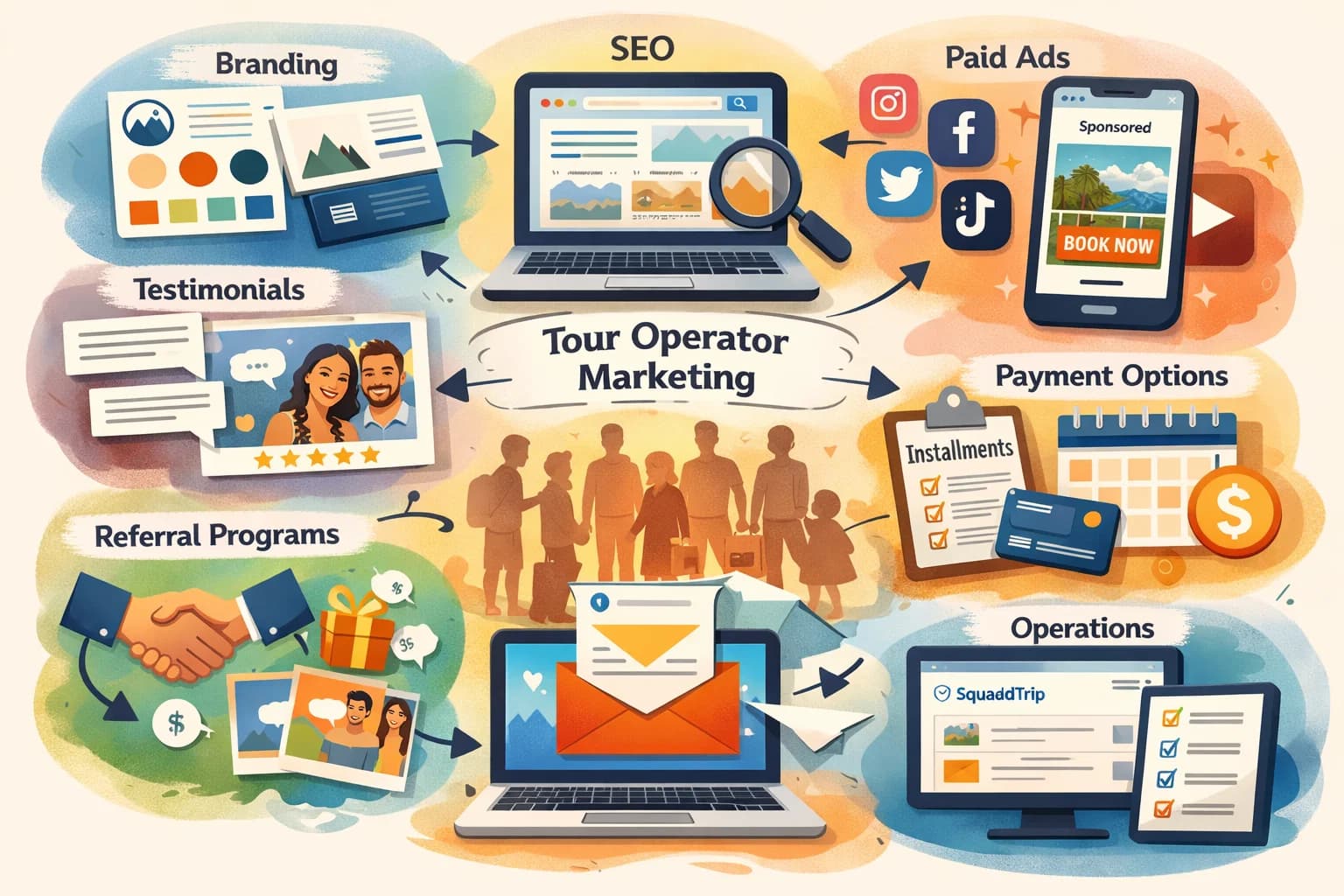
Marketing tips for travel & tour businesses work best when paired with clear positioning and trust
-
Your website should convert visitors, not just look good
-
Social proof, content, and email still drive consistent bookings
-
Partnerships and referrals lower acquisition costs
-
Paid ads work only when tracking and landing pages are solid
-
Community-driven travel is growing fast
-
SquadTrip simplifies bookings, payments, and group coordination
-
Smart tools matter as much as smart ideas
Introduction
Running a travel or tour business today is very different from what it was even five years ago. Competition is higher, customer attention is shorter, and people expect smooth online experiences from the first click to the final payment. That is why marketing tips for travel & tour businesses can no longer be generic. What works now is clarity, consistency, and systems that remove friction for travelers.
Whether you manage guided tours, retreats, group trips, or custom travel experiences, your marketing should do three things clearly: attract the right audience, build trust quickly, and make booking easy. This guide walks through nine proven marketing tips for travel & tour businesses that help you get more inquiries, more bookings, and fewer drop-offs.
If you host group trips, SquadTrip helps you tailor booking pages and payment flows to your specific audience.
Marketing Tips For Travel & Tour Businesses
1. Get Clear on Who You Are Marketing To
Many travel businesses struggle with marketing because they try to speak to everyone. That usually leads to vague messaging and weak results.
Before you invest time or money in any channel, define:
-
Who your ideal traveler is
-
What problem they want solved
-
Why they would choose you over others
A yoga retreat for busy professionals should not sound like an adventure tour for backpackers. Your website copy, visuals, and offers should reflect one clear audience.
Action steps:
-
Create 1–2 traveler personas
-
Define budget range, travel style, and motivations
-
Use their language across your site and campaigns
2. Build a Website That Converts, Not Just Informs
Your website is your main sales tool. Most travel sites focus heavily on inspiration but forget conversion.
A high-converting travel website should include:
-
Clear trip descriptions
-
Transparent pricing or payment options
-
Social proof
-
Simple calls to action
Avoid forcing users to email just to get basic details. The more friction you add, the more bookings you lose.
Key elements to include:
-
Trip highlights in bullet form
-
FAQs that answer real traveler questions
-
Visible booking or inquiry buttons
-
Trust signals like testimonials and reviews
3. Use Content Marketing to Attract High-Intent Travelers
Content marketing is one of the most effective marketing tips for travel & tour businesses because it attracts people already planning a trip.
Instead of writing generic blog posts, focus on:
-
Destination guides
-
Trip planning advice
-
Comparison content
-
Cost and budgeting articles
These topics match search intent and bring in travelers who are closer to booking.
Examples of strong content ideas
-
How much does a group trip to Italy cost
-
Best destinations for wellness retreats
-
What to expect on your first guided tour
4. Turn Social Media into a Trust-Building Channel
Social media is less about direct selling and more about reassurance. Travelers want to see real people, real experiences, and real outcomes.
Focus on:
-
Behind-the-scenes content
-
Past trip highlights
-
Traveler testimonials
-
Educational posts
Avoid treating social media as a discount board. Consistency matters more than volume.
Best platforms for travel businesses:
-
Instagram for visuals and stories
-
TikTok for short, authentic videos
-
Facebook Groups for community-driven trips
5. Collect and Use Social Proof Everywhere
Travel is a trust-based purchase. People want proof before committing.
Make reviews and testimonials easy to find:
-
On your homepage
-
On trip pages
-
In emails
-
On social media
If you are new, start with:
-
Small group trips
-
Beta pricing
-
Feedback requests after each trip
Types of social proof that work well:
-
Short written testimonials
-
Photos from real travelers
-
Video reviews
-
Screenshots of messages
6. Use Email Marketing to Stay Top of Mind
Email is still one of the highest-converting channels for travel businesses. The key is relevance.
Instead of blasting offers, segment your list:
-
Interested but not booked
-
Past travelers
-
Leads for specific destinations
Send emails that help people decide, not pressure them.
Email ideas
-
Trip launch announcements
-
Limited-seat reminders
-
Packing guides
-
Payment deadline reminders
7. Partner With the Right Creators and Communities
Influencer marketing works best when it feels natural. Instead of chasing large accounts, look for:
-
Niche creators
-
Community leaders
-
Past travelers with engaged audiences
Partnerships can include:
-
Co-hosted trips
-
Revenue sharing
-
Affiliate referrals
This lowers marketing costs and builds trust faster.
Good partnership examples
-
Yoga teachers hosting retreats
-
Coaches leading group trips
-
Community organizers running themed tours
8. Run Paid Ads Only After Your Funnel Is Ready
Paid ads can work for travel businesses, but only if your basics are solid.
Before running ads, make sure:
-
Your landing page is clear
-
Pricing or next steps are visible
-
Tracking is set up properly
Start small and test one offer at a time.
Best ad types
-
Search ads for high-intent keywords
-
Retargeting ads for site visitors
-
Lead ads for early-stage interest
9. Simplify Booking, Payments, and Group Management
One of the most overlooked marketing tips for travel & tour businesses is operational simplicity. Marketing fails when booking is confusing.
Travelers expect:
-
Online booking
-
Clear payment options
-
Automatic confirmations
-
Easy communication
Manual processes slow growth and increase errors.
What to automate
-
Payments and installments
-
Participant tracking
-
Communication reminders
Common Marketing Mistakes Travel Businesses Should Avoid
Even strong brands make these mistakes:
-
Relying only on Instagram
-
Hiding pricing
-
Overcomplicating booking
-
Ignoring repeat travelers
-
Not tracking results
Fixing these often brings faster results than launching new campaigns.
How SquadTrip Fits Into Your Marketing Strategy
Marketing does not end at getting attention. It ends when someone successfully books and shows up.
SquadTrip supports travel and tour businesses by:
-
Providing dedicated booking pages
-
Supporting flexible payment plans
-
Managing group logistics
-
Reducing manual follow-ups
This makes your marketing more effective because fewer leads fall through the cracks.
Conclusion
Marketing a travel or tour business today requires more than pretty photos and last-minute discounts. The most effective marketing tips for travel & tour businesses focus on clarity, trust, and simplicity.
By defining your audience, improving your website, using content and email wisely, and removing booking friction, you set your business up for consistent growth.
If you are planning group trips, retreats, or tours and want a smoother way to manage bookings and payments, SquadTrip helps you turn interest into confirmed travelers without the operational headache.
Try SquadTrip and make your travel marketing easier to execute and easier to scale.
FAQs
1. What marketing channels work best for small travel and tour businesses today?
For most travel and tour businesses, content marketing, email, and social media work best when combined. Content brings in high-intent travelers, email helps close bookings, and social media builds trust. Paid ads can work too, but only once your website and booking flow are solid.
2. How do I market my travel business if I don’t have a big budget?
Focus on organic channels first. Write content that answers real trip planning questions, collect emails early, and use social proof from past travelers. Partnerships with creators or community leaders also work well without large upfront costs.
3. Should travel businesses show pricing upfront or keep it hidden?
In most cases, showing pricing or at least a clear price range leads to better conversions. Travelers drop off when they have to email just to get basic cost details. Transparent pricing builds trust and filters serious inquiries.
4. How important is a booking system in travel marketing?
Very important. Even strong marketing fails if booking is confusing. Travelers expect online booking, payment options, and instant confirmation. A smooth booking system directly impacts how well your marketing performs.
5. Does content marketing actually bring bookings for tour operators?
Yes, when done correctly. Articles focused on trip costs, itineraries, comparisons, and what to expect tend to attract travelers who are already planning. These readers are far more likely to book than general inspiration traffic.