TL;DR:
-
A meditation retreat in California can be a powerful experience for stress relief, focus, and self-discovery
-
Retreats vary by style, duration, group size, teacher approach, and setting
-
Key decision points include your experience level, schedule, budget, and desired outcome
-
Preparing physically and mentally before the retreat enhances the experience
-
Group retreats benefit from clear logistics and flexible payment plans
-
SquadTrip helps organizers plan meditation retreats with automated payments and simplified coordination
Introduction
If you’re searching for a meditation retreat California destination that helps you reset, find peace, and deepen your practice, you’ve come to the right place. Choosing the right retreat, one that suits your needs, personality, experience level, and goals can make all the difference between a good getaway and a life-changing experience. This guide walks you through everything from types of meditation retreats and how they differ, to key factors you should consider before booking, and how platforms like SquadTrip can help you plan and manage group retreats without the operational stress.
Whether you’re new to meditation or looking for a deeper immersion, California offers an incredible range of retreats from forest sanctuaries to luxury wellness centers, silent retreats to mindfulness training programs. Let’s break down how to choose the right one for you.
Use SquadTrip to coordinate meditation retreats in California, handle group planning, and simplify payments.
Why People Choose a Meditation Retreat in California
California draws retreat seekers for many reasons:
1. Natural Landscapes That Support Stillness
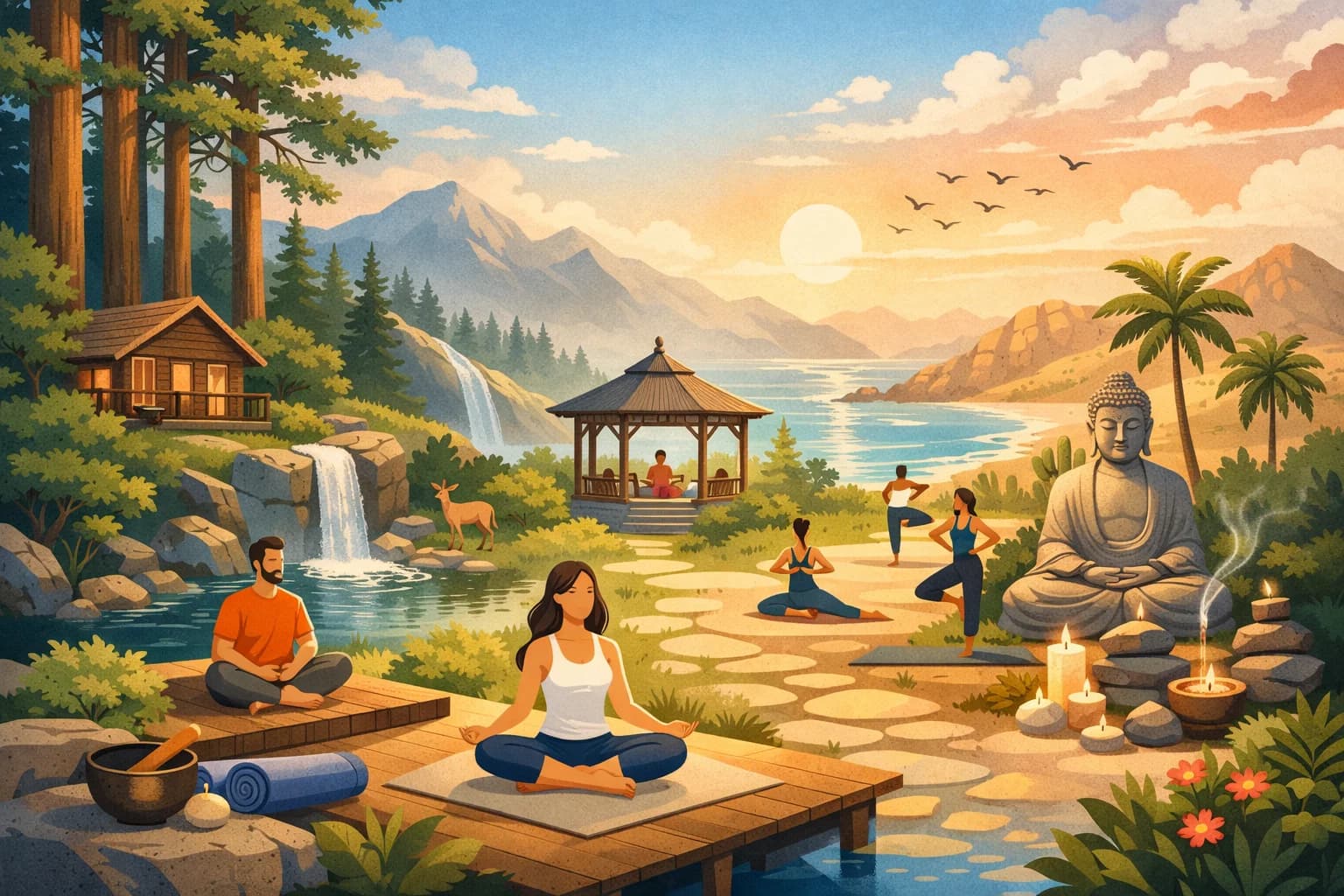
From redwood forests and coastal cliffs to desert expanses and mountain valleys, California includes landscapes that naturally promote reflection and presence. Many meditation retreats intentionally situate themselves in quiet, nature-rich settings where distractions are minimal.
2. Diverse Retreat Styles
Whether you want a silent Vipassana retreat, a Zen meditation experience, a guided mindfulness program, or something blended with yoga and breathwork, California has options that span traditions and teaching approaches.
3. Accessibility and Community
California’s large network of spiritual centers, meditation teachers, and wellness communities means you can find retreats year-round and connect with like-minded people. Retreats often draw folks from across the U.S. and internationally.
What Is a Meditation Retreat?
A meditation retreat is a structured period of time set aside from regular life to focus on meditative practices. It may include:
-
Daily meditation sessions
-
Silent periods
-
Mindfulness instruction
-
Group sharing
-
Breathwork or movement practices
-
Nature time and reflection
Retreat durations vary from a weekend to a month or longer and the format influences how deeply you can settle into your practice.
Decide What You Want From Your Retreat
Before you start browsing options, get clear on what you’re seeking. Your intention not only guides your choice but also informs the level of commitment that makes sense for you.
Are You Looking For…
-
Stress relief and rest? Gentle guided retreats with optional activities may be best.
-
Deep spiritual or contemplative practice? Silent retreats or structured mindfulness curriculums might be right.
-
Community and connection? Group meditations and sharing circles support shared experiences.
-
Instruction and learning? Retreats with experienced teachers can provide tools to bring home.
Answering these questions helps you narrow your choices quickly.
Key Factors to Consider When Choosing a Meditation Retreat
Here are the most important variables to evaluate:
1. Retreat Style and Teaching Approach
Meditation retreats differ in structure and philosophy:
-
Silent vs. Open Communication: Some retreats require silence for most or all of the session; others allow more interaction.
-
Guided vs. Self-led Practices: Beginners may benefit from retreats with lots of guidance, while seasoned meditators may prefer self-paced schedules.
-
Traditional vs. Blended Practices: Some retreats focus purely on meditation, while others combine meditation with yoga, breathwork, or movement.
Understanding the format helps avoid surprises.
2. Duration
Retreats can be:
-
Weekend escapes (2-3 days): Good for stress relief or introduction to meditation.
-
Weeklong retreats: Allow deeper engagement and habit formation.
-
Extended retreats (10+ days): Often include more rigorous schedules, sometimes silent periods.
Your schedule and goals will determine what duration fits best.
3. Experience Level
Retreats may be labeled for:
-
Beginners: With lots of instruction and support
-
Intermediate practitioners: Who have some meditation experience
-
Advanced practitioners: For deeper exploration and often more silent or rigorous schedules
Retreat descriptions usually indicate who they’re best suited for.
4. Location and Setting
Does the environment matter to you? Most people answer yes. Consider:
- Forest or mountains for quiet stillness
- Coastal settings for expansive energy
- Desert retreats for solitude and introspection
- Wellness centers with amenities for comfort
Each setting influences your experience differently.
5. Teacher Credentials and Approach
Look into the teachers or facilitators:
-
What lineage or tradition do they represent?
-
Do they have experience teaching retreats?
-
How do past participants describe their style?
Retreats with clear teacher information and testimonials give more confidence.
6. Group Size and Social Environment
Some people thrive in small, intimate retreats; others enjoy larger cohorts. If personal connection matters, choose retreats with limited attendance or focused group practices.
7. Cost and Value
Retreat pricing varies widely:
-
Budget or donation-based retreats
-
Mid-range programs with basic accommodation
-
Premium retreats with private rooms, gourmet meals, and luxury settings
Cost doesn’t always correlate directly with quality. Look at what’s included: meals, housing, instruction, and length.
How to Evaluate Meditation Retreat Listings
When comparing retreats online, use a checklist:
Retreat Checklist
-
Clear schedule and daily structure
-
Transparent pricing and payment options
-
Inclusion of meals and accommodation
-
Information about teachers
-
Location and travel guidance
-
Cancellation and refund policies
-
Any prerequisites or expectations
Getting this information up front prevents surprises.
Preparing for Your Meditation Retreat in California
Meditation retreats require more than packing a bag. Preparation helps you enter the experience fully:
1. Physical Preparation
-
Adjust your schedule a few days before the retreat
-
Sleep well
-
Practice brief daily meditation at home
2. Mental Preparation
-
Set a clear intention
-
Let go of distractions before you go
-
Prepare to be present, not entertained
Your retreat experience deepens when you arrive with intention.
What Happens During a Typical Retreat Day?
Though structure varies, many retreats have a rhythm:
- Early morning meditation
- Group instruction or silent practice
- Movement or yoga session
- Lunch and nature time
- Afternoon or evening meditations
- Reflection or group sharing
Knowing the rhythm helps you decide if a retreat suits your personality.
Common Meditation Retreat Challenges (and How to Handle Them)
Even the best retreats challenge participants at points. Knowing common difficulties ahead of time helps you stay grounded.
1. Difficulty with Silence
If silence feels uncomfortable, remind yourself it’s part of the practice not a punishment. Bring a journal if you need space for processing thoughts.
2. Physical Discomfort
Meditation can be physically demanding for some. Most retreats provide cushions or props; don’t hesitate to adjust posture.
3. Emotional Release
Meditation sometimes brings unresolved emotions. This can be a healing part of the process give yourself permission to sit with your experience.
Should You Attend a Retreat Alone or With a Group?
Both options have unique value:
1. Attending Alone
-
Encourages self-reflection
-
Offers individual pacing
-
Reduces social distraction
2. Attending With Friends or a Group
-
Build shared memories
-
Group travel logistics often smoother
-
Encouragement and support
If you’re planning a group retreat, organized coordination helps everyone show up prepared and excited.
Payment Planning for Meditation Retreat California Experiences
Many retreats require full payment upfront. That can be a barrier for people who need flexibility.
Why Flexible Payment Plans Help
-
Lower psychological barrier to commit
-
Helps people budget over time
-
Increases early bookings
-
Reduces last-minute cancellations
Offering structured payment plans builds trust and improves conversions.
How SquadTrip Simplifies Retreat Planning
SquadTrip helps organizers manage retreat logistics especially payment plans and group coordination without manual effort.
1. Automated Payment Schedules
Instead of chasing payments, set rules once and let the platform collect according to your timeline.
2. Centralized Group Info
Attendees can view:
-
What they’ve paid
-
What’s due next
-
Retreat schedule
-
Itinerary details
Organizers see the full group at a glance.
Reviews and Testimonials: What Past Participants Look For
When evaluating retreat options, people often ask:
-
“Did this retreat help me find clarity?”
-
“Was the teacher supportive?”
-
“Was the environment peaceful?”
-
“Did I feel welcomed and safe?”
Browse retreat websites and independent reviews to sense the experience beyond marketing copy.
Travel and Logistics Tips for California Retreats
1. Book Travel Early
Flights and rental cars during peak seasons fill fast.
2. Plan Around Weather
California weather varies dramatically by region check specifics for your retreat location.
3. Stay Flexible
Allow time before or after the retreat to transition back into daily life slowly.
Meditation Retreat California Options by Region
While not an exhaustive list, certain regions consistently attract retreat practitioners:
1. Northern California
Redwoods, mountain air, deep forests perfect for silent and mindfulness retreats.
2. Central Coast
Ocean views and gentle breezes support relaxation and presence.
3. Southern California
Sun, palm trees, and desert landscapes support variety from yoga-meditation blends to intensive silence.
Each region has unique qualities; match them with your intention.
Conclusion
Choosing the right meditation retreat California experience is about aligning your intentions, personality, schedule, and budget. Whether you want silence, community, learning, or just presence, there’s a retreat that fits your path.
For hosts and organizers, clear communication, easy payment plans, and streamlined logistics matter just as much as the retreat content. That’s where SquadTrip shines by helping you manage payments, coordinate group details, and reduce the admin load so you can focus on creating meaningful experiences.
Plan and manage your next meditation retreat in California with SquadTrip simplify payments, coordinate attendees, and deliver a transformative experience
FAQs
1. How do I know if a meditation retreat in California is right for me?
If you’re feeling mentally overloaded, disconnected, or stuck in routines, a meditation retreat can help. The key is choosing one that matches your experience level, comfort with silence, and the kind of outcome you want, whether that’s rest, clarity, or deeper practice.
2. What’s the difference between a silent retreat and a guided meditation retreat?
Silent retreats limit or completely remove talking so you can focus inward. Guided retreats include regular instruction, talks, and group check-ins. Beginners usually feel more comfortable with guided formats, while experienced practitioners may prefer silence.
3. Are meditation retreats in California suitable for beginners?
Yes. Many retreats are designed for beginners and don’t require prior meditation experience. These usually include clear guidance, flexible schedules, and an emphasis on learning rather than performance.
4. How long should my first meditation retreat be?
For most people, a 2–3 day retreat is a good starting point. It gives you enough time to experience the rhythm of retreat life without feeling overwhelming. Longer retreats are better once you know what to expect.
5. Do meditation retreats in California include yoga or other movement practices?
Some do, some don’t. Many retreats include light yoga, stretching, or walking meditation to support long sitting sessions. Always check the daily schedule so you know how physically active the retreat will be.