TL;DR
-
Healthy cooking retreats combine hands-on culinary education with wellness-focused living.
-
Immersive learning makes healthy eating habits easier to sustain long-term.
-
Guests learn practical skills like meal prep, label reading, and mindful eating.
-
Group accountability increases motivation and consistency.
-
Retreat settings remove daily distractions and unhealthy triggers.
-
Hosts can monetize retreats through tiered pricing and curated experiences.
-
SquadTrip simplifies payment collection, booking pages, and guest coordination for retreat organizers.
Introduction
If you’ve been searching for a real, sustainable way to improve your nutrition, healthy cooking retreats might be the reset you didn’t know you needed. Unlike short-term diets or online challenges, these immersive experiences combine hands-on learning, community, and practical skills that help you build better eating habits that actually stick.
Whether you’re planning to attend one or host your own wellness getaway, this guide breaks down how healthy cooking retreats work, why they’re effective, and how to organize one smoothly.
Planning a group wellness retreat? Try SquadTrip to manage bookings, collect payments, and keep your guests organized in one place.
Why Most Healthy Eating Plans Fail
Before we talk about solutions, it helps to understand the problem.
Most people don’t struggle with knowing what’s healthy. They struggle with:
-
Consistency
-
Planning
-
Cooking skills
-
Time management
-
Emotional eating
-
Lack of accountability
A diet plan downloaded from the internet doesn’t change behavior. It doesn’t teach you how to shop, cook, portion, or adapt recipes to your lifestyle. That’s where immersive learning changes everything.
Healthy cooking retreats focus on education and practice, not restriction.
What Are Healthy Cooking Retreats?
Definition and Core Experience
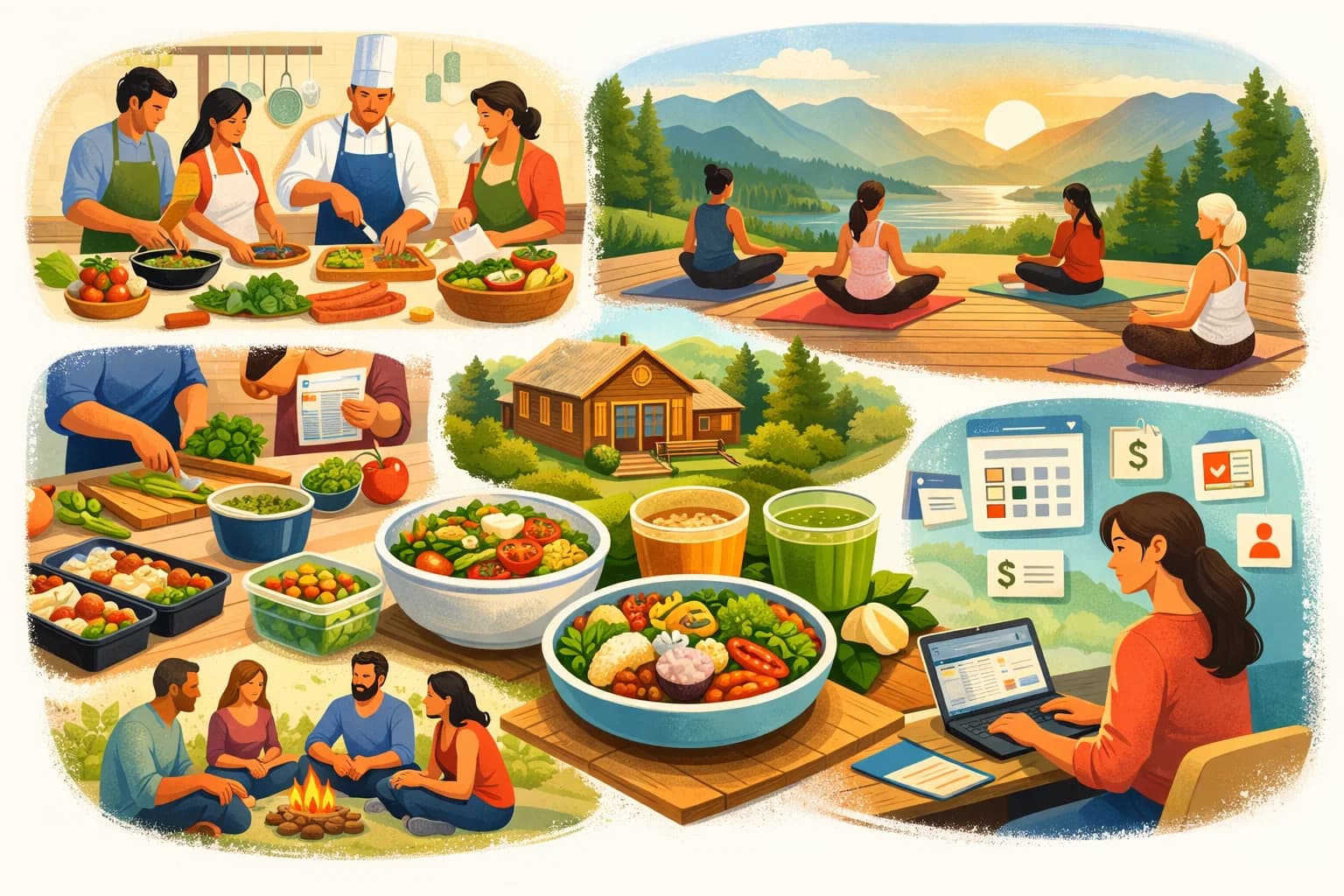
Healthy cooking retreats are multi-day experiences where participants learn how to prepare nutritious meals while also engaging in wellness activities such as yoga, mindfulness, nutrition workshops, and fitness sessions.
Instead of simply being told what to eat, attendees:
-
Cook meals themselves
-
Learn ingredient substitutions
-
Understand macro and micronutrients
-
Practice meal planning
-
Experience structured, balanced days
These retreats are typically hosted in calming environments like countryside villas, beach resorts, mountain lodges, or wellness centers.
And importantly, they’re community-driven.
Read More: Integrating Nutrition Into Your Retreat Meal Ideas
How Healthy Cooking Retreats Rewire Your Habits
1. Immersion Removes Everyday Distractions
When you’re at home, your environment works against you:
-
Processed snacks in the pantry
-
Stress from work
-
Social obligations
-
Time pressure
Retreats remove these friction points. For a few days, your environment supports healthy choices. You wake up to nutritious meals, attend workshops, and practice cooking without distractions.
That repetition creates momentum.
2. Hands-On Learning Builds Real Confidence
Reading a recipe is different from cooking it with guidance.
During healthy cooking retreats, participants:
-
Chop, sauté, steam, and bake
-
Learn knife skills
-
Understand cooking methods that preserve nutrients
-
Practice building balanced plates
Confidence is key. Once someone feels capable in the kitchen, they’re far more likely to continue cooking at home.
Skill-based learning beats willpower every time.
3. You Learn Practical Meal Prep Systems
One of the biggest barriers to healthy eating is planning.
Retreat instructors often teach:
-
Weekly meal mapping
-
Batch cooking
-
Smart grocery lists
-
Portion control strategies
-
Time-saving prep methods
Instead of random recipes, guests leave with repeatable systems.
That’s what makes habits sustainable.
4. Nutrition Education Becomes Understandable
Many people are confused about:
-
Carbs vs. complex carbs
-
Healthy fats
-
Protein intake
-
Food labels
-
Sugar alternatives
Healthy cooking retreats break down nutrition science into simple, actionable guidance. Guests learn how to read ingredient lists, understand portion sizes, and adjust meals based on their goals.
Education reduces confusion. Reduced confusion increases action.
The Power of Community and Accountability
Social Reinforcement Changes Behavior
Behavioral psychology shows that we adopt habits faster in group settings.
At a healthy cooking retreat, everyone:
-
Wakes up early
-
Eats balanced meals
-
Participates in cooking sessions
-
Shares experiences
That shared journey creates accountability without pressure.
When you see others making positive choices, you naturally follow.
Emotional Support Makes a Difference
Healthy eating is often tied to stress, emotional triggers, and lifestyle patterns.
Retreats usually include:
-
Group discussions
-
Reflection exercises
-
Mindful eating practices
-
Stress management sessions
This emotional layer helps participants understand why they eat the way they do.
Awareness leads to change.
Healthy Cooking Retreats vs Traditional Diet Programs
Traditional Diet Programs
Healthy Cooking Retreats
Focus on restriction
Focus on skill-building
Often online and isolated
Immersive and community-driven
Short-term motivation
Long-term habit formation
Little practical training
Hands-on cooking education
Generic meal plans
Personalized guidance
Retreats build capability, not dependency.
What You Actually Learn at Healthy Cooking Retreats
Cooking Skills
-
Knife techniques
-
Healthy oil usage
-
Low-sodium flavor building
-
Plant-based protein preparation
-
Whole-food recipe creation
Nutrition Frameworks
-
Balanced plate models
-
Anti-inflammatory foods
-
Gut-friendly ingredients
-
Blood sugar management basics
-
Hydration strategies
Lifestyle Integration
-
Morning routines
-
Grocery budgetingEating out strategies
-
Travel-friendly meal planning
The result? Participants leave with tools they can use in real life.
How Long Does It Take to Form a Habit?
Research suggests habit formation can take anywhere from 21 to 66 days, depending on the behavior.
A retreat jumpstarts this process by:
-
Creating consistent structure
-
Reinforcing daily repetition
-
Reducing competing distractions
Instead of starting from zero when you get home, you return with momentum.
That’s powerful.
Hosting Your Own Healthy Cooking Retreat
If you’re a wellness coach, nutritionist, chef, or fitness instructor, healthy cooking retreats are also a strong business opportunity.
Step 1: Define Your Retreat Angle
Examples:
-
Plant-based cooking retreat
-
Anti-inflammatory diet immersion
-
Mediterranean cooking experience
-
Gut health intensive
-
Weight management reset
Specific positioning attracts the right audience.
Step 2: Structure Your Daily Schedule
A typical retreat day might look like:
Morning
-
Light yoga or movement
-
Nutrition workshop
-
Breakfast prep and cooking session
Afternoon
-
Hands-on cooking class
-
Ingredient deep dive
-
Group lunch
Evening
-
Mindful eating session
-
Group reflection
-
Optional wellness activity
Structure creates rhythm.
Step 3: Price Your Retreat Strategically
Consider:
-
Accommodation cost
-
Ingredient sourcing
-
Instructor fees
-
Venue rental
-
Marketing costs
-
Profit margin
Tiered pricing works well:
-
Shared room
-
Private room
-
VIP experience
Collecting deposits early helps manage cash flow.
Managing Payments and Guests the Smart Way
One of the biggest challenges retreat hosts face is:
-
Tracking payments
-
Handling installment plans
-
Coordinating travel details
-
Sending updates
Spreadsheets quickly become overwhelming.
SquadTrip allows you to:
-
Accept secure payments
-
Track who has paid
-
Communicate with guests easily
Instead of administrative stress, you focus on delivering a great experience.
If you’re organizing healthy cooking retreats, having the right system matters.
Read More:Travel Payment Solutions : 10 Best Options for Group Trips and Retreats
Who Benefits Most from Healthy Cooking Retreats?
1. Busy Professionals
They often struggle with meal prep and time management.
2. People Recovering from Diet Burnout
Those tired of extreme dieting benefit from skill-based learning.
3. Wellness Enthusiasts
Yoga practitioners, fitness lovers, and health-conscious travelers.
4. Aspiring Home Chefs
People who want confidence in healthy cooking.
Common Myths About Healthy Cooking Retreats
“They’re Only for Advanced Cooks”
Not true. Most retreats cater to beginners and intermediates.
“Healthy Food Is Bland”
Participants often discover new flavors and cooking techniques.
“You’ll Starve or Feel Restricted”
Balanced retreats focus on nourishment, not deprivation.
“It’s Too Expensive”
When compared to years of failed programs, retreats can be cost-effective.
How to Choose the Right Healthy Cooking Retreat
Ask these questions:
-
What dietary philosophy do they follow?
-
Are sessions hands-on or demonstration-based?
-
What’s included in the price?
-
Are ingredients locally sourced?
-
How many participants per session?
Look for small-group formats for better learning.
Integrating Retreat Lessons Back Home
After attending healthy cooking retreats, success depends on follow-through.
Practical tips:
-
Plan your first week of meals before returning
-
Grocery shop immediately
-
Repeat 3–4 recipes learned
-
Set up a Sunday meal prep routine
-
Stay connected with fellow participants
Consistency beats intensity.
The Long-Term Impact of Healthy Cooking Retreats
Participants often report:
-
Increased cooking confidence
-
Reduced reliance on processed foods
-
Better energy levels
-
More mindful eating
-
Improved relationship with food
These aren’t quick fixes. They’re lifestyle upgrades.
Final Thoughts: Why Healthy Cooking Retreats Work
Healthy cooking retreats work because they combine immersion, education, repetition, and community.
They teach skills, not shortcuts.
They build confidence, not dependency.
They create systems, not restrictions.
And whether you’re attending one to reset your habits or hosting one to grow your wellness brand, the right structure makes all the difference.
If you’re planning to organize healthy cooking retreats, simplify your logistics from day one.
Use SquadTrip to create your retreat booking page, collect payments, and keep everything organized in one place.
FAQs: Healthy Cooking Retreats and Sustainable Eating Habits
1. What are healthy cooking retreats?
Healthy cooking retreats are immersive, multi-day experiences where participants learn how to prepare nutritious meals while engaging in wellness activities like yoga, mindfulness, and nutrition workshops. The goal is to build practical cooking skills and sustainable eating habits, not follow restrictive diets.
2. How do healthy cooking retreats help build better eating habits that actually stick?
They focus on hands-on learning, structured routines, and repetition. Instead of just giving meal plans, retreats teach meal prep systems, label reading, portion control, and balanced plate building. That practical experience makes habits easier to maintain long-term.
3. Are healthy cooking retreats suitable for beginners?
Yes. Most retreats are designed for beginners and intermediate cooks. Instructors guide participants step by step through techniques, recipes, and nutrition basics.
4. What skills will I learn at a healthy cooking retreat?
You can expect to learn:
-
Knife and food prep techniques
-
Healthy cooking methods
-
Ingredient substitutions
-
Balanced meal building
-
Weekly meal planning systems
-
Grocery shopping strategies
5. How long do the effects of a healthy cooking retreat last?
While habit formation varies from person to person, the immersive structure jumpstarts consistency. Many participants maintain new routines because they leave with repeatable systems rather than temporary motivation.