
TL;DR:
-
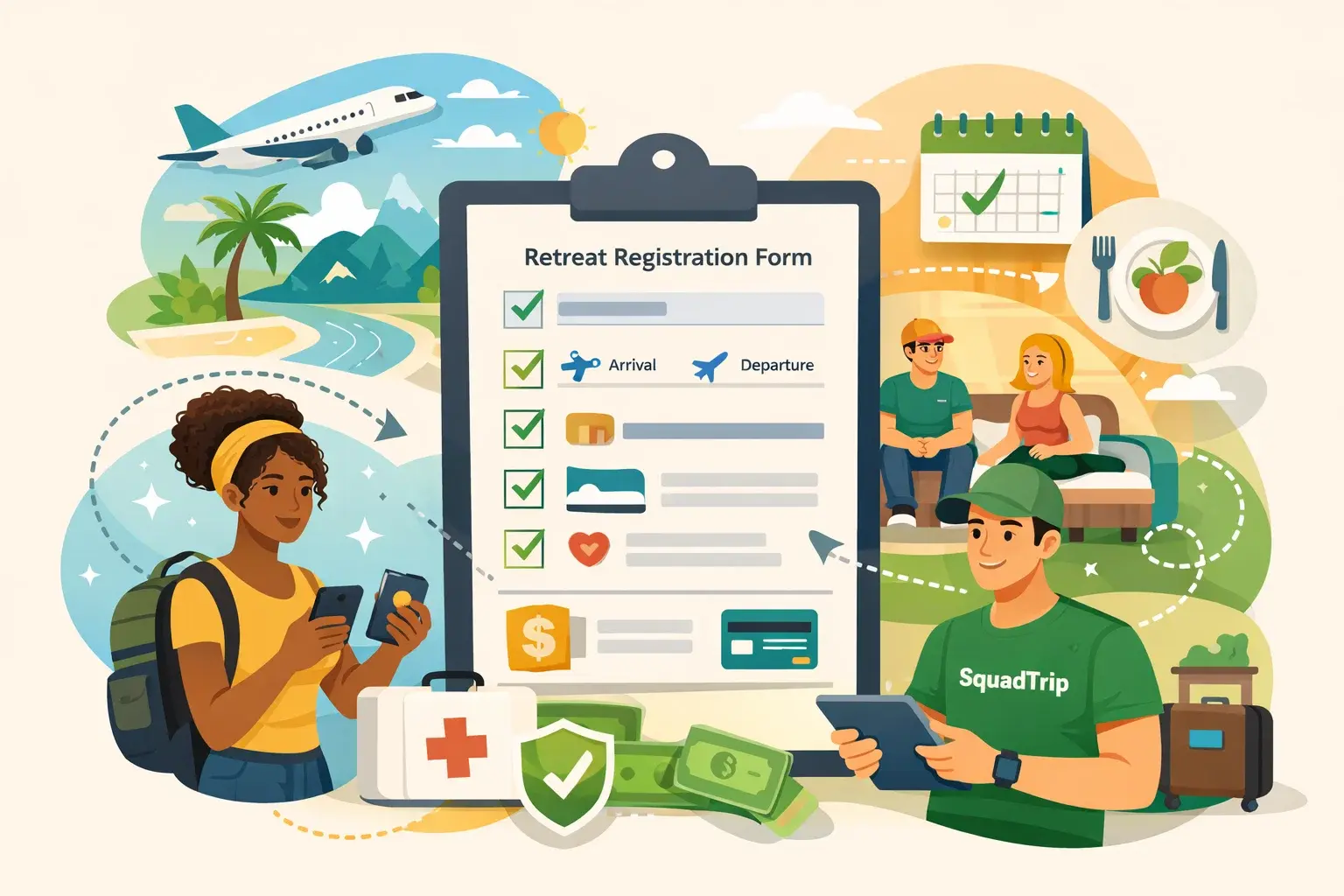
Organizing group travel starts long before anyone books a flight—it begins with a well-designed retreat registration form.
-
The right questions help you prevent logistical issues, payment confusion, and last-minute emergencies.
-
A strong registration form balances collecting essential details without overwhelming attendees.
-
Poor registration planning leads to avoidable chaos during travel, accommodations, and scheduling.
-
SquadTrip streamlines retreat registration, group travel details, and payments in one centralized platform so nothing slips through the cracks.
Introduction
Organizing group travel is one of the most underestimated parts of hosting a retreat. Many hosts focus on venues, programming, and marketing but overlook the registration form as a strategic tool.
In reality, your retreat registration form is the foundation of your entire group travel experience. It’s where you:
-
Collect critical attendee information
-
Set expectations
-
Prevent misunderstandings
-
Reduce back-and-forth communication
-
Avoid last-minute logistical disasters
A poorly designed registration form creates chaos later: wrong room assignments, dietary issues, missed flights, payment problems, and frustrated attendees.
This article breaks down exactly what to include in a retreat registration form and what to avoid so organizing group travel becomes smooth, predictable, and stress-free. We’ll also show how SquadTrip helps you centralize this process so you’re not juggling forms, spreadsheets, emails, and payment tools.
Planning a retreat or group trip? Organize everything from the start with SquadTrip.
Why Registration Forms Matter When Organizing Group Travel
A retreat registration form isn’t just a form it’s a planning system.
When organizing group travel, you’re responsible for:
-
Multiple travelers
-
Shared accommodations
-
Group schedules
-
Financial commitments
-
Safety and emergency preparedness
Without structured data collection, you’ll spend weeks reacting instead of leading.
1. What a Strong Registration Form Does
-
Collects consistent, accurate data
-
Reduces assumptions
-
Automates decision-making
-
Improves attendee confidence
-
Saves time for hosts
2. What a Weak Registration Form Causes
-
Endless follow-up emails
-
Manual data entry
-
Conflicting information
-
Increased stress during travel
-
Poor attendee experience
Core Principle: Collect What You’ll Actually Use
Before diving into specific fields, remember this rule:
Only collect information you will actively use.
When organizing group travel, too many questions can overwhelm attendees while too few create blind spots.
The goal is clarity, not complexity.
Essential Sections to Include in a Retreat Registration Form
Let’s break this down step by step.
1. Basic Attendee Information (Non-Negotiable)
This is the foundation of organizing group travel.
What to Include
-
Full legal name (as it appears on ID/passport)
-
Preferred name (optional)
-
Email address
-
Phone number
-
Country of residence
Why It Matters
-
Legal names are required for bookings and manifests
-
Preferred names improve personalization
-
Phone numbers are critical for day-of travel communication
What to Avoid
-
Only collecting first names
-
Relying on email alone for urgent communication
SquadTrip Advantage
SquadTrip automatically stores attendee details in one centralized dashboard no copying between tools.
2. Travel Details (Critical for Organizing Group Travel)
Travel coordination is often where chaos begins.
What to Include
Depending on your retreat model, consider:
-
Arrival date and time
-
Departure date and time
-
Airport or train station
-
Whether they need group transportation
-
Whether they plan to arrive early or stay late
Why This Matters
When organizing group travel, knowing when and how people arrive helps you:
-
Schedule group transfers
-
Plan welcome sessions
-
Avoid stranded attendees
-
Coordinate shared transportation
What to Avoid
-
Asking for flight numbers too early (they often change)
-
Leaving travel coordination vague
Best Practice
Collect arrival windows first, then confirm details closer to the event.
SquadTrip Advantage
SquadTrip centralizes travel details and updates so changes don’t get lost in email threads.
3. Accommodation Preferences and Room Assignments
Shared accommodations are common in retreats and a major source of stress if mishandled.
What to Include
-
Room type preference (shared/private)
-
Bed preference (if applicable)
-
Willingness to share with strangers
-
Roommate requests (optional)
-
Accessibility needs
Why This Matters
Clear accommodation data helps you:
-
Assign rooms fairly
-
Avoid awkward last-minute changes
-
Respect personal boundaries
-
Maximize space and budget
What to Avoid
-
Assuming people are comfortable sharing
-
Ignoring accessibility requirements
-
Handling room assignments manually at the last minute
SquadTrip Advantage
SquadTrip helps hosts manage accommodation logistics clearly and professionally.
4. Dietary Restrictions and Health Considerations
This section protects both attendee experience and safety.
What to Include
-
Dietary restrictions (allergies, vegan, halal, etc.)
-
Food preferences vs. medical needs (separate these)
-
Medical conditions relevant to travel or activities
-
Mobility limitations
-
Emergency contact information
Why This Matters
When organizing group travel, you are responsible for:
-
Group meals
-
Activity safety
-
Emergency preparedness
Missing this information can lead to serious issues.
What to Avoid
-
Open-ended questions that lead to unclear responses
-
Ignoring “minor” dietary needs that add up at scale
SquadTrip Advantage
Centralized access to health and dietary info ensures nothing gets overlooked.
5. Payment Status and Financial Clarity
Payment confusion is one of the biggest sources of stress in organizing group travel.
What to Include
-
Confirmation of payment plan selection
-
Agreement to pricing and refund policy
-
Acknowledgment of what’s included vs. not included
Why This Matters
Clear financial data helps you:
-
Forecast cash flow
-
Pay vendors on time
-
Avoid disputes
-
Reduce refund conflicts
What to Avoid
-
Collecting payments separately from registration
-
Unclear refund or cancellation terms
-
Manual payment tracking
SquadTrip Advantage
SquadTrip integrates registration and payments so everyone knows where they stand.
6. Experience, Intentions, and Expectations
This section enhances the quality of the retreat not just logistics.
What to Include
-
What they hope to gain from the retreat
-
Previous retreat experience (optional)
-
Comfort level with group activities
-
Any personal goals or concerns
Why This Matters
When organizing group travel, understanding attendee intentions helps you:
-
Tailor programming
-
Manage group dynamics
-
Create better experiences
-
Spot potential issues early
What to Avoid
-
Overly personal questions
-
Using this data without discretion
SquadTrip Advantage
With better attendee insights, hosts can create more intentional, aligned group experiences.
7. Legal Agreements and Acknowledgements
Protect yourself and your attendees.
What to Include
-
Liability waiver acknowledgment
-
Code of conduct agreement
-
Travel responsibility acknowledgment
-
Media consent (photos/videos)
Why This Matters
When organizing group travel, legal clarity:
-
Sets boundaries
-
Reduces risk
-
Builds professionalism
What to Avoid
-
Hiding agreements in long documents
-
Skipping legal acknowledgments entirely
Best Practice
Use clear, plain-language summaries with acknowledgment checkboxes.
What to Avoid Including in a Retreat Registration Form
Just as important as what you include is what you leave out.
1. Questions You Won’t Use
If you won’t act on the information, don’t collect it.
2. Excessively Long Forms
Long forms increase abandonment and frustration.
3. Vague or Open-Ended Questions
They create unclear data that’s hard to use.
4. Redundant Information
Don’t ask the same thing in multiple ways.
5. Collecting Info Across Multiple Tools
This defeats the purpose of organizing group travel.
How SquadTrip Simplifies Organizing Group Travel From Registration to Return
SquadTrip isn’t just a form builder it’s a group travel operating system.
With SquadTrip, You Can:
-
Collect registration details
-
Manage payments
-
Coordinate travel
-
Share itineraries
-
Communicate updates
-
Scale future trips
All in one place.
Why This Matters
When organizing group travel, fewer tools mean:
-
Less confusion
-
Fewer errors
-
Better attendee experience
-
Less stress for hosts
A Sample Retreat Registration Workflow (Simplified)
-
Attendee signs up through SquadTrip
-
Registration + payment collected together
-
Travel and accommodation info stored centrally
-
Updates shared in one place
-
Host focuses on experience not admin
That’s what smooth organizing group travel looks like.
Conclusion
Organizing group travel doesn’t have to be chaotic but it does require intention. A thoughtfully designed retreat registration form is one of the most powerful tools you have as a host.
When you collect the right information at the right time, you:
-
Reduce stress
-
Prevent mistakes
-
Improve attendee trust
-
Deliver smoother, more professional retreats
SquadTrip brings everything together registration, payments, logistics, and communication so you’re not patching together systems that weren’t built for group travel.
If you want to avoid chaos later, start organizing group travel the right way today.
Ready to simplify retreat planning and group travel? Try SquadTrip now.
FAQs
1. What’s the biggest mistake people make with retreat registration forms?
Trying to collect everything at once or worse, collecting the wrong things. Overly long or vague forms overwhelm attendees, while missing critical details (like arrival times or dietary needs) creates chaos later during travel and accommodations.
2. How detailed should a retreat registration form actually be?
Detailed enough to run the trip smoothly, but not so long that people abandon it. A good rule: only ask for information you’ll actively use to make decisions about travel, rooms, meals, safety, or payments.
3. Should I collect flight details right when people register?
Not exact flight numbers. Flights change frequently. It’s better to collect arrival and departure windows first, then confirm specific details closer to the retreat date.
4. Do I really need to ask about dietary restrictions and health info?
Yes especially when organizing group travel. Even “minor” dietary needs add up at scale, and missing medical or mobility considerations can create serious safety or liability issues during the retreat.
5. How do I avoid room assignment drama with shared accommodations?
Ask clearly and early. Include questions about willingness to share, room type preferences, and accessibility needs. Never assume people are comfortable sharing rooms even at retreats.