
TL;DR
-
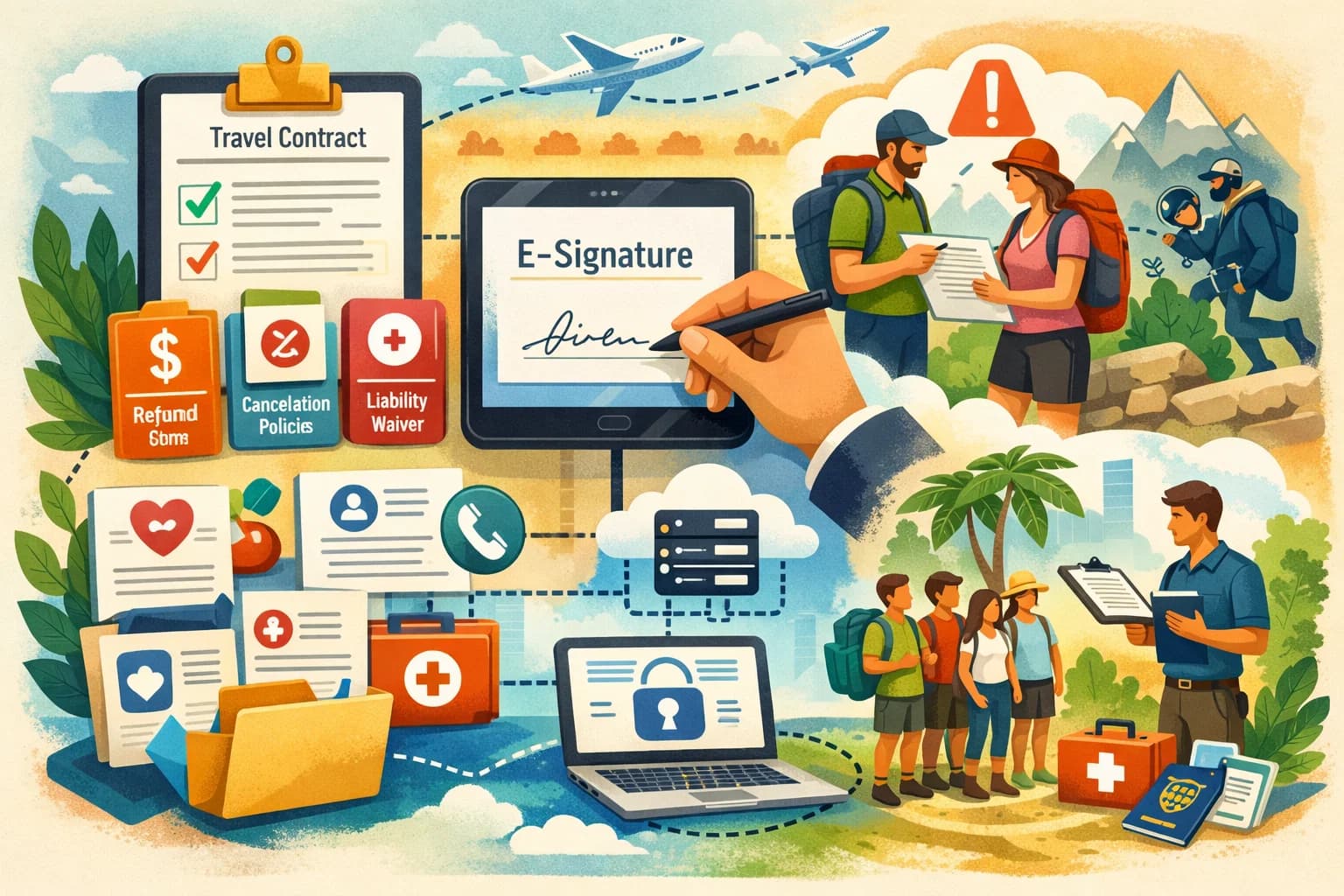
Travel agency contracts define payment terms, cancellation policies, and responsibilities.
-
Waivers reduce liability related to injuries, delays, and third-party services.
-
Clear refund and cancellation clauses prevent chargeback issues.
-
Medical disclosure and emergency contact sections are essential for group trips.
-
Digital signature workflows make contracts easy to execute and track.
-
Centralized document storage reduces admin stress.
-
SquadTrip allows you to collect traveler agreements and trip data in one organized system.
Introduction
If you run group trips, retreats, or tours, Travel Agency Contract Templates and Waivers are not optional. They protect your business, set expectations with travelers, and reduce disputes before they happen. Whether you organize influencer trips, student travel, wellness retreats, or multi-day international tours, having structured, legally sound agreements in place is one of the smartest operational moves you can make.
Without contracts and waivers, you are relying on emails, DMs, and assumptions. That is a risk no serious travel organizer should take.
With SquadTrip, you can automate installment schedules and payment reminders so travelers always know what is due and when.
Why Travel Agencies Need Contracts and Waivers
Many organizers start small. A few clients. A shared spreadsheet. Payments collected manually. That works until something goes wrong.
Here is what contracts help you avoid:
-
Disputes over refunds
-
Chargebacks
-
Confusion about inclusions
-
Rooming disagreements
-
Liability from accidents
-
Medical non-disclosure issues
-
Miscommunication about itinerary changes
A proper travel contract creates clarity. A waiver reduces legal exposure. Together, they protect both you and your travelers.
If you are moving beyond spreadsheets and managing multiple trips per year, contracts should be part of your booking workflow not an afterthought.
What Should a Travel Agency Contract Include?
A travel agency contract outlines the business terms between the organizer and the traveler. Below are the core sections every template should include.
1. Trip Details and Scope of Services
Clearly define:
-
Destination
-
Dates
-
Inclusions
-
Exclusions
-
Accommodation type
-
Transportation details
-
Activities included
Avoid vague language like “luxury stay” or “private transport.” Be specific.
Example:
-
4-star hotel, double occupancy
-
Round-trip airport transfers
-
3 guided excursions
Specific language prevents refund disputes later.
2. Payment Terms and Installment Schedule
This section should include:
-
Total trip cost
-
Deposit amount
-
Payment deadlines
-
Accepted payment methods
-
Late payment penalties
If you allow installment plans, define what happens if someone misses a payment.
Clear payment structures reduce back-and-forth emails and protect your cash flow.
3. Cancellation and Refund Policy
This is one of the most important sections in Travel Agency Contract Templates and Waivers.
Include:
-
Refund timeline (e.g., 90 days, 60 days, 30 days before departure)
-
Non-refundable deposits
-
Partial refund scenarios
-
Trip cancellation by organizer terms
-
Force majeure clause
Avoid overly complicated language. Keep it direct and structured.
For example:
-
90+ days: Full refund minus deposit
-
60–89 days: 50% refund
-
Under 60 days: No refund
Clarity here prevents emotional disputes later.
4. Liability Disclaimer
A waiver section limits your liability for:
-
Airline delays
-
Weather disruptions
-
Third-party vendors
-
Injuries during activities
-
Lost luggage
You cannot eliminate all risk, but you can define responsibility boundaries.
Include language that clarifies you act as an intermediary between travelers and service providers.
5. Assumption of Risk
If your trips involve:
-
Hiking
-
Adventure sports
-
International travel
-
Remote destinations
-
Water activities
You need a clear assumption-of-risk clause.
This confirms that participants understand and accept the inherent risks involved in travel and activities.
6. Medical Disclosure and Emergency Contacts
For group trips, this section is critical.
Collect:
-
Dietary restrictions
-
Allergies
-
Medical conditions
-
Emergency contact information
-
Required medications
You cannot plan properly without this data.
7. Code of Conduct
Define expected behavior:
-
Respectful conduct
-
Alcohol policies
-
Drug policies
-
Harassment rules
-
Grounds for removal
This protects the group experience.
Include a clause stating that violation of conduct rules may result in removal without refund.
8. Image and Media Release
If you take photos or videos during the trip:
Include a media release clause allowing you to use images for marketing purposes.
Offer an opt-out option if needed.
9. Governing Law and Jurisdiction
State which country or state laws apply and where disputes will be handled.
This is especially important for international trips.
Read More : 5 Host Travel Agencies: Pros & Picks for 2025
What Is a Travel Waiver?
A waiver is a legal document where travelers agree not to hold you liable for certain risks.
While contracts define business terms, waivers focus on liability protection.
They are often combined into a single document but serve different legal functions.
Types of Travel Agency Waivers You May Need
Not all trips require the same waiver. Here are common types.
General Liability Waiver
Covers:
-
Minor injuries
-
Property damage
-
Accidents during planned activities
Standard for most group trips.
Adventure Activity Waiver
Required for:
-
Scuba diving
-
Trekking
-
Mountain climbing
-
Skiing
-
Safari tours
Higher-risk activities require more detailed waivers.
International Travel Waiver
Addresses:
-
Visa issues
-
Political instability
-
Health risks
-
Travel advisories
Especially important for multi-country tours.
COVID or Health-Related Waiver
Some agencies still include clauses addressing communicable disease risks.
This clarifies that exposure risks cannot be fully controlled.
How to Structure Travel Agency Contract Templates and Waivers
When creating templates, follow these principles:
Keep Language Clear
Avoid overly legal jargon. Travelers should understand what they are signing.
Use Headings
Break documents into sections with clear titles:
-
Payments
-
Cancellations
-
Liability
-
Conduct
This improves readability and enforceability.
Avoid Contradictions
Ensure your:
-
Website
-
Booking page
-
Marketing materials
-
Contracts
All reflect the same policies.
Inconsistent policies create legal exposure.
Digital vs Paper Contracts
Paper contracts are outdated for modern group travel.
Digital agreements offer:
-
Faster execution
-
Easier tracking
-
Secure storage
-
Automatic timestamping
-
Reduced admin work
If you manage multiple trips per year, digital is the only scalable solution.
How to Collect Signed Contracts the Smart Way
Instead of emailing attachments manually:
-
Embed agreement checkboxes in booking forms
-
Require acknowledgment before payment
-
Store signed agreements per traveler
-
Link agreements to payment history
This creates a clear audit trail.
When disputes arise, documentation matters.
Common Mistakes Travel Agencies Make
Here are the biggest issues we see:
1. Copy-Pasting Random Templates
Templates from random websites may not apply to your business model or jurisdiction.
2. Vague Refund Policies
Ambiguity invites disputes.
3. No Assumption of Risk Clause
Especially dangerous for adventure travel.
4. Not Updating Contracts Annually
Travel regulations and risk factors change.
5. Storing Contracts in Multiple Places
If documents are scattered across inboxes, you are exposed.
Centralization matters.
Read More: 5 Common Group Trip Planning Mistakes for Hosts to Avoid
How Contracts Fit Into Your Booking Workflow
Contracts should not feel separate from your booking experience.
The ideal workflow:
-
Traveler selects trip
-
Reviews inclusions
-
Fills traveler information
-
Accepts contract and waiver
-
Pays deposit
-
Receives automated confirmation
No manual steps.
No follow-up emails asking for missing documents.
Sample Travel Agency Contract Template Structure
Below is a simplified outline you can adapt:
1. Introduction and Parties Involved
2. Trip Details
3. Payment Terms
4. Cancellation and Refund Policy
5. Changes to Itinerary
6. Liability Disclaimer
7. Assumption of Risk
8. Medical and Emergency Disclosure
9. Code of Conduct
10. Media Release
11. Governing Law
12. Signature Section
You should always have a qualified legal professional review your final document.
How Contracts Protect Your Revenue
Travel businesses operate on tight margins.
Late cancellations, chargebacks, and no-shows can damage profitability.
Clear contracts:
-
Reduce refund disputes
-
Support chargeback defense
-
Improve payment compliance
-
Increase traveler trust
When expectations are clear, friction decreases.
Travel Agency Contract Templates and Waivers for Different Trip Types
Different trip formats require slight adjustments.
Corporate Retreats
Include:
-
Employer responsibility clauses
-
Rooming coordination
-
Confidentiality clauses
Student Travel
Add:
-
Parental consent
-
Guardian signatures
-
Supervision terms
Influencer Trips
Include:
-
Content deliverables
-
Brand usage rights
-
Cancellation clauses tied to sponsorship
Wellness Retreats
Add:
-
Health disclosure requirements
-
Fitness participation waivers
-
Medical responsibility disclaimers
Each trip format has unique risk factors.
Secure Storage of Contracts and Waivers
Because contracts include:
-
Personal data
-
Medical information
-
Payment details
Security is non-negotiable.
Best practices:
-
Use encrypted platforms
-
Limit internal access
-
Avoid downloading files locally
-
Maintain organized trip-level documentation
Centralized systems reduce risk and improve compliance.
When Should You Update Your Templates?
Review your contracts:
-
Annually
-
After legal changes
-
After a dispute
-
When expanding internationally
-
When adding new activities
Contracts should evolve with your business.
Building Trust Through Transparency
Clear contracts do more than protect you.
They show professionalism.
When travelers see:
-
Structured policies
-
Transparent refund timelines
-
Clear expectations
They trust your organization more.
That trust increases booking confidence.
Final Thoughts
Travel Agency Contract Templates and Waivers are not just legal paperwork. They are operational tools that protect revenue, reduce conflict, and create a smoother experience for your travelers.
If you are still managing agreements through scattered PDFs and email threads, you are increasing risk and admin workload.
Modern group travel requires:
-
Structured contracts
-
Digital waivers
-
Secure data collection
-
Automated payment workflows
-
Centralized documentation
Ready to simplify contracts, payments, and traveler management in one place? Try SquadTrip and streamline your next group trip from booking to departure.
Frequently Asked Questions
What is included in travel agency contract templates?
Travel agency contract templates typically include trip details, payment terms, cancellation and refund policies, liability disclaimers, assumption of risk clauses, medical disclosures, code of conduct, and governing law sections. Well-structured contracts clearly define what is included in the trip and what is not, helping prevent disputes later.
Are travel waivers legally enforceable?
In most jurisdictions, travel waivers are legally enforceable if they are clearly written, voluntarily signed, and not misleading. They must not attempt to waive liability for gross negligence or illegal conduct. It’s always recommended to have your waiver reviewed by a legal professional.
What is the difference between a travel contract and a travel waiver?
A travel contract defines the business agreement between the agency and the traveler, including payments, cancellations, and services provided. A waiver focuses specifically on liability protection and confirms that the traveler understands and accepts certain risks associated with the trip.
Do small travel agencies need contracts and waivers?
Yes. Even small or new agencies need structured travel agency contract templates and waivers. One dispute, injury, or chargeback can significantly impact a small business. Contracts protect both your revenue and your reputation.
Can I use a free travel contract template online?
You can start with a template, but free templates often lack jurisdiction-specific language or risk coverage for your particular trip type. It’s best to customize templates to your business and have them reviewed by a legal professional.