
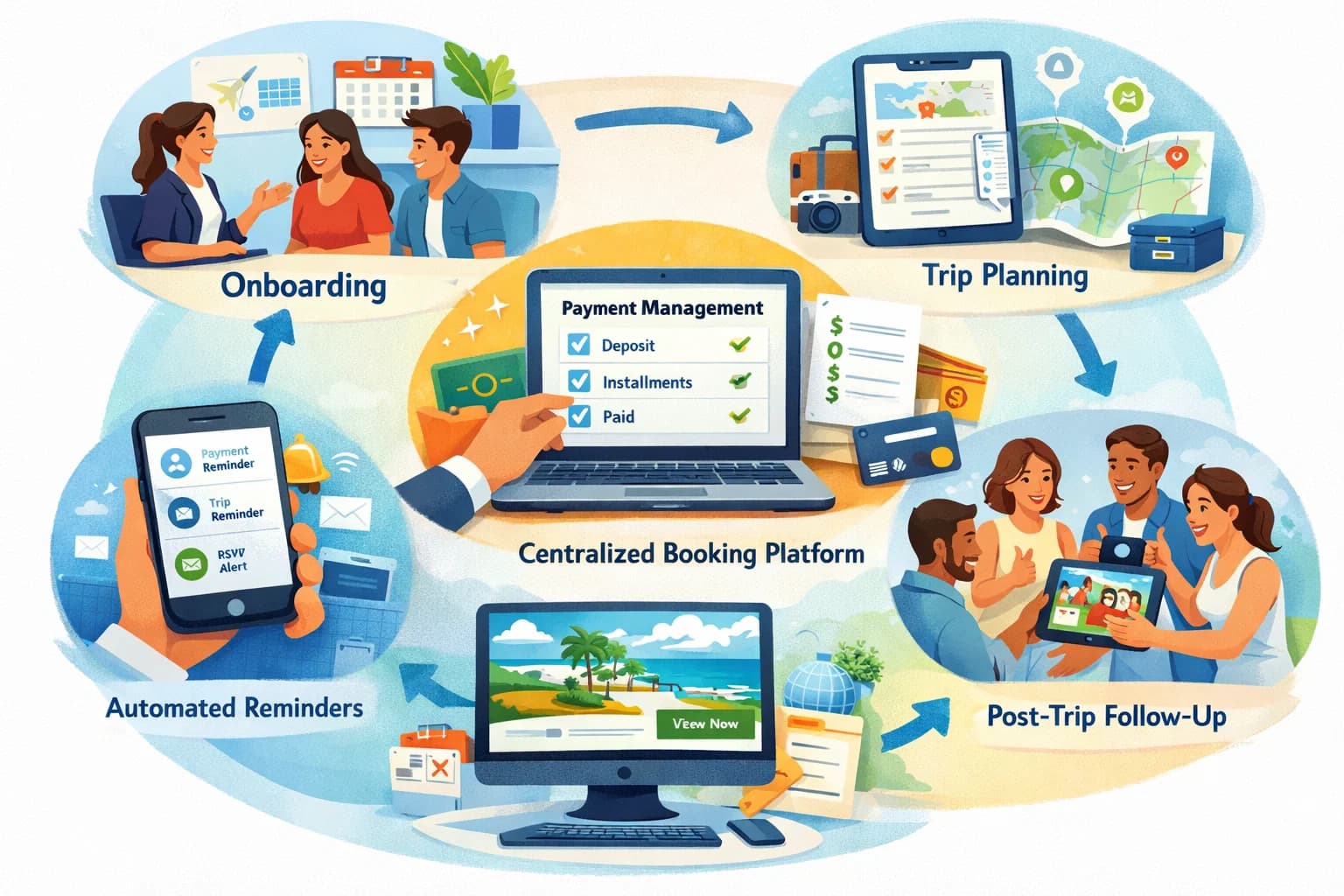
TL;DR
-
A clear onboarding process sets expectations and builds client trust
-
Organized trip planning systems prevent last-minute chaos
-
Transparent pricing and structured payment plans reduce friction
-
Automated reminders eliminate awkward follow-ups
-
Centralized booking pages improve professionalism
-
Clear communication timelines reduce client anxiety
-
Post-trip follow-up increases referrals and repeat bookings
-
A platform like SquadTrip simplifies payments, RSVPs, and client coordination
Introduction
Planning flawless trips starts with having the Ultimate Travel Agency checklist in place. Whether you’re running a boutique agency, planning group tours, or organizing destination experiences, structure is what separates stressed-out coordination from smooth, repeatable client success.
In today’s competitive travel industry, clients expect transparency, organization, clear communication, and simple payment processes. Without a strong system, even experienced agencies can struggle with scattered bookings, missed payments, and last-minute confusion.
This guide walks you through the complete Ultimate Travel Agency checklist to help you deliver consistent, profitable, and stress-free client experiences.
If you’re managing group trips, tours, or retreats, you can simplify bookings and payments with SquadTrip.
Start organizing smarter. Create your next group trip with SquadTrip.
Why Every Agency Needs the Ultimate Travel Agency Checklist
Running a travel agency involves far more than booking flights and hotels. You are managing:
-
Client expectations
-
Vendor coordination
-
Payment schedules
-
Contracts
-
Trip communication
-
Cancellations and changes
-
Group logistics
Without a defined checklist, things slip through the cracks.
The Ultimate Travel Agency checklist ensures:
-
Every client receives the same high-quality experience
-
Nothing is forgotten during planning
-
Payments are tracked clearly
-
Communication is structured
-
Your agency looks professional and reliable
Consistency builds trust. Trust builds repeat clients.
Phase 1: Client Onboarding and Discovery
1. Initial Consultation Process
Before sending proposals or pricing, you need clarity.
Create a discovery framework that includes:
-
Trip purpose (vacation, retreat, wedding, corporate, etc.)
-
Budget range
-
Group size
-
Destination preferences
-
Travel dates
-
Accommodation expectations
-
Special requirements (dietary, accessibility, insurance)
Document everything.
This reduces misunderstandings later.
2. Proposal and Itinerary Draft
A professional proposal should include:
-
Destination overview
-
Sample itinerary breakdown (day-by-day)
-
Estimated pricing per person
-
Payment structure
-
Cancellation terms
-
Deadlines
Clear documentation protects both you and the client.
3. Clear Pricing Transparency
Clients lose trust when pricing feels vague.
Break down:
-
Accommodation costs
-
Transportation
-
Activities
-
Agency fees
-
Taxes
-
Optional add-ons
When clients see exactly what they’re paying for, resistance decreases.
For group travel, use a dedicated booking page so pricing and payment plans are clear in one place. SquadTrip helps agencies create structured payment plans without spreadsheets.
Read More: 5 Best Software for Retreat Planning
Phase 2: Booking and Payment Management
Ultimate Travel Agency Payment System Checklist
Payment chaos is one of the biggest operational headaches for agencies.
Instead of chasing clients manually, build structure.
1. Deposit Collection
-
Set a non-refundable deposit
-
Define deposit deadline
-
Clarify what the deposit secures
Avoid holding space without commitment.
2. Installment Plans
Offer structured payment plans such as:
-
3-installment plan
-
Monthly payments
-
Milestone-based deadlines
Clear payment schedules prevent last-minute cancellations due to large lump sums.
If you’re running group tours or retreats, automate this process. SquadTrip allows agencies to set installment plans, track balances, and send automatic reminders.
3. Automated Reminders
Never manually message 20+ travelers about due payments.
Automated reminders:
-
Reduce awkward conversations
-
Increase on-time payments
-
Protect cash flow
Automation saves hours each week.
4. Centralized Payment Tracking
Stop using spreadsheets for tracking balances.
Instead, use:
-
A client portal
-
Central booking dashboard
-
Automated status updates
Clients should be able to see:
-
What they’ve paid
-
What’s due
-
Upcoming deadlines
This builds professionalism.
Want to eliminate payment confusion for your next group trip? Use SquadTrip to manage bookings and payments in one place.
Phase 3: Vendor Coordination Checklist
Agencies succeed when vendor management is smooth.
1. Confirm Contracts in Writing
Always secure:
-
Hotel agreements
-
Tour operator contracts
-
Transportation confirmations
-
Activity bookings
Avoid verbal confirmations.
2. Payment Timelines with Vendors
Track:
-
Vendor deposit deadlines
-
Balance due dates
-
Cancellation windows
Your internal calendar must align with client payment schedules.
3. Emergency Contacts
Keep a document with:
-
Hotel front desk contacts
-
Local ground coordinators
-
Transportation providers
-
Insurance partners
Preparedness builds confidence.
Phase 4: Pre-Departure Preparation
1. Final Itinerary Distribution
Send:
-
Confirmed schedule
-
Addresss
-
Check-in times
-
Meeting points
-
Contact details
Keep it clean and easy to follow.
2. Travel Documents Checklist
Ensure clients have:
-
Passports
-
Visas
-
Insurance
-
Tickets
-
Emergency numbers
Never assume.
3. Packing Guidance
Provide destination-specific packing lists.
For example:
-
Beach trip
-
Ski retreat
-
Corporate offsite
Clear guidance reduces client stress.
4. Final Payment Confirmation
Before departure:
-
Confirm all balances are paid
-
Send payment confirmation receipts
-
Clarify refund policies
A structured booking platform like SquadTrip keeps everything organized and visible.
Phase 5: On-Trip Client Experience
The Ultimate Travel Agency checklist doesn’t end at departure.
1. Real-Time Communication Plan
Use:
-
WhatsApp groups
-
Email updates
-
Centralized trip portal
Set communication expectations clearly.
2. Problem Resolution Framework
Things can go wrong:
-
Delayed flights
-
Hotel issues
-
Weather disruptions
Have a documented response plan.
Clients don’t judge you for problems. They judge how you handle them.
Phase 6: Post-Trip Follow-Up
Most agencies forget this step.
That’s a mistake.
1. Feedback Collection
Send:
-
Short survey
-
Testimonial request
-
Review links
Feedback improves operations.
2. Referral Strategy
Happy clients are your best marketers.
Offer:
-
Referral discount
-
Loyalty perks
-
Early access to new trips
3. Photo and Memory Sharing
Create a shared space for:
-
Trip photos
-
Highlights
-
Future announcements
Community builds repeat bookings.
The Technology Layer: Modern Tools for the Ultimate Travel Agency
Today’s clients expect digital convenience.
Agencies that rely on manual processes struggle to scale.
You need:
-
Booking pages
-
Automated payment collection
-
Structured installment plans
-
Centralized communication
-
Transparent pricing
This is where many agencies lose time.
Instead of juggling spreadsheets, payment apps, and email threads, use one organized platform.
SquadTrip allows agencies to:
-
Create branded booking pages
-
Collect deposits and installments
-
Track balances automatically
-
Manage RSVPs
-
Share trip details
All in one place.
Ultimate Travel Agency Operational Checklist Summary
Below is a condensed operational overview:
Client Stage
-
Discovery call
-
Proposal
-
Transparent pricing
-
Signed agreement
Payment Stage
-
Deposit
-
Installment schedule
-
Automated reminders
-
Central tracking
Vendor Stage
-
Written contracts
-
Payment alignment
-
Emergency contact list
Pre-Departure
-
Final itinerary
-
Document verification
-
Packing guidance
-
Final balance confirmation
During Trip
-
Communication channel
-
Issue resolution system
Post-Trip
-
Feedback
-
Reviews
-
Referral campaign
Structure turns chaos into a system.
Common Mistakes Travel Agencies Make
Even experienced agencies fall into these traps:
1. Accepting Verbal Confirmations
Always document agreements.
2. Delayed Payment Follow-Ups
Late reminders lead to cash flow problems.
3. Vague Cancellation Policies
Be clear upfront.
4. Using Too Many Tools
Multiple systems increase confusion.
Centralization improves clarity.
Scaling Your Agency with Systems
If you want growth, your Ultimate Travel Agency checklist must be repeatable.
Ask yourself:
-
Can a team member follow this checklist without you?
-
Are payment processes automated?
-
Is communication structured?
-
Are vendor deadlines tracked?
Growth requires structure.
When group sizes increase from 10 to 50 travelers, spreadsheets break down fast.
Using a platform like SquadTrip allows you to scale without increasing manual workload.
Conclusion:
The Ultimate Travel Agency checklist is not just a planning tool. It is the foundation of client satisfaction, operational efficiency, and scalable growth.
When your onboarding is structured, your payments are automated, your vendors are aligned, and your communication is clear, your agency becomes predictable and reliable.
That reliability leads to:
-
Fewer last-minute issues
-
Better cash flow
-
Stronger client relationships
-
More referrals
-
Repeat bookings
If you are organizing group trips, retreats, tours, or destination experiences, centralizing bookings and payments can dramatically reduce stress.
Ready to simplify your travel agency operations? Start using SquadTrip to manage bookings, payments, and trip coordination in one organized platform.
FAQ:
What is the Ultimate Travel Agency checklist?
The Ultimate Travel Agency checklist is a structured framework that helps agencies manage every stage of the client journey, from onboarding and pricing to payments, vendor coordination, trip execution, and post-trip follow-up. It ensures nothing is missed and every client receives a consistent experience.
Why is a checklist important for travel agencies?
A checklist prevents operational gaps. Travel agencies manage multiple moving parts including vendors, payments, deadlines, and communication. A documented system reduces errors, improves organization, and increases client trust.
How does the Ultimate Travel Agency checklist improve client satisfaction?
When processes are clear and organized, clients feel confident. Transparent pricing, clear itineraries, structured payment plans, and timely communication reduce confusion and build credibility.
What should be included in a travel agency onboarding process?
An effective onboarding process should include a discovery call, budget alignment, trip expectations, documentation of requirements, clear pricing breakdowns, cancellation policies, and payment structure details.
How can travel agencies manage group payments more efficiently?
Agencies can improve efficiency by using a centralized booking and payment system instead of spreadsheets. Platforms like SquadTrip allow agencies to collect deposits, set installment plans, automate reminders, and track balances in one dashboard.