TL;DR :
- This ultimate tour operator list covers every stage of running tours, from planning to post-trip follow-up
- Strong tour operators rely on systems, not scattered tools
- Planning, pricing, payments, communication, and guest management must work together
- Most problems happen before the trip begins, not during the experience itself
- Clear processes reduce stress, protect margins, and improve guest trust
- SquadTrip helps tour operators manage group bookings and payments in one place
Introduction
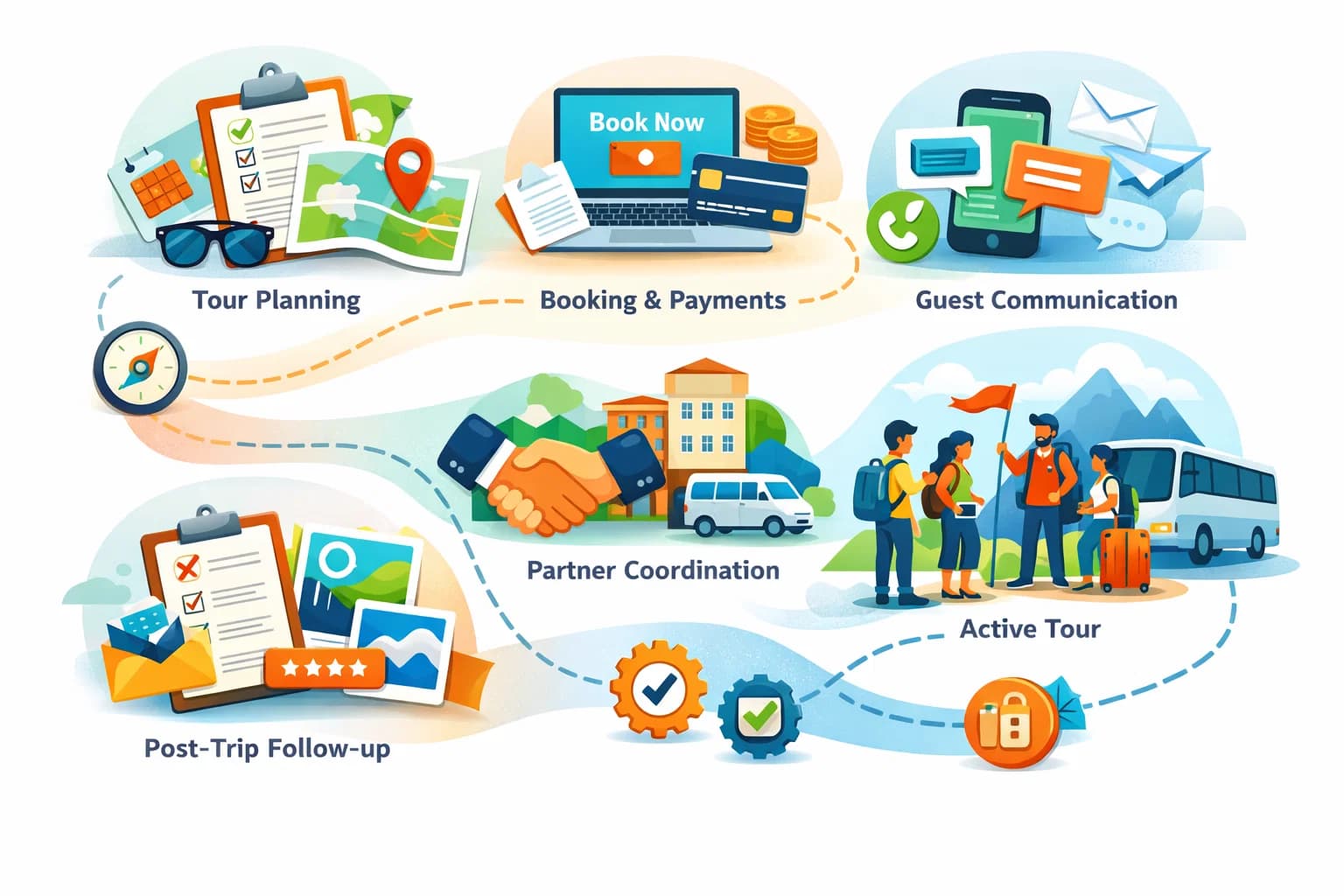
This ultimate tour operator list is built to help tour operators manage the full lifecycle of a tour, from the first idea to the final follow-up after guests return home. Whether you run day tours, weekend getaways, retreats, or multi-day group trips, the real work happens long before the first guest arrives and continues well after the trip ends.
Many tour operators struggle not because their tours are poorly designed, but because their operations are fragmented. Pricing is set without full cost visibility. Payments are tracked manually. Guest details live across emails, spreadsheets, and chat threads. Communication becomes reactive instead of clear and predictable.
This guide breaks down the complete tour operator workflow step by step. Each stage explains what matters, where operators often run into trouble, and how experienced tour operators keep things organized. You can use this as a checklist, a reference, or a way to improve how your tours already run.
What a Tour Operator Is Responsible For
A tour operator manages far more than activities and logistics during a trip. The role covers the entire guest journey.
That includes :
- Designing the tour concept
- Pricing and packaging the experience
- Managing bookings and payments
- Communicating with guests before and during the trip
- Coordinating logistics and partners
- Following up after the tour
The best tour operators think in terms of flow. Every step connects to the next. When one part breaks, the whole experience feels harder than it should.
Stage 1 : Tour Planning and Concept Development
1. Define the Purpose of the Tour
Before booking venues or outlining activities, get clear on the purpose of the tour.
Ask yourself :
- Who is this tour for
- What outcome or experience are they looking for
- Why they would choose this tour over others
Clear positioning makes everything else easier, from marketing to pricing to guest communication.
2. Choose the Right Tour Format
The format of your tour shapes your entire operation.
Common formats include :
- Day tours
- Weekend trips
- Multi-day group tours
- Retreats and workshops
- Seasonal or themed experiences
Each format comes with different expectations around pricing, payments, logistics, and communication.
3. Build a Practical Itinerary
A strong itinerary balances structure and flexibility.
Include :
- Arrival and departure windows
- Key activities and time blocks
- Meal times and rest periods
- Buffer time for delays or changes
Overloaded itineraries often create stress instead of value. Guests prefer clarity and flow over packed schedules.
Stage 2 : Supplier and Partner Coordination
1. Choose Reliable Partners
Tour operators depend on partners such as :
- Hotels and accommodations
- Transportation providers
- Local guides or facilitators
- Activity vendors
- Catering or meal services
Confirm availability, pricing, and cancellation terms early. Clear agreements prevent surprises later.
2. Lock Costs Before Final Pricing
Never price a tour without understanding the full cost structure.
Track :
- Fixed costs
- Per-guest variable costs
- Contingency buffers
- Platform or payment processing fees
Clear cost visibility protects your margins and avoids last-minute pricing adjustments.
Stage 3 : Pricing and Revenue Setup
1. Set Clear and Honest Pricing
Guests expect transparency. Confusion around pricing damages trust.
Your pricing should clearly explain :
- What is included
- What is not included
- Payment timelines
- Refund and cancellation policies
Clear pricing reduces support questions and booking friction.
2. Decide How Payments Will Work
Common payment structures include :
- Full payment upfront
- Deposit with a remaining balance
- Installment-based payments for group trips
Group tours often benefit from deposits and automated payment reminders.
Collect deposits and group payments without chasing people. Try SquadTrip for tour payments.
Stage 4 : Booking and Registration Systems
1. Centralize Your Bookings
Managing bookings through email and spreadsheets alone increases errors.
A reliable booking system should :
- Collect guest details
- Confirm and track payments
- Show booking status clearly
- Reduce manual follow-ups
Centralization keeps you organized as bookings grow.
2. Handle Group Bookings Properly
Group bookings add complexity :
- Multiple guests per booking
- Different payment timelines
- Shared responsibilities
Using a tool designed for group travel makes this manageable.
Stage 5 : Guest Communication Before the Trip
1. Set Expectations Early
Most guest questions happen before departure.
Share :
- Final itinerary
- Packing recommendations
- Arrival and meeting instructions
- Emergency contact details
- Payment status and deadlines
Clear communication reduces anxiety and last-minute questions.
2. Create One Reliable Information Source
Avoid spreading updates across multiple platforms without clarity.
Guests should know :
- Where to find trip details
- Where updates will be posted
- How to contact you
Consistency builds confidence.
Stage 6 : Payment Collection and Financial Tracking
1. Automate Payment Management
Manual payment tracking leads to mistakes and awkward follow-ups.
A strong system should :
- Track who has paid and who has not
- Send automated reminders
- Provide real-time payment visibility
This improves cash flow and reduces admin work.
2. Handle Changes and Refunds Cleanly
Tours change. Guests cancel. Plans shift.
Your system should support :
- Partial refunds
- Guest substitutions
- Payment adjustments
- Clear records for every transaction
Clear documentation protects you and your guests.
Stage 7 : Pre-Departure Logistics
1. Finalize Guest Numbers
Before departure, confirm :
- Final headcounts
- Room assignments
- Transportation details
- Dietary or accessibility needs
Share final numbers with partners to avoid confusion.
2. Align Your Team
If you work with guides or staff :
- Share final schedules
- Assign responsibilities clearly
- Review emergency procedures
Preparation reduces stress during the trip.
Stage 8 : Managing the Experience During the Trip
1. Stay Organized and Calm
Guests take cues from the tour operator.
Focus on :
- Clear instructions
- Smooth transitions
- Staying on schedule where possible
- Handling issues quietly
Strong preparation shows up here.
2. Adapt When Needed
Changes happen even with strong planning.
Good tour operators :
- Communicate changes clearly
- Offer solutions quickly
- Keep guests informed without overloading them
Flexibility builds trust.
Stage 9 : Guest Support During the Trip
1. Respond Quickly to Issues
Common issues include :
- Travel delays
- Schedule changes
- Health concerns
- Payment or booking questions
A clear support process helps you act fast.
2. Keep Guests Oriented
Guests should always know :
- What is happening next
- Where to meet
- Who to contact
Clarity keeps the group relaxed.
Stage 10 : Post-Trip Follow-Up
1. Collect Feedback Promptly
Send feedback requests soon after the trip ends.
Ask about :
- What guests enjoyed most
- What felt confusing or stressful
- How communication could improve
- Whether they would recommend the tour
Feedback improves future trips.
2. Maintain the Relationship
Post-trip communication may include :
- Thank-you messages
- Photos or recap emails
- Invitations to future tours
Strong follow-ups increase repeat bookings.
Common Mistakes Tour Operators Make
1. Using Too Many Tools
More tools often mean more gaps.
Fewer, well-chosen systems work better.
2. Ignoring Payment Friction
Late payments create stress and uncertainty.
Automation reduces awkward reminders.
3. Weak Pre-Trip Communication
Most complaints come from unclear expectations, not bad experiences.
Read More : Why Retreats Fail Before They Start: Group Travel Planning Traps To Avoid
How Experienced Tour Operators Stay Organized
They :
- Plan backward from the departure date
- Use repeatable checklists
- Centralize guest and payment data
- Communicate proactively
- Review each tour after completion
Consistency leads to growth.
Why Tools Matter for Tour Operators Today
Manual processes limit scale.
Modern tour operators need tools that :
- Support group payments
- Track guests automatically
- Reduce admin time
- Improve guest confidence
This is especially important for group and multi-day tours.
How SquadTrip Helps Tour Operators
SquadTrip is built specifically for group travel and experiences.
It helps tour operators :
- Collect deposits and group payments
- Track payment status in real time
- Manage guest details in one place
- Reduce manual coordination
Instead of juggling tools, you manage tours in a single workflow.
Read More : Tour Operator Marketing: Proven Strategies to Attract More Bookings
Conclusion : Strong Tours Start with Strong Systems
Running successful tours is not just about destinations or activities. It is about clarity, trust, and smooth execution from start to finish. This ultimate tour operator list shows that the strongest operators rely on connected systems, not last-minute fixes.
From planning and pricing to payments and post-trip follow-ups, every step shapes how guests feel. When your operations run smoothly, guests notice. They relax, engage, and recommend you.
If you organize group tours, retreats, or multi-day experiences, the right platform makes a real difference. SquadTrip helps tour operators manage planning, payments, and guests without unnecessary complexity.
Build better tours by building better systems.
Run smoother group tours without chasing payments or juggling tools. Try SquadTrip.
Frequently Asked Questions
1. What does a tour operator actually manage beyond the trip itself?
A tour operator handles much more than the experience on the ground. Planning, pricing, supplier coordination, payments, guest communication, and post-trip follow-up all sit on the operator’s plate. Most of the real work happens before guests ever arrive.
2. Why do so many tour operations feel stressful even when the tour itself is good?
Because systems are often fragmented. When bookings, payments, guest info, and communication live in different places, small issues pile up fast. Stress usually comes from disorganization, not the tour experience.
3. At which stage do tour operators usually run into the most problems?
Pre-trip. Payment delays, unclear itineraries, missing guest details, and last-minute questions tend to cause more trouble than anything that happens during the actual tour.
4. How should tour operators decide on pricing without hurting margins?
Pricing should be based on locked-in costs, not estimates. That includes fixed costs, per-guest expenses, buffers, and payment fees. Operators who skip this step often underprice and feel pressure later.
5. Are deposits really necessary for group tours?
Yes. Deposits reduce drop-offs, confirm intent, and help with cash flow. For group trips, deposits paired with automated reminders work far better than chasing full payments manually.