TL;DR :
• A strong landing page helps a tour operator attract visitors, build trust, and increase bookings.
• Use a clear headline and subheadline to explain your tours in seconds.
• Add real photos, social proof, and simple navigation to improve engagement.
• Show your top tours, explain what makes you different, and outline your booking process.
• Include a visible CTA such as “View Tours” or “Plan My Trip.”
• Add an FAQ, lead form, and SEO focused content to boost conversions and search visibility.
• Promote your landing page through SEO content, social media, Google ads, email, and partnerships.
• If you want easier payment collection and guest management, you can use SquadTrip to streamline your operations.
Introduction
A landing page is the core of your online presence. For any tour operator, this page is where potential travelers first decide whether they want to explore your brand or move on to another provider. It sets the tone for trust, clarity, and booking decisions.
If your landing page is confusing or looks outdated, visitors will leave fast. But when the page is built with intent, it becomes a powerful tool to promote your website, attract quality traffic, and convert visitors into paying customers.
This guide breaks down everything you need to create a landing page that helps your tour operator website reach the right audience and drive more bookings.
Why Your Landing Page Matters
Travelers today take seconds to judge whether a tour operator is trustworthy. They want clear information, real photos, simple navigation, and confidence that they are booking with professionals.
A great landing page helps you :
• Explain your value immediately
• Show what makes your tours unique
• Build trust with reviews and visuals
• Capture leads from visitors who are not ready to book
• Improve your search visibility
• Increase conversions through smart layout and CTAs
Your landing page can become your strongest marketing asset when it is designed with the traveler in mind.
Key Elements of an Effective Tour Operator Landing Page
To promote your website well, your landing page should include the elements below.
1. A Clear Headline That Explains Your Offer
Your headline should immediately tell visitors what you provide. It must be simple, specific, and related to the keyword tour operator.
Examples :
• “Private Adventure Tours Led by Local Experts”
• “Family Focused Tour Operator for Europe and Asia”
• “Luxury Small Group Tours for Couples and Friends”
Avoid vague lines like “Discover Beautiful Places.” Travelers want clarity.
2. A Helpful Subheadline That Adds Context
Your subheadline should strengthen your message by explaining :
• Who your tours are for
• What experience you offer
• Why you are different
Example :
“A tour operator dedicated to personalized travel that feels authentic, safe, and effortless.”
This gives visitors a quick reason to keep reading.
3. Strong Visuals That Inspire Travel
Real photos make the biggest difference. Your landing page should show :
• Tour highlights
• Local scenery
• Group activities
• Tour guides with guests
• Accommodation and experiences
Travel is emotional. Photos help visitors imagine themselves on your trips.
Use original photos whenever possible. Stock photos reduce trust.
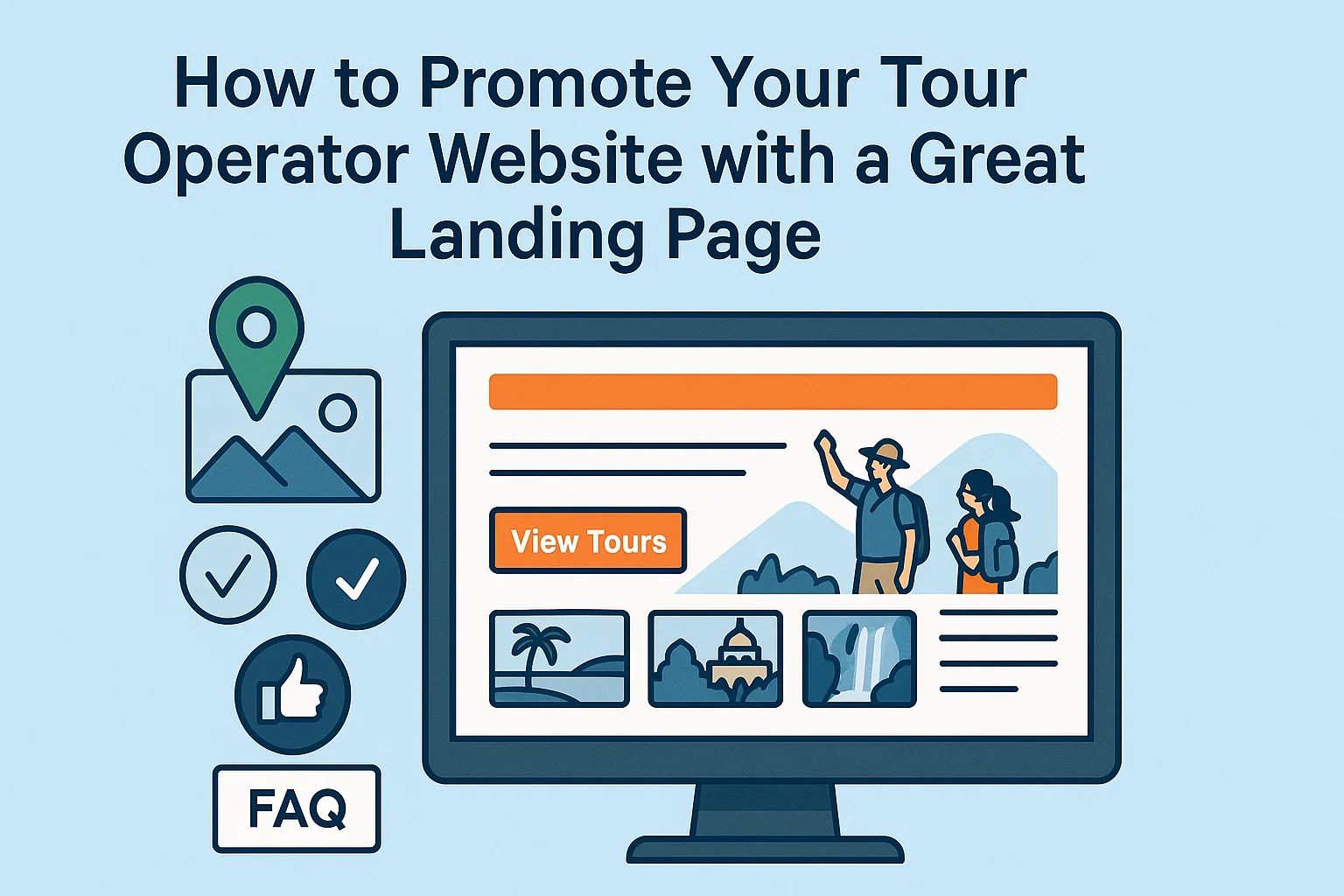
4. A Primary Call to Action
Your main CTA should be visible above the fold and easy to understand.
Examples :
• “View All Tours”
• “Plan My Trip”
• “Get a Free Itinerary”
• “Check Availability”
Repeat your CTA at key points throughout the page. Repetition increases conversions.
5. Simple Navigation and Fast Load Times
A clean layout creates a stress free browsing experience. Your landing page should be :
• Mobile friendly
• Easy to skim
• Free of clutter
• Fast to load
• Visually balanced
More than half of travel traffic is mobile, so responsive design is non negotiable.
6. Highlight Your Top Tours
Showcase your most popular tours with short descriptions and attractive visuals.
Include :
• Tour name
• Duration
• Price
• Key highlights
• A CTA to learn more
Curated options help travelers make decisions faster.
7. Build Trust with Social Proof
Trust plays a major role in travel bookings. Add proof such as :
• Customer testimonials
• Ratings from Google or TripAdvisor
• Video reviews
• Awards or certifications
• Partnerships with local or global travel brands
Every piece of trust builds confidence.
8. Explain What Makes You Different
Travelers compare several options before booking. Your landing page should clearly state what sets you apart.
Examples :
• Smaller group sizes
• Experienced local guides
• Better safety standards
• Custom itineraries
• Eco friendly practices
• Exclusive access to locations
• Transparent pricing
Make your unique value clear.
9. Show a Simple Three Step Process
Travelers want to know what happens after they book. A simple process removes uncertainty.
Example :
- Choose your preferred tour or request a custom plan
- Confirm your dates and payment
- Enjoy a smooth, well planned travel experience
Simple steps build trust and reduce friction.
10. Use SEO to Promote Your Tour Operator Landing Page
Your landing page should be optimized for search engines so that travelers can find you online.
Include :
• The keyword “tour operator” in the headline, intro, and one H2
• Related keywords based on destination, travel type, or audience
• Optimized image alt text
• Internal links to tour pages
• A clear meta title and description
• A helpful FAQ section
SEO ensures long term visibility and organic traffic.
11. Add an FAQ Section Based on Common Questions
An FAQ helps your visitors understand more about your tours and increases your search relevance.
Suggested FAQs :
• What is included in the tour package
• How flexible are the itineraries
• What is your cancellation policy
• What kind of groups do you specialize in
• Are tours suitable for children or seniors
• How early should travelers book
Keep the answers short and simple.
12. Capture Leads Through a Simple Form
Not everyone books on their first visit. You can convert more traffic by offering something valuable in exchange for contact details.
Examples :
• A free custom itinerary
• A downloadable travel guide
• A discount or seasonal offer
• A newsletter for upcoming tours and tips
A lead capture strategy helps you continue the conversation with potential clients.
13. Tell Your Story as a Tour Operator
Travelers want to know the people behind the trips.
Share :
• Your background
• Why you started the company
• The values you operate with
• Your experience in the region or niche
Your story helps build a personal connection.
14. Use Clear, Modern Design Principles
A visually clean and organized landing page improves conversions.
Follow these basics :
• Use large, readable fonts
• Keep paragraphs short
• Use icons to simplify points
• Add enough white space
• Use colors that match your brand
• Keep CTA buttons bright and noticeable
• Avoid clutter and unnecessary elements
Good design builds trust and increases time spent on the page.
How to Promote Your Landing Page After Publishing It
Creating a great landing page is only part of the work. You also need to drive traffic to it.
Below are effective ways for tour operators to promote their website.
1. Use SEO Driven Blog Content
Write helpful blogs related to your destinations and tour types.
Examples :
• Best adventure tours for families
• How to choose a reliable tour operator
• What to pack for a multi day guided trip
• Unique cultural experiences in Asia
• Top honeymoon destinations for 2026
Link these blogs to your landing page to increase traffic.
2. Run Google Search Ads
Targeting high intent keywords helps you reach travelers who are ready to book.
Examples :
• Bali tour operator
• Custom Europe tours
• Safari tour operator
• Group tour packages
Direct all ads to your landing page for the best results.
3. Promote on Social Media
Share:
• Behind the scenes clips
• Photos from travelers
• Quick tour highlights
• Seasonal promotions
• “Day in the life” videos of guides
Always include a link to your landing page.
4. Use Email Marketing to Nurture Leads
Send :
• Welcome emails
• Travel tips
• Destination guides
• Special offers
• New tours
Each email should include a CTA leading back to your landing page.
5. Partner With Travel Bloggers and Influencers
Collaborations can bring qualified traffic to your page through:
• Blogs
• YouTube videos
• Instagram content
• Travel reviews
Backlinks from bloggers also improve SEO
Final Thoughts
A well structured landing page can help a tour operator promote their website more effectively and attract high quality leads. When your page is clear, visually strong, and focused on the traveler, it becomes a reliable conversion tool.
Use strong visuals, clear messaging, trust elements, and simple CTAs. Make the experience easy to follow and make it obvious why someone should choose your tours. When the landing page feels polished and helpful, it supports your marketing efforts for years.
If you want to simplify booking management, payment collection, and guest communication on your tour website, tools like SquadTrip can help you run everything in one place. You can explore how it works at squadtrip and see how it supports travel hosts and tour operators with a smooth user experience.
Turn your landing page traffic into real bookings by managing signups, payments, and guest communication in one place with SquadTrip.
FAQ
1. How do I explain my tour operator services on a landing page without overwhelming visitors?
Focus on a clear headline and a short supporting line. Tell people what you offer, who it’s for, and what makes your tours different. Keep the wording simple and let your visuals do part of the work.
2. What kind of photos actually help a tour operator landing page convert better?
Real photos of your guests, guides, destinations, and on-tour activities work best. People want to see what they will experience, not staged stock images. Authentic visuals build trust much faster.
3. How many tours should I feature on the landing page before it starts looking cluttered?
Most tour operators highlight three to six of their top tours. Enough to show variety, but not so many that visitors feel lost. The rest can sit on your Tours page.
4. What should my primary CTA be if I offer multiple types of tours?
Choose the CTA that aligns with your main goal. If you want more inquiries, use “Plan My Trip.” If you want more direct bookings, use “View Tours” or “Check Availability.” Keep one main CTA and repeat it across the page.
5. How do I show what makes my tours different without sounding salesy?
Be specific. Instead of saying “We offer unique experiences,” explain what that actually means. Smaller group sizes, local guides, custom itineraries, better safety standards, or access to unique spots all matter to travelers.