TL;DR
-
Testimonials drive trust, bookings, and pricing confidence for retreat hosts
-
The best time to collect testimonials is immediately after the retreat
-
Structured feedback surveys produce stronger, more detailed responses
-
Specific questions lead to emotional, persuasive testimonials
-
Always ask for permission before publishing guest feedback
-
Video testimonials are powerful but require simple prompts
-
SquadTrip helps hosts manage guest communication and follow-ups in one organized place
Introduction
If you want to collect testimonials that actually build trust and increase bookings, you need more than a simple “How was your retreat?” email. This retreat feedback survey guide will show you exactly how to collect testimonials in a structured, strategic way that turns guest experiences into powerful social proof for your next event.
Whether you host wellness retreats, business masterminds, yoga experiences, church trips, or creative workshops, this guide will walk you step by step through building a feedback system that consistently generates high-quality testimonials.
If you want to manage payments, guest communication, and post-retreat follow-ups in one place, try SquadTrip for your next retreat.
Start collecting powerful testimonials and managing your entire retreat experience in one place with SquadTrip.
Why Testimonials Matter for Retreat Hosts
Retreats are emotional purchases. Guests are not just buying accommodation or activities. They are buying transformation, connection, clarity, and growth.
When potential guests evaluate your retreat, they look for one thing:
Proof.
Testimonials reduce uncertainty. They answer questions like:
-
Will this be worth the investment?
-
Is this host organized?
-
Will I feel safe and supported?
-
Do past guests recommend it?
Strong testimonials help you:
-
Increase booking conversions
-
Justify premium pricing
-
Reduce refund anxiety
-
Build authority in your niche
-
Strengthen email marketing campaigns
Without testimonials, every retreat launch feels like starting from scratch.
What Makes a Strong Retreat Testimonial?
Not all testimonials are created equal.
“Loved it!” is nice, but it doesn’t sell.
A strong testimonial includes:
-
A specific problem or hesitation
-
What changed during the retreat
-
Emotional impact
-
Clear recommendation
For example:
Weak testimonial:
“The retreat was amazing.”
Strong testimonial:
“I almost didn’t book because of the cost, but it was worth every dollar. I left feeling more confident, clear about my goals, and connected to a supportive community.”
Your feedback survey should guide guests toward responses like the second example.
When Is the Best Time to Collect Testimonials?
Timing is everything.
1. Immediately After the Retreat
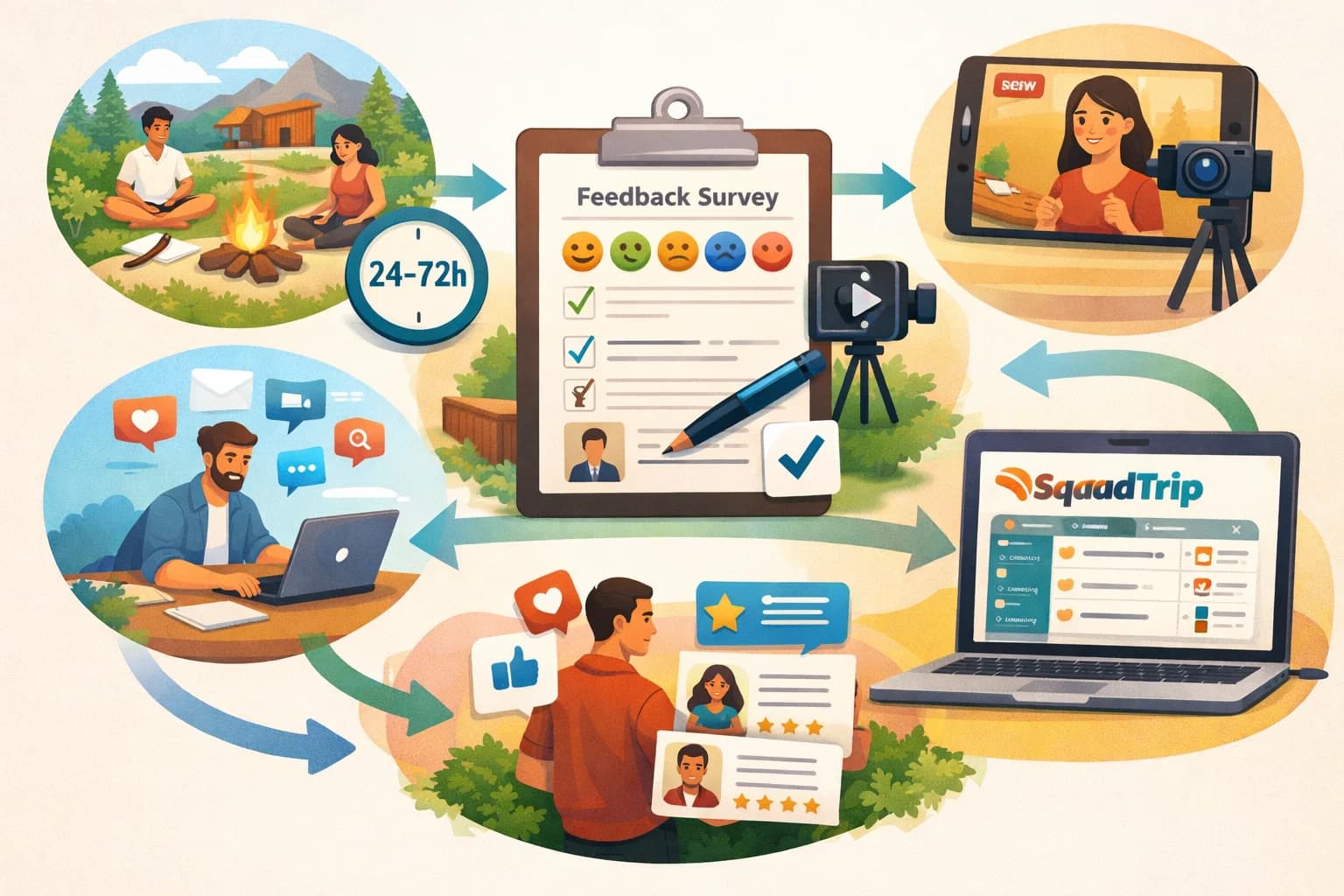
The best time to collect testimonials is within 24 to 72 hours after the retreat ends.
Why?
-
Emotions are fresh
-
Transformation is still top of mind
-
Guests are more likely to respond
Send a structured survey while they are still reflecting on their experience.
2. One Week Later Follow-Up
Sometimes guests need time to process.
Send a short reminder:
“Would you be open to sharing a few thoughts about your experience? It helps future guests feel confident booking.”
Keep it simple and respectful.
If you manage your guest list and communication in one platform like SquadTrip, sending post-retreat follow-ups becomes much easier.
How to Collect Testimonials Using a Retreat Feedback Survey
Step 1: Clarify Your Goal
Before creating a survey, ask yourself:
-
Do I need testimonials for my website?
-
For social media?
-
For email marketing?
-
For ads?
-
For sales pages?
Your goal determines the type of questions you ask.
If you want emotional transformation stories, your questions must go deeper than “Rate your experience from 1 to 10.”
Step 2: Ask Open-Ended Questions
Closed questions give you data.
Open-ended questions give you testimonials.
Here are strong questions to include:
-
What made you decide to book this retreat?
-
What were you nervous about before attending?
-
What was your biggest takeaway?
-
How did this retreat impact you personally or professionally?
-
Would you recommend this retreat to others? Why?
These questions help guests tell a story.
And stories convert.
Step 3: Include Transformation-Based Prompts
If your retreat promises growth, clarity, healing, business success, or connection, your questions should highlight that.
Examples:
-
What has changed for you since attending?
-
What surprised you most about the experience?
-
What would you tell someone considering this retreat?
These prompts naturally produce powerful testimonial copy.
Step 4: Ask for Permission to Publish
Always include a permission checkbox:
“I give permission for this testimonial to be used in marketing materials.”
You can also ask:
-
Can we use your full name?
-
First name only?
-
Photo?
-
LinkedIn profile?
Transparency builds trust.
How to Structure Your Retreat Feedback Survey
A well-designed survey should take no more than 5 to 7 minutes.
Here is a recommended structure:
Section 1: Experience Overview
-
How would you rate your overall experience?
-
What was your favorite part of the retreat?
Section 2: Transformation
-
What was your biggest takeaway?
-
What changed for you during this retreat?
Section 3: Objections & Hesitations
-
Did you have any hesitations before booking?
-
What would you say to someone unsure about joining?
This section is gold for conversion copy.
Section 4: Logistics Feedback
-
How was communication before the retreat?
-
How was the organization?
-
How was the venue, schedule, and activities?
This helps improve operations.
If you centralize trip details, payment collection, and communication in a platform like SquadTrip, you reduce negative logistical feedback before it even happens.
How to Collect Testimonials That Feel Natural
Some guests feel awkward writing testimonials.
Make it easy.
Offer Fill-in-the-Blank Prompts
Example:
-
“Before the retreat, I felt…”
-
“After the retreat, I feel…”
-
“I would recommend this retreat because…”
This lowers friction and increases response quality.
Offer Video Option
Video testimonials are powerful for:
-
Landing pages
-
Instagram
-
Retreat sales pages
Keep it simple:
“Would you be open to recording a 60-second video sharing your experience?”
Provide 2 to 3 guiding questions.
Do not overcomplicate it.
Where to Use Your Retreat Testimonials
Once you collect testimonials, maximize them.
Website
Add testimonials to:
-
Retreat landing pages
-
About page
-
Home page
-
Checkout page
Place testimonials near pricing sections to reduce hesitation.
Email Marketing
Use testimonials in:
-
Launch sequences
-
Early bird announcements
-
Abandoned cart emails
Testimonials increase conversion rates dramatically.
Social Media
Turn testimonials into:
-
Carousel posts
-
Quote graphics
-
Reels with guest stories
-
Behind-the-scenes recap posts
Consistency builds authority.
Common Mistakes When Trying to Collect Testimonials
1. Asking Vague Questions
“Did you enjoy the retreat?”
This produces weak responses.
Be specific.
2. Waiting Too Long
If you wait a month, emotional impact fades.
Act quickly.
3. Not Following Up
Many guests intend to respond but forget.
One gentle reminder increases response rates significantly.
4. Overloading the Survey
If your survey is too long, people abandon it.
Keep it focused.
How Testimonials Improve Future Retreat Sales
When you collect testimonials consistently, something powerful happens.
Your next retreat becomes easier to sell.
Instead of convincing people, you show proof.
Testimonials:
-
Answer objections before they arise
-
Show transformation
-
Demonstrate organization
-
Build emotional resonance
Your marketing becomes less about selling and more about sharing stories.
Advanced Strategy: Segment Testimonials by Audience Type
If you host different types of retreats, segment your testimonials.
For example:
-
First-time retreat attendees
-
Repeat guests
-
Corporate leaders
-
Solo travelers
-
Couples
-
Creative entrepreneurs
When a prospect sees someone “like them” in a testimonial, conversion increases.
Turning Survey Responses into Polished Testimonials
Sometimes responses are long and unstructured.
You can:
-
Edit for clarity
-
Keep the guest’s voice intact
-
Send back for approval
Example:
Original response:
“It was really good and I learned a lot and met nice people.”
Edited version:
“I learned more in three days than I expected and left with real clarity and meaningful connections.”
Always confirm before publishing.
Creating a Testimonial Collection System for Every Retreat
Make testimonial collection part of your retreat workflow.
After the retreat:
-
Send thank-you email
-
Send feedback survey
-
Send reminder
-
Extract testimonials
-
Publish
-
Archive responses
When payments, guest details, and communication are already organized in one place, this workflow becomes seamless.
That is why many retreat hosts choose platforms like SquadTrip to centralize everything from booking to follow-up.
Conclusion: Turn Guest Experience Into Growth
Learning how to collect testimonials is one of the smartest investments a retreat host can make. When you consistently collect testimonials through structured feedback surveys, you transform guest experiences into persuasive proof that fuels future bookings.
Testimonials build trust. Trust builds sales. Sales build sustainable retreats.
Manage bookings, payments, guest communication, and follow-ups easily with SquadTrip for your next retreat.
FAQ: How to Collect Testimonials for Retreats
How do I collect testimonials after a retreat?
To collect testimonials after a retreat, send a structured feedback survey within 24–72 hours while the experience is still fresh. Use open-ended questions about transformation, hesitation before booking, and overall impact. Follow up once if needed to increase response rates.
What questions should I ask to collect testimonials?
To collect testimonials that convert, ask questions like:
-
What made you decide to book this retreat?
-
What changed for you during the experience?
-
What would you tell someone considering joining?
-
Did you have any hesitations before booking?
Specific, transformation-based questions produce stronger testimonials than general rating questions.
When is the best time to collect testimonials?
The best time to collect testimonials is immediately after the retreat ends, ideally within 2–3 days. Guests are still emotionally connected to the experience, which leads to more detailed and enthusiastic responses.
How many testimonials should I collect per retreat?
You should aim to collect at least 5–10 strong testimonials per retreat. Larger groups may generate 15–20. The more testimonials you collect, the more social proof you can use across landing pages, email campaigns, and future retreat launches.
Can I edit testimonials before publishing?
Yes, you can lightly edit testimonials for clarity and grammar while keeping the guest’s original voice intact. Always get approval before publishing an edited version.