TL;DR
-
Group trip pricing strategies help organizers cover costs, reduce drop-offs, and increase sign-ups
-
Clear pricing builds trust and avoids last-minute confusion
-
Tiered packages, deposits, and deadlines make group trips easier to sell
-
Early-bird and value-based pricing work better than discounts alone
-
Transparent pricing pages convert better than flexible pricing explained over messages
-
Tools like SquadTrip help organizers manage pricing, payments, and participant coordination in one place
Introduction
Planning a group trip is exciting, but pricing it correctly is where most organizers struggle. Whether you are running retreats, brand trips, student tours, corporate offsites, or destination weddings, group trip pricing strategies directly affect sign-ups, cash flow, and how smooth the experience feels for everyone involved.
In the first few conversations with potential participants, price is usually the deciding factor. If pricing feels unclear, unfair, or risky, people hesitate. If it feels structured, transparent, and easy to understand, they commit faster.
This guide breaks down practical, proven group trip pricing strategies every organizer should use. You will learn how to price confidently, reduce payment friction, and create packages that people actually say yes to.
Planning a group trip and tired of explaining pricing one person at a time? SquadTrip helps you present clear pricing and collect payments without chasing anyone.
Why Group Trip Pricing Is Different From Individual Travel
Pricing a group trip is not the same as selling a single ticket or booking a hotel room. You are managing shared costs, varying commitment levels, and group dynamics all at once.
Unique challenges of group pricing
-
Costs depend on minimum headcount
-
Dropouts can affect everyone’s price
-
People pay at different times
-
Trust matters more because money is collected in advance
A strong pricing strategy accounts for these realities upfront instead of reacting to problems later.
Core Principles Behind Smart Group Trip Pricing
Before diving into specific tactics, it helps to understand the fundamentals that make pricing work.
1. Clarity beats flexibility
Flexible pricing sounds appealing, but it often creates confusion. Clear packages with fixed prices convert better than “we’ll figure it out later.”
2. Commitment matters more than discounts
A small deposit and clear deadlines do more to lock in attendance than offering constant discounts.
3. Transparency builds trust
People are more comfortable paying when they understand what is included, what is optional, and what happens if plans change.
5 Group Trip Pricing Strategies You Should Always Use
Tiered Pricing Packages
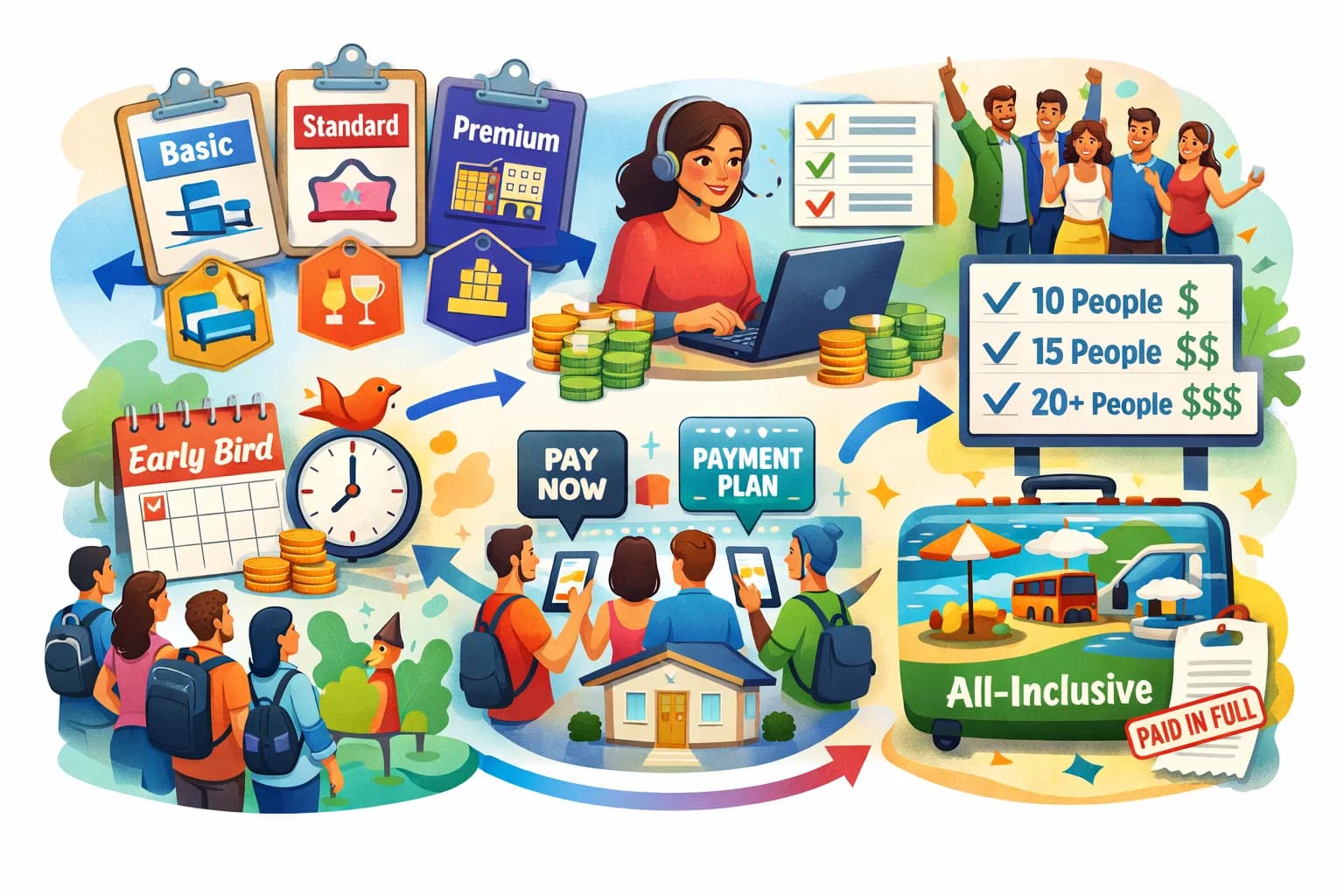
Tiered pricing is one of the most effective group trip pricing strategies. Instead of offering one flat price, you create multiple options.
How tiered pricing works
You offer two or three packages with increasing value:
-
Basic
-
Standard
-
Premium
Each tier includes clear differences in accommodation, activities, or perks.
Why it works
-
Participants self-select based on budget
-
Higher tiers increase average revenue per person
-
Fewer pricing questions
Example
-
Shared room package
-
Private room package
-
VIP experience with add-ons
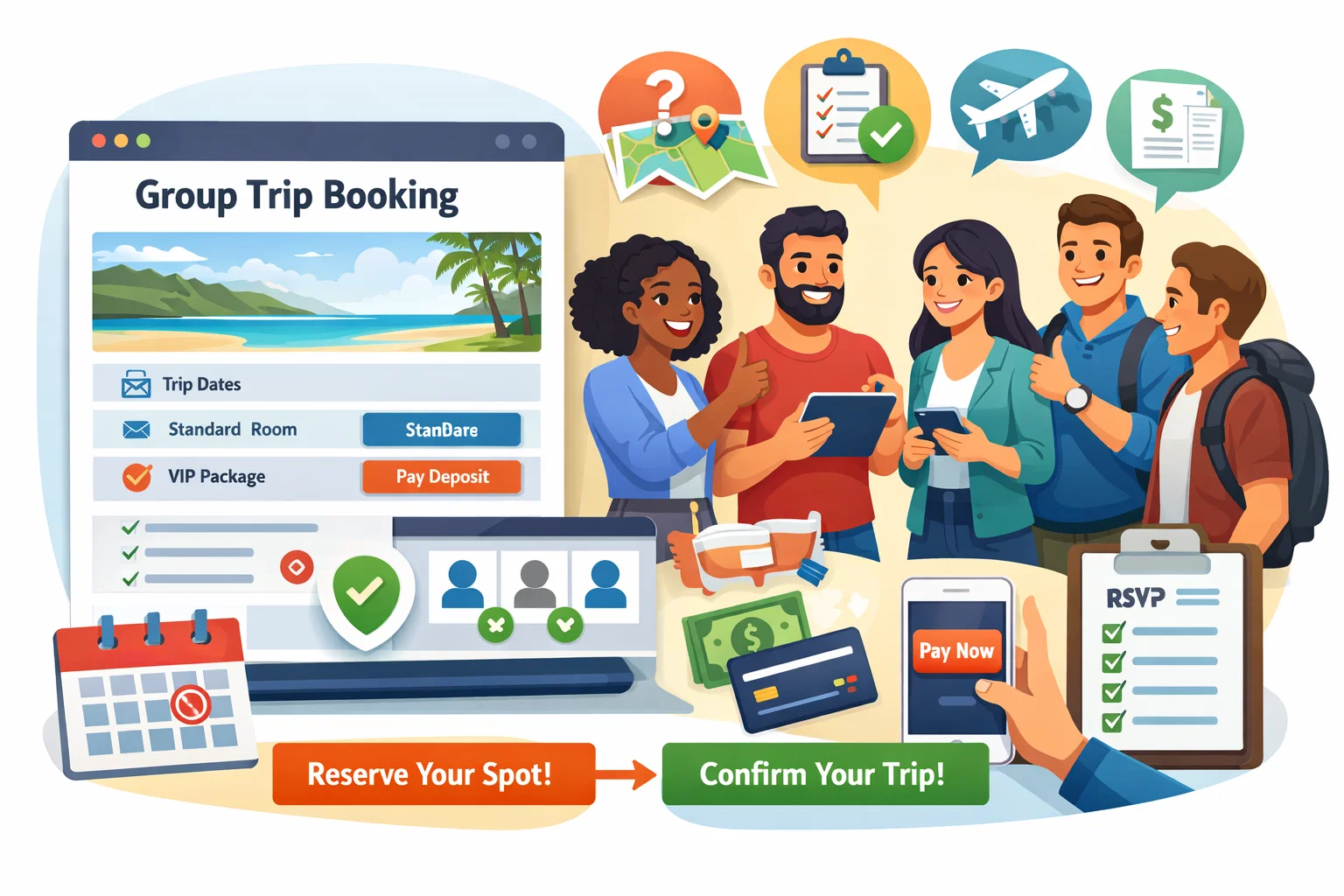
Deposit-Based Pricing
Deposits reduce risk for organizers and lower the psychological barrier for participants.
Why deposits matter
-
People commit earlier
-
Cash flow improves
-
Drop-offs decrease
Best practices
-
Set deposits between 20 to 40 percent
-
Make deposits non-refundable or partially refundable
-
Clearly explain what the deposit covers
Deposits work especially well for retreats, international trips, and brand trips where upfront costs are high.
Early-Bird Pricing
Early-bird pricing rewards early commitment and helps you confirm viability faster.
How to structure early-bird pricing
-
Set a clear deadline, not a vague time window
-
Offer a small but meaningful price difference
-
Display the deadline clearly
Common mistake to avoid
Do not keep extending early-bird deadlines. This trains people to wait.
Headcount-Based Pricing
Group trips often depend on minimum numbers. Headcount-based pricing makes this transparent.
How it works
You publish pricing based on different group sizes:
-
Price with 10 people
-
Price with 15 people
-
Price with 20 people
This approach works well for private group trips and corporate retreats.
Why people accept it
When participants see that pricing improves as the group grows, they are more likely to invite others.
All-Inclusive Pricing
All-inclusive pricing removes uncertainty and reduces follow-up questions.
What to include
-
Accommodation
-
Planned activities
-
Group transportation
-
Taxes and fees
What to exclude or list separately
-
Flights
-
Optional excursions
-
Personal expenses
The goal is not to include everything, but to be clear about what is included.
Pricing Strategies by Group Trip Type
Different trips need different pricing approaches.
Retreat Pricing Strategies
Retreat guests value simplicity and peace of mind.
What works best
-
One or two clear packages
-
Payment plans
-
Transparent cancellation policies
Avoid overly complex pricing that distracts from the experience.
Brand Trip Pricing Strategies
Brand trips often involve creators and influencers.
Common approaches
-
Invite-only with subsidized pricing
-
Full-price tickets with brand sponsorships
-
Mixed models with paid upgrades
Clarity is essential, especially when expectations around deliverables exist.
Student and Youth Group Trips
Affordability and payment flexibility matter most.
Effective tactics
-
Low deposits
-
Monthly payment plans
-
Group discounts tied to headcount
Parents and organizers appreciate predictable pricing and clear schedules.
Corporate and Team Offsite Pricing
Corporate buyers expect structure.
Best practices
-
Per-person pricing with minimums
-
Clear invoicing
-
Optional add-ons
Professional presentation matters as much as the price itself.
Payment Plans as a Pricing Strategy
Payment plans are not just a payment feature. They are a pricing strategy.
Why payment plans increase conversions
-
Lower upfront cost
-
Reduced hesitation
-
Better cash flow predictability
How to structure payment plans
-
Fixed installment dates
-
Clear consequences for missed payments
Common Group Trip Pricing Mistakes to Avoid
Underpricing to fill spots
Low prices attract the wrong audience and increase last-minute cancellations.
Changing prices mid-way
Price changes after people have paid erode trust.
Hiding fees
Unexpected costs create frustration and refund requests.
Explaining pricing only in messages
If pricing is not documented clearly, confusion spreads fast.
How to Present Group Trip Pricing Clearly
Pricing strategy fails if presentation is weak.
What a strong pricing page includes
-
Clear package names
-
What is included and excluded
-
Deposit amount
-
Payment deadlines
-
Refund policy
Why presentation matters
People decide faster when everything is visible in one place.
Using Pricing Deadlines to Drive Action
Deadlines are powerful when used honestly.
Effective deadlines include
-
Deposit deadline
-
Price increase date
-
Final payment date
Avoid artificial urgency. Real deadlines tied to logistics work best.
Pricing Transparency and Refund Policies
Refund policies are part of pricing strategy.
Best practices
-
Write policies in simple language
-
Avoid legal jargon
-
Be upfront about edge cases
Clear policies reduce disputes and support requests.
Scaling Group Trips With Repeatable Pricing
If you plan to run multiple trips, pricing should be repeatable.
How to build repeatable pricing
-
Use templates
-
Standardize deposit percentages
-
Keep tier names consistent
This makes marketing easier and reduces setup time for future trips.
How Technology Supports Better Pricing Strategies
Manual pricing management breaks down as groups grow.
What to automate
-
Pament tracking
-
Due date reminders
-
Participant status
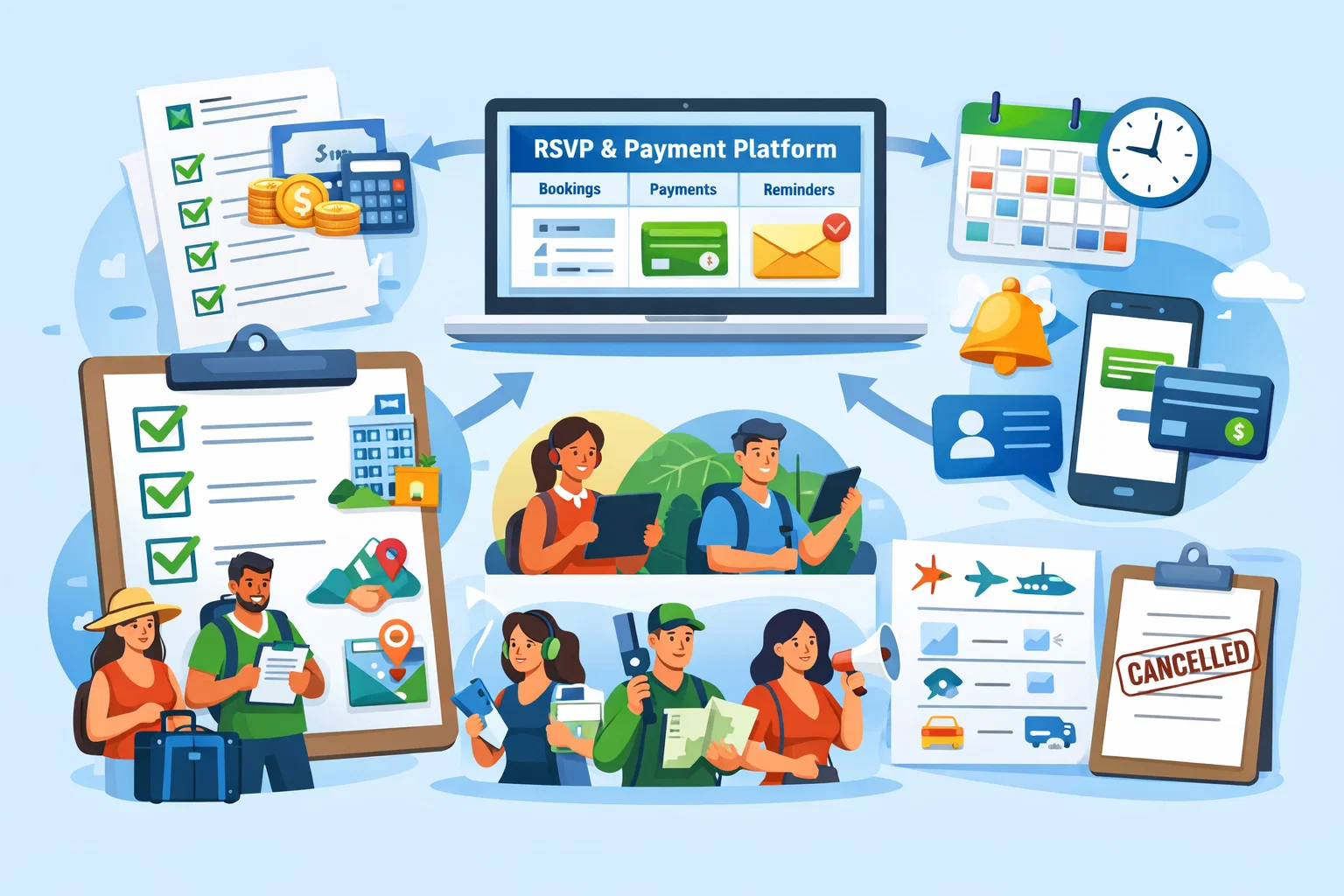
A single system keeps pricing, payments, and communication aligned.
Conclusion:
Group trip pricing is not just about covering costs. It sets expectations, builds trust, and determines how smooth your trip feels long before anyone arrives.
The best group trip pricing strategies focus on clarity, commitment, and consistency. When pricing is easy to understand and easy to act on, participants feel confident saying yes.
If you want to present pricing clearly, collect payments without chasing people, and keep everything organized as your group grows, SquadTrip gives you the structure to do it without the chaos.
Planning your next group trip? Use SquadTrip to launch clear pricing, collect payments on time, and manage your group in one place.
FAQs:
What are the best group trip pricing strategies for organizers?
The most effective group trip pricing strategies include tiered packages, deposits, early-bird pricing, and clear payment deadlines. These approaches reduce hesitation, lock in commitment, and make pricing easier to understand for participants.
How do I price a group trip if the final headcount is uncertain?
Set pricing based on a minimum number of participants and explain how pricing adjusts if more people join. This keeps expectations clear and avoids last-minute pricing changes.
How much deposit should I collect for a group trip?
Most organizers collect 20–40 percent as a deposit. This amount is enough to secure commitment without scaring people away, especially for retreats, brand trips, and international travel.
Should group trip pricing be all-inclusive?
All-inclusive pricing works well when you want to reduce questions and decision fatigue. If some costs vary, clearly list what is included and what is optional so participants know exactly what they are paying for.
Are payment plans a good idea for group trips?
Yes. Payment plans lower the upfront cost and increase sign-ups, especially for higher-priced trips. They work best when installment dates and deadlines are clearly communicated from the start.
How many pricing tiers should a group trip have?
Two or three pricing tiers are ideal. Fewer tiers make decisions easier and prevent confusion, while still giving participants options based on budget and preferences.