
TL;DR
-
A group trip planning checklist keeps logistics organized and reduces last-minute chaos
-
Clear budgets, timelines, and payment systems prevent awkward money conversations
-
Defined roles and expectations improve communication among group members
-
Booking tools that centralize RSVPs and payments eliminate spreadsheet confusion
-
Automated reminders and payment tracking reduce cancellations and drop-offs
-
Platforms like SquadTrip simplify planning, pricing, and managing group travel in one place
Introduction
A group trip planning checklist is the difference between a smooth, memorable travel experience and a stressful chain of missed payments, unanswered messages, and last-minute cancellations. When you’re organizing travel for friends, a team offsite, a retreat, or a special event, small details multiply quickly.
Unlike solo travel, group travel involves coordination, budgeting transparency, scheduling alignment, and clear communication. Without structure, even the most exciting destination can feel overwhelming to manage.
This guide walks you through a complete, step-by-step group trip planning checklist to help you organize stress-free travel from idea to return.
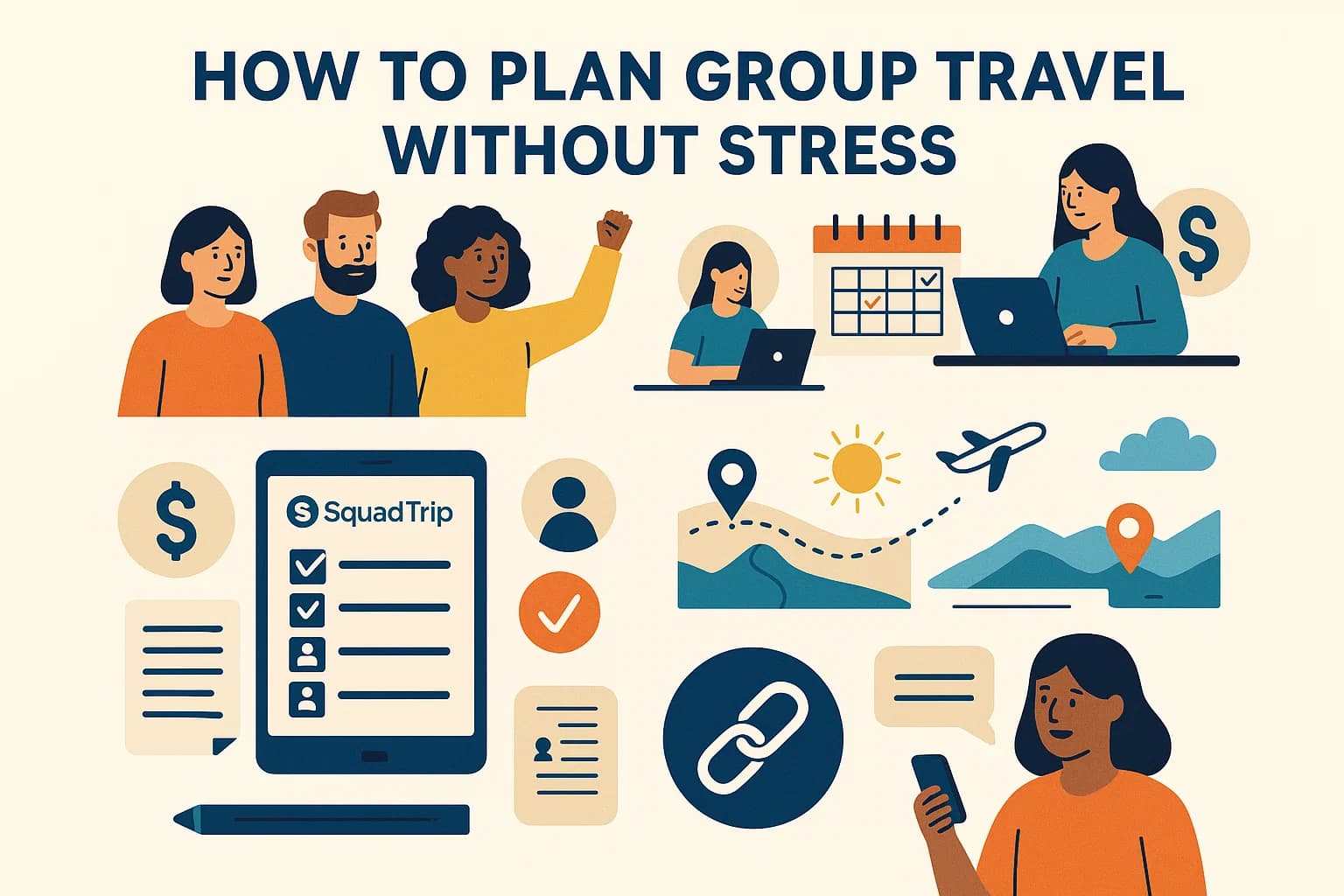
If you’re planning a group experience, you can simplify everything with SquadTrip. Create a booking page, collect payments, manage RSVPs, and share trip details in one organized platform.
Manage your entire trip in one place with SquadTrip.
Why You Need a Group Trip Planning Checklist
Planning a group trip is not just about booking flights and hotels. It involves:
-
Coordinating availability
-
Aligning expectations
-
Managing budgets
-
Handling payments
-
Organizing communication
-
Setting cancellation policies
Without a checklist, most organizers rely on scattered group chats, shared spreadsheets, and repeated reminders. That’s where problems start.
A structured checklist helps you:
1. Avoid Financial Confusion
Money is the number one reason group trips fall apart. A checklist ensures:
-
Transparent pricing
-
Clear payment deadlines
-
Defined refund policies
-
Tracked contributions
Instead of chasing people individually, you can automate payment tracking with SquadTrip and keep everything visible.
2. Reduce Last-Minute Stress
Many group trips fail due to poor timing. A checklist creates deadlines for:
- Deposits
- Accommodation bookings
- Activity reservations
- Transportation confirmations
When everything is mapped out in advance, you eliminate rushed decisions.
3. Improve Guest Experience
A well-organized trip creates confidence. Guests feel secure when they know:
-
What’s included
-
What they need to pay
-
What the schedule looks like
-
What to pack
Structure builds trust. And trust increases attendance and referrals for future trips.
The Complete Group Trip Planning Checklist
Below is a step-by-step checklist broken into phases so you can plan with clarity.
Phase 1: Define the Purpose of the Trip
Before booking anything, define the goal.
Is this:
-
A friends’ getaway?
-
A team offsite?
-
A wellness retreat?
-
A birthday trip?
-
A destination event?
The purpose shapes the destination, budget, and expectations.
Clarify the Trip Theme
Examples:
-
Relaxation and beach vibes
-
Networking and collaboration
-
Cultural exploration
-
Celebration-focused
Clear positioning makes marketing the trip easier if you’re organizing for a larger audience.
Phase 2: Choose the Destination
Destination affects cost, logistics, and group participation.
Consider Accessibility
Ask:
-
Are there direct flights?
-
Do travelers need visas?
-
Is local transportation easy?
-
Is the destination safe for groups?
The more complicated the travel process, the higher the drop-off rate.
Phase 3: Set the Budget Framework
Budget clarity is critical.
Break down costs into:
-
Accommodation
-
Flights
-
Activities
-
Meals
-
Transportation
-
Emergency buffer
Decide on Pricing Model
There are three common models:
- Equal split pricing
- Tiered room pricing
- Package-based pricing (all-inclusive)
Transparent pricing reduces hesitation.
With SquadTrip, you can create structured payment plans so guests don’t need to pay everything upfront.
Phase 4: Lock Dates Early
Availability is often the biggest obstacle.
Send a poll before finalizing. Once confirmed:
-
Set deposit deadline
-
Share cancellation terms
-
Communicate commitment expectations
Deadlines create urgency.
Phase 5: Book Accommodations
When booking group accommodation:
-
Check cancellation policy
-
Confirm room configurations
-
Verify group rates
-
Review amenities
-
Confirm capacity limits
Always Overcommunicate Inclusions
Clarify:
-
Is breakfast included?
-
Is airport transfer included?
-
Are taxes included?
Misunderstandings damage trust.
Phase 6: Organize Payments
This is where many trips fail.
Avoid:
-
Manual transfers
-
Confusing split calculations
-
Repeated reminders
-
Tracking through screenshots
Instead, use a centralized booking and payment system.
With SquadTrip, you can:
-
Set payment schedules
-
Track who paid
-
Reduce drop-offs
Phase 7: Plan Activities
Balance structure and flexibility.
Include Core Activities
Examples:
-
Welcome dinner
-
Group excursion
-
Main event session
-
Farewell gathering
Allow Free Time
Not everyone wants to follow a strict schedule. Free time improves satisfaction.
Phase 8: Share a Detailed Itinerary
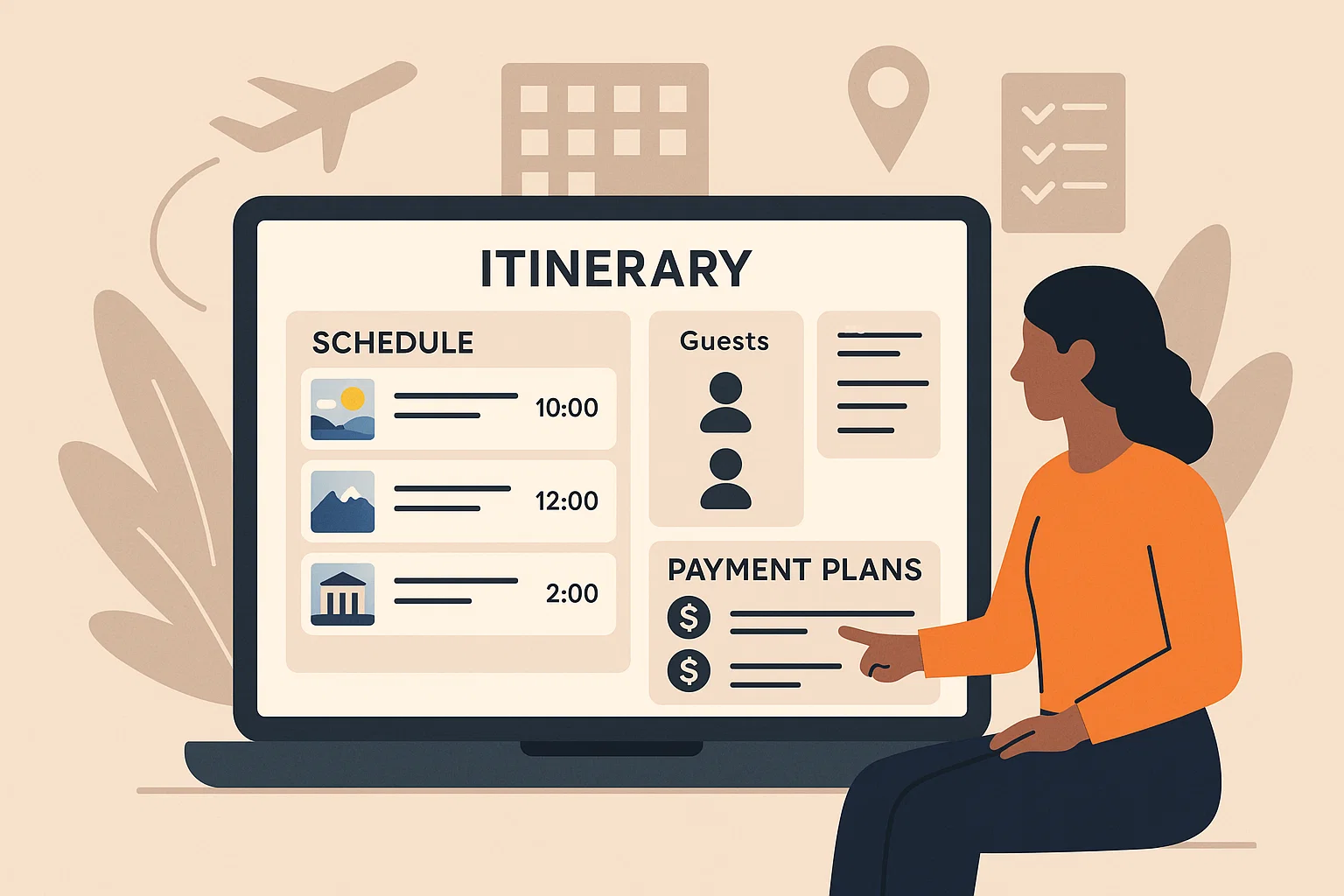
Create a digital itinerary that includes:
-
Dates and times
-
Addresses
-
Emergency contacts
-
Packing suggestions
-
Local tips
Centralized communication prevents repetitive questions.
Phase 9: Define Roles and Responsibilities
Assign:
-
Finance coordinator
-
Logistics lead
-
Activity manager
-
Communication contact
Clear ownership avoids chaos.
Phase 10: Prepare for Risk Management
Have backup plans for:
-
Weather changes
-
Delayed flights
-
Cancellations
-
Medical emergencies
Preparedness builds confidence.
Communication Checklist for Group Trips
Strong communication determines whether a group trip feels organized or messy.
Before the Trip
Send:
-
Confirmation emails
-
Payment reminders
-
Packing list
-
Travel instructions
During the Trip
-
Daily schedule recap
-
Location updates
-
Emergency contact reminders
After the Trip
-
Thank-you message
-
Feedback form
-
Future trip announcement
Keeping everything in one hub reduces scattered communication.
Common Mistakes to Avoid
Even experienced organizers make these errors:
1. Underpricing
Forgetting hidden costs creates shortfalls. Always include a buffer.
2. No Payment Deadlines
Without deadlines, guests delay commitment.
3. Vague Cancellation Policy
Ambiguity causes disputes. Define it clearly.
4. Overloading the Schedule
Too many activities exhaust the group.
5. Managing Everything Manually
Manual systems increase stress and errors.
Using a platform like SquadTrip removes spreadsheet chaos and keeps everything organized in one place.
How SquadTrip Simplifies Your Group Trip Planning Checklist
If you are organizing recurring group trips, retreats, or team offsites, tools matter.
SquadTrip helps you:
-
Create a professional booking page
-
Collect deposits and full payments
-
Offer installment plans
-
Track RSVPs
-
Manage participant details
-
Centralize trip information
Instead of juggling spreadsheets, emails, and messaging apps, everything lives in one organized platform.
This reduces organizer stress and increases guest confidence.
Conclusion
A well-structured group trip planning checklist transforms overwhelming coordination into an organized, confident planning process. When budgets are clear, payments are automated, communication is centralized, and responsibilities are defined, group travel becomes enjoyable instead of stressful.
Whether you’re organizing a friends’ getaway, a corporate retreat, or a community experience, the right systems make all the difference.
If you want to eliminate spreadsheets, reduce payment confusion, and manage everything in one place, try SquadTrip.
FAQ
What should be included in a group trip planning checklist?
A group trip planning checklist should include destination selection, budget breakdown, payment structure, accommodation booking, activity planning, transportation coordination, communication timeline, cancellation policy, and risk management planning. It should also outline deadlines for deposits and final payments to avoid confusion.
How far in advance should I start planning a group trip?
For domestic trips, start planning at least 3–6 months in advance. For international group travel, 6–12 months is ideal. Larger groups require more lead time because accommodation and activity availability becomes limited quickly.
How do I organize group payments without stress?
The easiest way to manage group payments is to use a centralized platform that tracks deposits, installment plans, and due dates. Instead of chasing transfers manually, tools like SquadTrip allow you to automate reminders and see exactly who has paid.
How do I calculate pricing for a group trip?
Start by listing fixed costs such as accommodation and transportation. Add variable costs like meals and activities. Include taxes and a contingency buffer of 5–10 percent. Divide the total cost based on room type or pricing tiers. Always be transparent about what is included.
What is the best way to avoid last-minute cancellations?
Require a non-refundable deposit. Clearly communicate payment deadlines and cancellation terms in writing. Structured payment schedules also increase commitment and reduce drop-offs.