
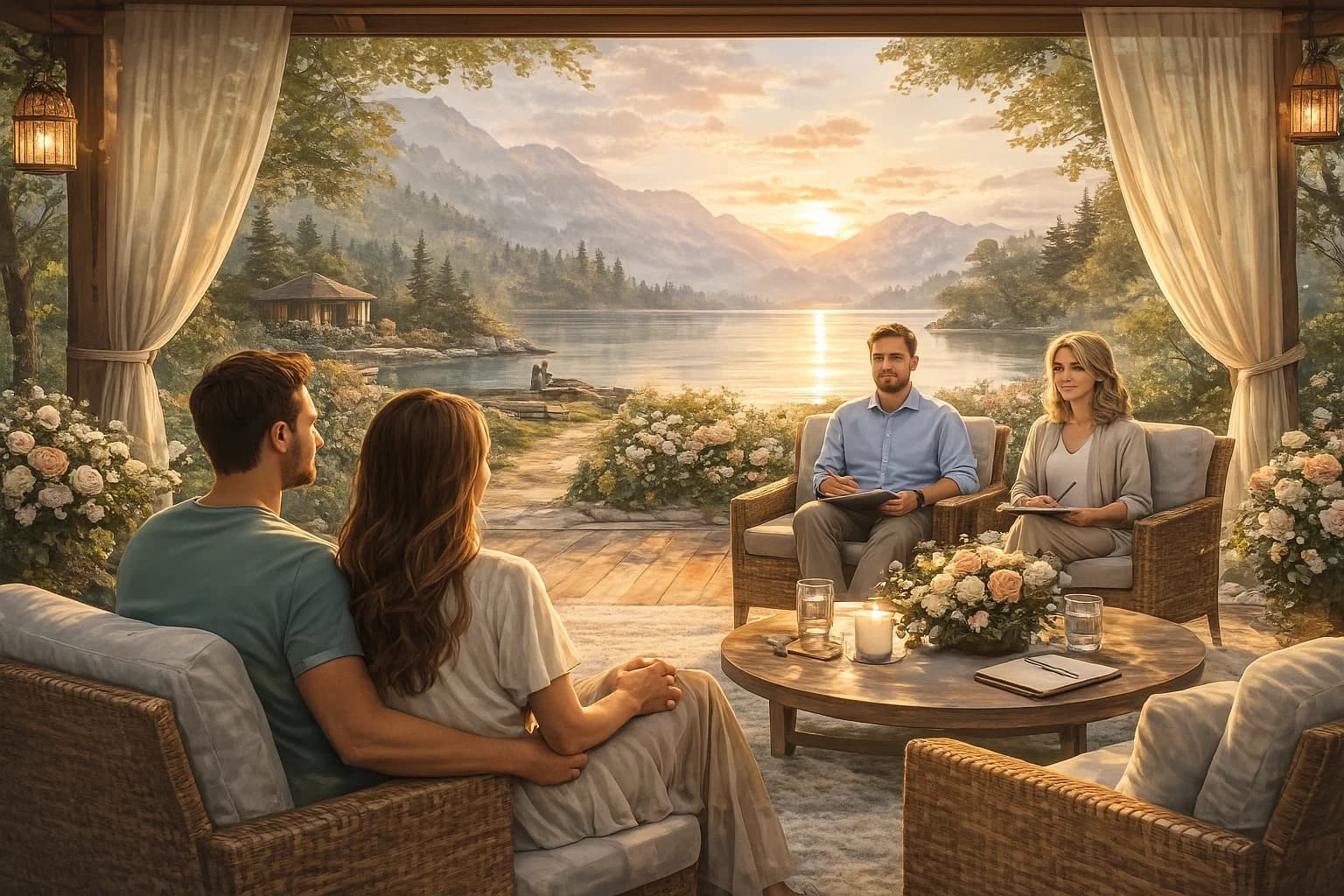
TL;DR :
- Marriage therapy retreats in 2026 focus on real relationship work, not surface level advice or vacation style getaways.
- These retreats compress months of therapy into a few focused days with licensed professionals.
- Top options include clinical intensives, research based programs like the Gottman Method, faith integrated retreats, and private therapy experiences.
- The right retreat depends on your goals, whether that is improving communication, rebuilding trust, or working through deeper conflict.
- Most effective retreats last between two and five days, with three to four days being the most common choice.
- Retreats work best when both partners are committed and ready to participate fully.
- Organizing travel, payments, and schedules ahead of time helps couples stay focused on the therapy experience.
- Tools like SquadTrip help keep retreat logistics simple so couples can focus on healing and connection.
Introduction
Best Marriage Therapy Retreats in 2026 are designed for couples who want real change, not surface level fixes. These retreats focus on structured therapy, guided conversations, and protected time away from daily pressure.
Unlike vacations or wellness getaways, marriage therapy retreats are built around professional support. Licensed therapists guide couples through communication challenges, trust issues, emotional distance, and long standing conflict patterns.
In 2026, more couples are choosing retreats because weekly therapy often feels slow or hard to schedule. A retreat creates focused time to work through issues without distractions, interruptions, or unfinished conversations.
This guide covers the five best marriage therapy retreats for 2026. Each option is reviewed based on therapy depth, environment, privacy, and the type of couple it serves best.
Read More : Christmas Couples Retreats
Why Marriage Therapy Retreats Are Growing in 2026
Couples today face pressure from work, finances, parenting, and constant digital noise. These stresses often show up as miscommunication, resentment, or emotional distance.
Marriage therapy retreats address this by compressing months of therapy into a few focused days. Couples step away from routines and work directly on their relationship with professional support.
Key reasons couples choose retreats in 2026 include :
- Faster progress than weekly therapy sessions
- Dedicated time without work or family interruptions
- A neutral setting that reduces defensive behavior
- Clear structure and guided conversations
- Privacy and confidentiality
For couples who feel stuck or disconnected, retreats offer a reset that is hard to achieve at home.
What Makes a Strong Marriage Therapy Retreat
Not all retreats offer the same level of care. Before choosing one, couples should understand what separates a therapeutic retreat from a wellness or coaching experience.
Strong marriage therapy retreats typically include :
- Licensed marriage and family therapists or clinical psychologists
- Structured sessions with clear goals
- Private or small group formats
- Evidence based therapy methods
- Follow up plans after the retreat
The environment matters too. Quiet settings help couples feel safe enough to speak honestly and listen fully.
5 Best Marriage Therapy Retreats
1. The Couples Institute Intensive Retreats
The Couples Institute offers intensive marriage therapy retreats led by licensed psychologists with decades of clinical experience.
These retreats are highly structured and focus on deep emotional patterns rather than surface conflict.
What makes it effective
- Uses developmental and attachment based therapy
- Sessions are private and tailored to the couple
- Focuses on long term patterns, not quick fixes
- Strong emphasis on emotional safety
Best for
Couples dealing with repeated conflict, emotional distance, or unresolved resentment. It is also well suited for couples who want clinical depth rather than coaching style advice.
Location
United States, with private retreat settings depending on availability.
2. Gottman Method Couples Retreats
Gottman Method retreats are based on over four decades of relationship research by Drs. John and Julie Gottman.
These retreats focus on measurable relationship behaviors and practical tools couples can continue using after the retreat.
What makes it effective
- Research based framework
- Clear tools for communication and conflict repair
- Mix of education and guided exercises
- Strong focus on rebuilding trust and friendship
Best for
Couples who want structure, clarity, and proven techniques. It works well for couples experiencing frequent arguments or breakdowns in communication.
Location
Available in multiple countries with certified Gottman therapists.
3. Relate Institute Marriage Intensives
Relate Institute offers faith integrated marriage therapy retreats that combine clinical therapy with spiritual reflection.
These intensives are led by licensed therapists and are designed for couples who want both emotional and spiritual alignment.
What makes it effective
- Integrates therapy with faith based principles
- Private sessions with licensed clinicians
- Clear plans for continued growth after the retreat
- Safe space for discussing sensitive issues
Best for
Couples who value faith as part of their relationship and want therapy that respects both emotional and spiritual dimensions.
Location
Primarily in the United States.
4. The Relationship School Couples Retreats
The Relationship School focuses on communication skills, emotional awareness, and conflict resolution through guided workshops and small group therapy.
While not as clinical as some intensives, it offers a strong balance between therapy and practical relationship education.
What makes it effective
- Focus on communication and emotional literacy
- Interactive sessions with real time feedback
- Small group format with privacy boundaries
- Clear tools for daily relationship habits
Best for
Couples who struggle with communication, emotional expression, or recurring misunderstandings but are not in crisis.
Location
International locations depending on retreat schedule.
5. Private Marriage Therapy Intensives with Licensed Therapists
Many licensed marriage and family therapists now offer private, custom intensives outside of large retreat programs.
These intensives are fully personalized and often held in quiet, private locations.
What makes it effective
- Fully customized therapy plan
- Maximum privacy
- Flexible scheduling
- Ability to focus on specific issues
Best for
Couples dealing with infidelity, trauma, or high conflict who need discretion and individualized care.
Location
Varies by therapist and region.
Best Marriage Therapy Retreats by Therapy Style
Choosing the right retreat often comes down to therapy approach rather than location.
1. Attachment focused therapy
Best for couples dealing with emotional distance, abandonment fears, or recurring insecurity.
2. Communication focused therapy
Best for couples who argue frequently or struggle to express needs clearly.
3. Faith integrated therapy
Best for couples who want therapy aligned with their spiritual values.
4. Trauma informed therapy
Best for couples affected by past trauma, betrayal, or major life events.
How Long Should a Marriage Therapy Retreat Be
Most effective marriage therapy retreats last between two and five days.
Shorter retreats can help with clarity and communication tools. Longer retreats allow deeper emotional work and pattern interruption.
In 2026, many couples prefer three to four day retreats. This length balances depth with emotional sustainability.
What to Expect During a Marriage Therapy Retreat
While each retreat differs, most follow a similar structure.
Common elements include :
- Intake and relationship assessment
- Guided therapy sessions
- Communication exercises
- Reflection time
- Action planning for after the retreat
Sessions are often emotionally intense but designed to feel safe and supported.
Preparing for a Marriage Therapy Retreat
Preparation helps couples get more from the experience.
Before attending, couples should :
- Agree on shared goals
- Commit to honesty and listening
- Set boundaries around phones and work
- Arrange childcare or responsibilities in advance
The more present both partners are, the more effective the retreat becomes.
After the Retreat : Maintaining Progress
The real work begins after the retreat ends.
Strong programs provide :
- Follow up sessions
- Homework or reflection exercises
- Tools for handling future conflict
- Clear communication frameworks
Couples who continue applying what they learn see longer lasting results.
Cost of Marriage Therapy Retreats in 2026
Prices vary widely depending on length, location, and level of personalization.
Typical ranges include :
- Group retreats : Moderate pricing
- Private intensives : Higher investment
- Luxury retreats: Premium pricing
While retreats cost more upfront than weekly therapy, many couples find them cost effective due to faster progress.
Is a Marriage Therapy Retreat Right for You
Marriage therapy retreats work best when both partners are willing to engage.
They may not be ideal if one partner is unwilling to participate or if there is ongoing abuse or untreated addiction.
For couples who want change and are open to guidance, retreats can be a powerful turning point.
Planning a Couples Therapy Retreat Without Stress
If you are coordinating travel, accommodation, or schedules for a couples retreat, organization matters.
Managing payments , schedules, forms, and communication in one place reduces friction and allows couples to focus fully on the experience.
Tools like SquadTrip help simplify retreat logistics by keeping everything organized and clear, so the emotional work stays front and center.
Read More : How to Plan Group Travel Without Stress
Final Thoughts
Marriage therapy retreats in 2026 offer couples something that day to day life rarely allows. They create protected time for honest conversations, guided support, and real progress without distractions. Whether you choose a research based program, a clinical intensive, or a private therapy retreat, the right environment can help reset patterns and rebuild trust.
Logistics should never become a source of stress during this process. When travel, payments, schedules, and guest communication are organized in one place, couples can stay focused on the work that matters. Tools like SquadTrip help retreat organizers and participants manage these details smoothly, so the experience remains centered on healing, connection, and forward movement.
Ready to take the next step together? Plan your marriage therapy retreat smoothly with SquadTrip.
Frequently Asked Questions
1. What is a marriage therapy retreat?
A marriage therapy retreat is a structured program where couples work with licensed therapists over several days. Instead of short weekly sessions, couples spend focused time addressing communication issues, conflict patterns, trust, and emotional connection in a private setting.
2. Are marriage therapy retreats more effective than weekly counseling?
For many couples, yes. Retreats compress months of therapy into a few days. This allows deeper conversations, fewer interruptions, and faster clarity. Weekly therapy can still be helpful, but retreats often create momentum that is hard to achieve with short sessions.
3. How long do marriage therapy retreats usually last?
Most marriage therapy retreats last between two and five days. In 2026, three to four day retreats are the most common because they balance emotional depth with mental and physical recovery time.
4. Do marriage therapy retreats work for couples in crisis?
They can, depending on the situation. Retreats are often effective for couples facing intense conflict, emotional distance, or betrayal. However, they may not be suitable in cases of ongoing abuse, untreated addiction, or when one partner is unwilling to participate.
5. Are marriage therapy retreats private or group based?
Both options exist. Some retreats offer fully private sessions, while others combine private therapy with small group workshops. Couples who value discretion often choose private intensives, while others benefit from shared learning in small groups.