
TL;DR:
- Local group trips fill the fastest but earn the least — typically ~$4K–$13K per trip. The volume is domestic; the value is overseas.
- Curated long-haul trips run ~$20K–$100K+ because the ticket is higher, there's room for add-ons, competition is thinner, and travelers buy on experience, not price.
- One overseas trip can out-earn a year of domestic weekends — with fewer travelers to manage and less churn.
- The trade-off is a bigger ask. Two levers solve it: deposit-plus-installments (turns a $4K "no" into an easy "yes") and a warm-audience launch (trust closes the bigger commitment).
- Use a tool like SquadTrip to host the trip page, take deposits, and automate the payment plan that makes a premium trip fill.
Long-haul vs local: which one actually earns more?
If you measure by revenue per trip, curated long-haul international trips earn far more than local domestic ones — typically ~$20,000 to $100,000+ for an overseas trip versus ~$4,000 to $13,000 for a domestic weekend. Local trips fill faster, but they earn the least per trip by a wide margin. The pattern across thousands of group trips is impossible to miss: volume is domestic, but value is overseas. A tool like SquadTrip makes the more profitable path practical by handling the booking page, deposits, and installment plan that turn a bigger ticket into an easy yes.
This isn't an argument that local trips are bad — they're a great way to prove your concept and build trust. It's that if you're choosing a destination purely by what's easiest to fill, you'll almost always land somewhere domestic and leave most of the money on the table. This guide breaks down exactly why overseas earns more, the honest trade-off that comes with it, and how to make the leap without losing your shirt.
Why "easiest to fill" is the wrong question
When a trip is filling slowly, the instinct is to pick the destination that books fastest — a city weekend, a lake house, a quick domestic getaway. Those trips do fill fast. They also earn the least, because everything that makes them easy to fill is the same thing that caps their revenue: a low ticket, a short stay, and a crowded field of organizers offering something nearly identical.
The better question isn't "what fills fastest?" It's "what earns the most per traveler I'm able to bring?" Filling 12 seats on a $400 domestic weekend is a lot of work for ~$5K. Filling 10 seats on a curated overseas trip can gross 8–10 times that — for a comparable amount of organizing effort. The same hours, the same audience, a dramatically different result.
The split, in one comparison table
Here's how the three broad trip styles compare on what they typically earn and what drives that number.
| Trip style | Typical revenue / trip | What drives it |
|---|---|---|
| Domestic weekend / getaway | ~$4K–$13K | Low ticket, short stay, easy to fill, lots of competition |
| Caribbean escape | ~$15K–$20K | All-inclusive packages, 4–7 nights, group rates |
| Curated long-haul (Africa / Asia / Europe) | ~$20K–$100K+ | Premium multi-day itineraries, paid add-ons, higher willingness to pay |
Read it top to bottom and the gradient is clear: as the trip moves further from home and becomes more curated, the revenue per trip climbs steeply. The Caribbean sits in the middle — more than a domestic weekend, thanks to all-inclusive packages and group rates, but still short of what a thoughtfully designed long-haul itinerary commands. The jump from the middle row to the bottom row is where the real money lives. For a fuller breakdown of which niches earn what, see our guide to the most profitable group trip types.
Why overseas group trips earn more
The revenue gap isn't luck or hype. Four structural reasons make long-haul trips earn more, and every one of them is something you can lean into on purpose.
Higher ticket, by nature
A 7–10 day international experience is simply a bigger purchase than a weekend away, and travelers expect to pay accordingly. Nobody blinks at a $3,500 land package for Cape Town or Tokyo the way they would at a $3,500 domestic weekend. The destination itself sets a higher anchor, so your base price starts in a different range before you've added a single upgrade.
Room to add value
This is the quiet multiplier. A domestic weekend is mostly a flat fee — there's little to upsell. A long-haul trip is built for upgrades: a safari extension, excursions, a private-room tier, extra nights, airport transfers. Every add-on a traveler selects raises your revenue per head without raising your headline price, so budget-conscious bookers aren't scared off while higher-spenders self-select into a richer package. Our heritage trip to South Africa playbook shows exactly how an optional safari add-on lifts revenue per traveler.
Less competition
Anyone can throw together a city weekend, and thousands do — which means you're competing on price in a crowded field. A thoughtfully curated trip to Ghana, Bali, or Japan is rare. That scarcity is yours to price. The harder a trip is to copy, the more pricing power you hold, and a well-designed international itinerary is genuinely hard to copy.
It's a destination, not a discount
This is the deepest reason. People shop domestic trips on price — they're comparing your lake house to three others and picking the cheapest. People choose long-haul trips on the experience and on the person leading them. A bucket-list trip to South Africa isn't a commodity; it's a once-in-a-lifetime experience with a leader they trust. That shifts the entire conversation away from "how much?" and toward "is this the trip for me?" — and that's a conversation you win on curation, not on price.
Build the trip that actually earns
Set up occupancy-based packages, optional add-ons, deposits, and installments on one branded page — everything a premium overseas trip needs. SquadTrip is free to start.
Create your trip freeThe honest trade-off — and how to handle it
Long-haul trips are worth more, but they ask more of the traveler: a bigger commitment and a bigger check. Pretending that away helps no one. The good news is that the gap between "I'd love to" and "I'm in" is narrower than it looks, and two specific levers close it almost entirely.
Installment plans turn a $4K "no" into a "yes"
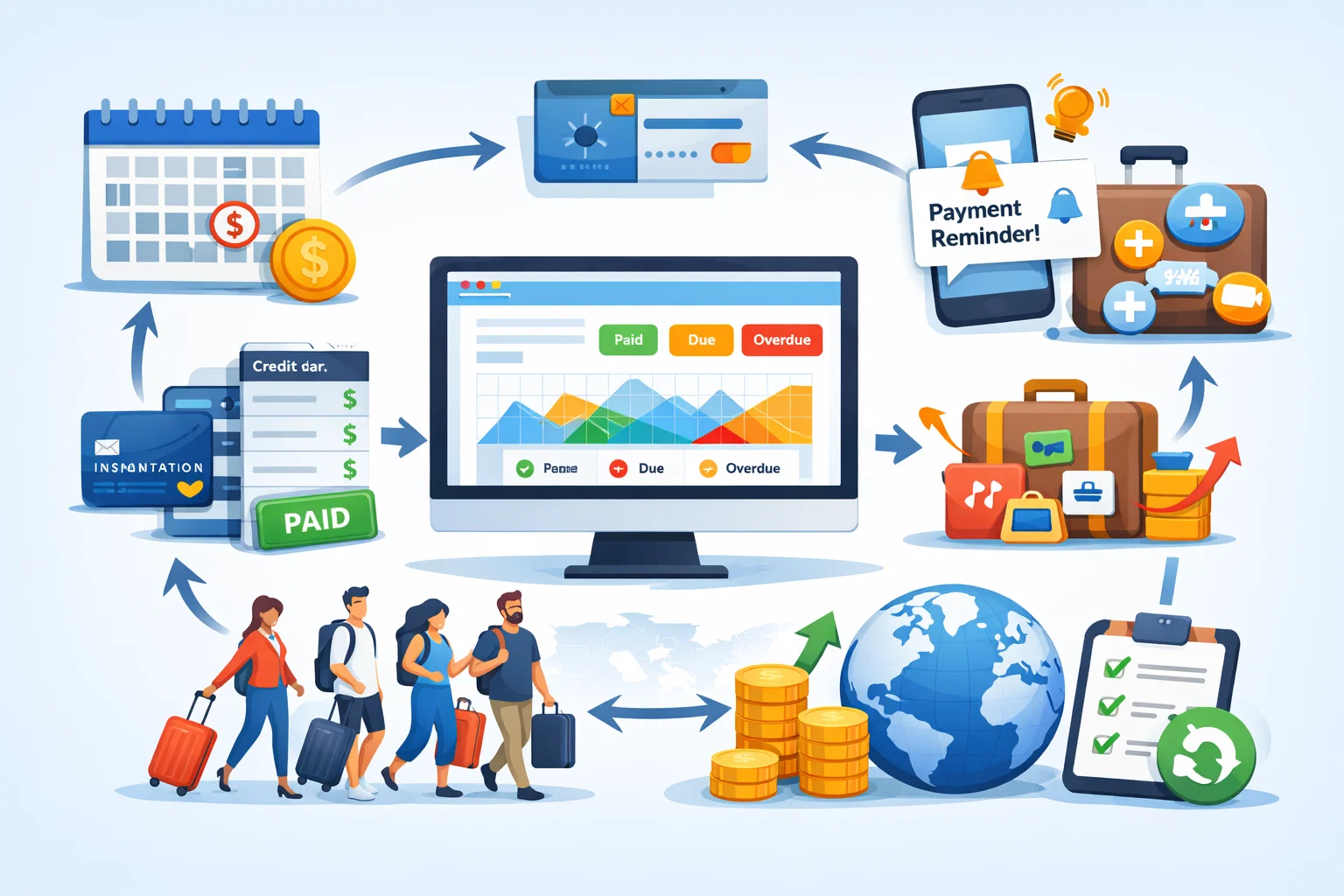
A $4,000 trip feels out of reach as a single payment. Broken into a deposit plus a handful of monthly installments, that same trip feels very reachable — it becomes a line item people can plan around instead of a lump sum they have to flinch at. Letting people pay over time is the single biggest lever for filling premium trips, because it widens who can say yes without lowering your price for anyone.
The mechanics matter here. You want a deposit to lock each spot, then installments charged automatically on a schedule running up to departure — no spreadsheets, no chasing, no awkward "hey, your payment's due" messages. With SquadTrip, guests book through your trip page, the deposit lands instantly, and each traveler is enrolled in your installment schedule automatically; cards are charged on each due date and reminders go out for you. That automation is what makes a 10-person, $40K trip manageable for a solo organizer.
Lead with your warm audience
The bigger the ask, the more trust matters — and trust doesn't come from a cold ad. People hand over a $500–$5,000 deposit because they trust you, which is why the trips that sell are filled almost entirely by the organizer's own warm audience, not by strangers. Launch to the people who already know you first: DM your warmest contacts, post to your Stories, share it in your group chats and community. Their early deposits create the momentum that pulls everyone else in.
This is also why you don't need a huge following to run a premium trip. You need the right ten or twelve people who already trust you — and a clear reason for them to commit now. For the complete playbook on filling a trip from your own audience without spending a dollar on ads, read how to fill your trip without ads.
How to make the leap from local to long-haul
If you've been running domestic trips and want to step up, you don't have to gamble. Move in a sequence that de-risks each step.
- Pick a destination you can curate, not just visit. Choose somewhere you know well enough to build a real itinerary with standout moments — that curation is what justifies the premium and beats the competition.
- Price it land-only with tiers and add-ons. Let travelers book their own flights so your headline price stays competitive, then use a shared/private room split and optional upgrades to lift revenue per traveler. Our retreat and trip pricing guide walks through the cost-plus math for setting your base number.
- Set the deposit and installment schedule before you launch. Decide the deposit amount and how many installments span the months to departure. This is the part that makes the bigger ticket fillable, so lock it in first.
- Open 8–12 months out. A longer runway keeps each installment small and affordable, gives you time to confirm room blocks, and creates room for an early-bird deadline that builds momentum.
- Launch to your warmest people first. Before any public post, message the contacts most likely to say yes. Their deposits are your proof for everyone else — and the back half of the trip fills on that momentum.
A realistic side-by-side
To make the trade concrete, picture two trips you could run with the same audience and roughly the same effort.
The local route: a 3-night domestic getaway for 12 travelers at ~$450 each. It fills in a couple of weeks because the price is low and the commitment is small. You gross around $5,400 — and you'll need to run several of these a year to add up to anything meaningful, each one a fresh fill from scratch.
The long-haul route: a 9-day curated trip for 10 travelers at a $3,500 land base, with half of them adding a $1,500 excursion and a few taking a $900 private-room upgrade. It takes longer to fill and asks more of each traveler — but installments make the ticket reachable, and your warm audience carries the launch. You gross well over $40,000 from a group you could fit on one bus.
Same organizer, same audience, roughly the same hours of work. One curated overseas trip out-earns a year of domestic weekends — with fewer travelers to manage and a community far more likely to re-book for your next one.
Common mistakes when moving upmarket
- Pricing the overseas trip like a domestic one. You're not selling a weekend; you're selling a bucket-list experience. Don't undercharge out of nerves — travelers expect a long-haul trip to cost more.
- Skipping add-ons. Add-ons are free revenue per traveler. Leaving them off the page is leaving money on the table.
- Offering a lump-sum price only. Without installments, you lose every traveler who'd happily pay over time — which on a premium trip is most of them.
- Launching cold. A bigger ask needs warm trust. Going straight to a public post or an ad, before your warm audience has committed, kills the momentum the trip needs.
- Opening too late. A short runway makes each installment painfully large. Give travelers 8–12 months so the monthly number stays small.
The bottom line
Local group trips fill fast and earn the least; curated long-haul trips ask more but earn far more — often ~$20K–$100K+ versus ~$4K–$13K. Overseas wins on every structural lever: a higher ticket, room for add-ons, less competition, and travelers who choose on experience rather than price. The one real downside — a bigger commitment — is solved by letting people pay in installments and launching to the audience that already trusts you.
Trade a pile of low-margin domestic weekends for one curated long-haul experience: fewer travelers, more revenue each, and a community that re-books. When you're ready to build it, SquadTrip gives you the branded trip page, deposits, payment plans, add-ons, and guest tracking in one place — free to start.
Ready to launch a trip that earns more?
Set up a premium overseas trip with packages, add-ons, deposits, and an automatic installment plan — then share one link and let it fill. Free to start.
Start your trip page