
TL;DR:
-
Pricing a retreat is about more than covering costs. It affects attendance, trust, and profitability
-
Many retreats fail because prices are set too low, too late, or without clear structure
-
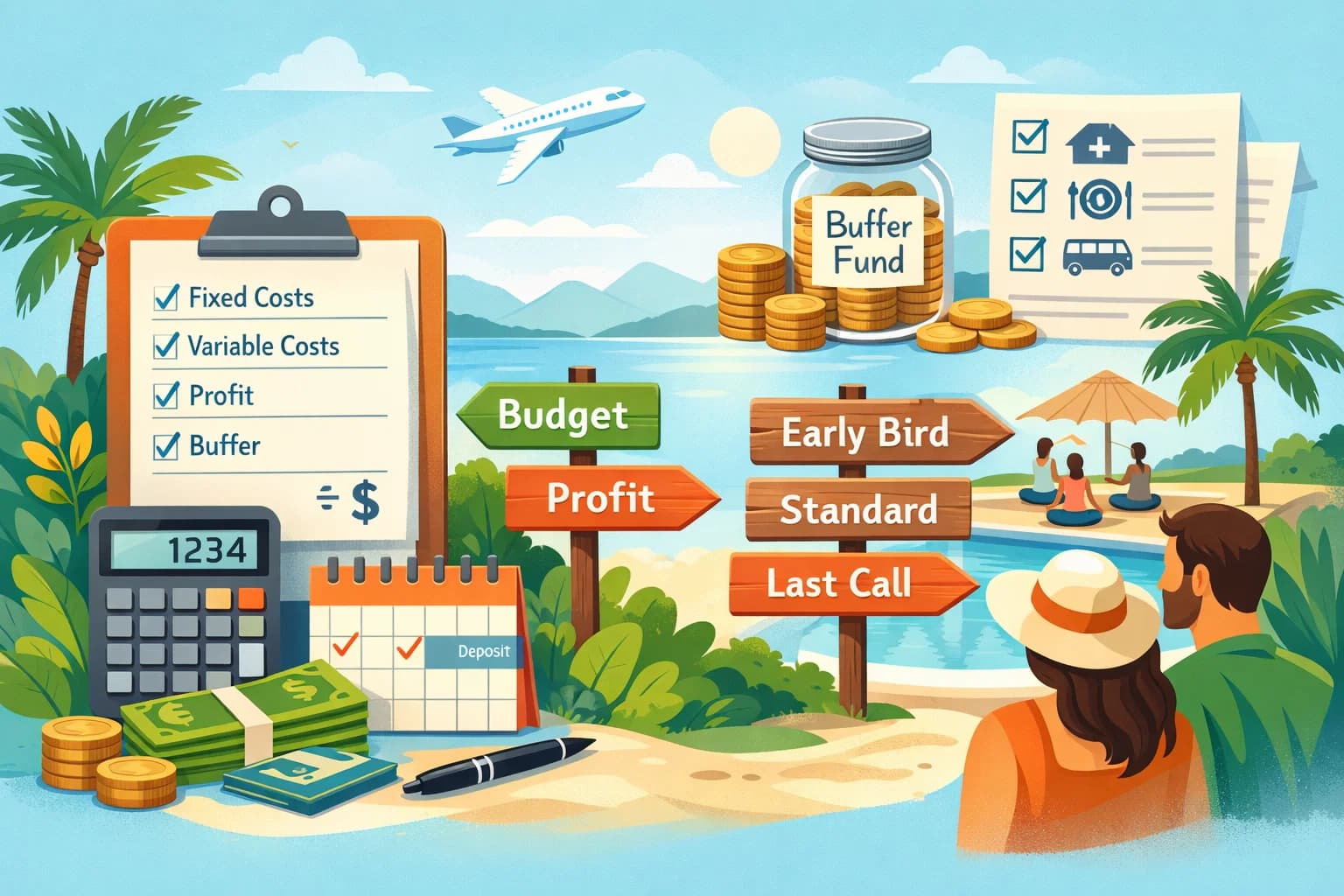
A strong retreat price includes fixed costs, variable costs, and a buffer
-
Tiered pricing and clear payment deadlines reduce dropouts
-
Transparent pricing builds confidence and increases conversions
-
Tools like SquadTrip help organizers manage pricing, payments, and guest commitments in one place
Introduction
To price a retreat, add up your fixed costs (venue, meals, facilitators) and variable costs (per-guest materials, transport), add a 30-50% margin, then divide by your minimum guest count. A 20-person wellness retreat with $8,000 in fixed costs and $200/person variable costs, priced at 40% margin, should charge approximately $730 per person. Tools like SquadTrip let you set up tiered pricing with deposits and installment plans, so guests commit early while you lock in revenue.
Whether you are planning a retreat as a wellness retreat, yoga retreat, corporate offsite, creator retreat, or community trip, these pricing principles apply. Below is the full breakdown of costs, margins, and pricing structures that successful retreat hosts use.
Why Pricing a Retreat Is More Than Just Math
Many first-time organizers think retreat pricing is simple:
-
Add up costs
-
Divide by the number of people
-
Add a small margin
In reality, pricing affects:
-
How serious people take your retreat
-
How early they commit
-
Whether they show up or drop out
-
Whether you end the retreat relaxed or financially stressed
Pricing is both a financial and psychological decision.
Planning your first retreat? Use SquadTrip to manage pricing and payments without confusion.
Common Pricing Mistakes That Hurt Retreats
Before learning how to price a retreat properly, it helps to understand where most organizers go wrong.
1. Underpricing to “Fill Spots”
Many organizers price too low hoping to attract more people. This often leads to:
-
Thin or no profit
-
Stress covering unexpected costs
-
Feeling resentful during the retreat
Low prices also attract less-committed attendees.
2. Pricing Without a Buffer
Costs almost always change:
-
Vendor rates increase
-
Transport costs fluctuate
-
Taxes or platform fees are missed
Without a buffer, even small surprises hurt.
3. Changing Prices Midway
Changing prices after people start paying creates:
-
Confusion
-
Refund requests
-
Loss of trust
Clear pricing from the start builds confidence.
Steps To Price a Retreat for Success
Step 1: List All Fixed Costs
The first step in learning how to price a retreat is understanding fixed costs. These are costs that stay the same regardless of how many people attend.
Common Fixed Costs
-
Venue or accommodation booking
-
Facilitator or instructor fees
-
Retreat planning and coordination time
-
Permits, insurance, or licenses
-
Marketing and design expenses
These costs must be covered even if fewer people join than expected.
Step 2: Identify Variable Costs Per Person
Variable costs change based on the number of attendees.
Common Variable Costs
-
Meals and catering
-
Local transportation
-
Activity fees
-
Retreat materials or welcome kits
Be realistic here. Underestimating per-person costs is a common mistake.
Step 3: Decide Your Profit Goal
Many organizers feel uncomfortable talking about profit, but profit is what makes retreats sustainable.
Ask yourself:
-
Is this a one-time experience or a recurring retreat?
-
Do you want this retreat to fund future retreats?
-
Is this part of your business or brand?
Your profit can be:
-
A fixed amount
-
A percentage margin
-
Built into facilitator fees
There is no wrong answer, but you must be intentional.
Step 4: Add a Safety Buffer
A realistic retreat price always includes a buffer.
Recommended Buffer
- 10–15% of total costs
This protects you from:
-
Currency fluctuations
-
Last-minute vendor changes
-
Unexpected guest needs
A buffer is not greed. It is responsible planning.
Step 5: Calculate Your Base Retreat Price
Now combine everything:
-
Fixed costs
-
Variable costs (based on realistic attendance)
-
Profit margin
-
Buffer
Divide by the number of expected attendees, not maximum capacity.
This gives you your base retreat price.
How To Price a Retreat Using Tiered Pricing
Tiered pricing is one of the most effective pricing strategies for retreats.
1. Common Pricing Tiers
-
Early-bird pricing
-
Standard pricing
-
Last-call pricing
2. Why Tiered Pricing Works
-
Rewards early commitment
-
Improves cash flow
-
Creates urgency
Tiered pricing should always be time-based or capacity-based, not arbitrary.
How To Price a Retreat With Room Options
Room type has a big impact on pricing.
Common Room Pricing Options
-
Shared rooms (lower price)
-
Private rooms (higher price)
-
Premium rooms or upgrades
Clearly explain:
-
What each option includes
-
Price differences
-
Availability limits
Transparency avoids awkward conversations later.
Payment Structure Matters as Much as Price
Knowing how to price a retreat also means knowing how to collect payments.
Best Practices
-
Require a non-refundable deposit
-
Set clear payment deadlines
-
Offer installment plans for higher-priced retreats
Installment plans make retreats accessible without lowering prices. For higher-priced retreats, offering buy now pay later through Klarna, Affirm, or Afterpay can further increase conversion — guests finance their trip over time while you receive the full amount upfront.
Why Clear Pricing Builds Trust
Guests hesitate when pricing feels unclear.
Clear pricing should answer:
-
What is included?
-
What is not included?
-
What happens if I cancel?
When guests understand the value, price resistance drops.
How To Price a Retreat for Different Retreat Types
1. Wellness and Yoga Retreats
-
Focus on experience and transformation
-
Price reflects expertise and environment
-
Avoid underpricing emotional labor
2. Corporate Retreats
-
Higher budgets
-
Emphasis on outcomes and structure
-
Pricing often per team, not per person
3. Creator or Community Retreats
-
Mix of affordability and sustainability
-
Installments help increase participation
-
Clear value messaging matters
Handling Discounts Without Hurting Your Retreat
Discounts should be intentional.
Good Discount Scenarios
-
Early-bird pricing
-
Returning guest incentives
-
Partner or group discounts
Avoid last-minute discounts unless attendance is critical.
How To Communicate Retreat Pricing Confidently
Confidence matters as much as numbers.
Tips:
-
Avoid apologizing for your price
-
Focus on value, not cost
-
Be clear and calm when answering questions
When you believe in your pricing, guests do too.
Tools That Make Retreat Pricing Easier
Manual pricing and payment tracking leads to:
-
Errors
-
Missed payments
-
Stress
Using a group travel platform simplifies:
-
Pricing tiers
-
Payment tracking
-
Guest status visibility
SquadTrip helps you manage retreat pricing and payments in one place so you can focus on the experience, not spreadsheets.
Final Pricing Checklist Before You Launch
Before announcing your retreat:
-
All fixed and variable costs listed
-
Buffer included
-
Pricing tiers defined
-
Payment deadlines set
-
Cancellation policy clear
If anything feels unclear, refine before launch.
Conclusion
Learning how to price a retreat is one of the most important skills for any organizer. Good pricing protects your time, energy, and finances while setting clear expectations for guests.
When pricing is clear, fair, and structured, guests commit earlier, dropouts decrease, and retreats feel easier to manage. With the right planning and the right tools, pricing a retreat does not have to feel stressful.
SquadTrip helps organizers handle retreat pricing, group payments, and guest coordination in one place, so you can build retreats that are both meaningful and profitable.
Ready to price your next retreat the right way? Plan and manage it using SquadTrip.
FAQs
1. How do I know if my retreat price is too high or too low?
If people show interest but delay committing or keep asking for discounts, your pricing may feel unclear or poorly structured, not necessarily too high. If spots fill instantly but you feel stressed about costs, you may have priced too low. The right price balances commitment, clarity, and sustainability.
2. Should I price my retreat per person or per experience?
Most successful retreats are priced per person, but the value should be framed around the experience. Guests don’t just pay for accommodation and food. They pay for curation, guidance, and the overall outcome of the retreat.
3. Is it okay to make a profit from hosting a retreat?
Yes. Profit is what makes retreats sustainable. Without it, organizers often burn out or stop hosting retreats altogether. A fair profit allows you to improve future retreats and show up fully for your guests.
4. What costs do people usually forget when pricing a retreat?
Commonly missed costs include taxes, payment processing fees, currency fluctuations, transport buffers, facilitator prep time, and last-minute vendor changes. This is why adding a buffer is essential.
5. How much buffer should I add when pricing a retreat?
A 10–15% buffer is standard. It protects you from unexpected costs without inflating the price unnecessarily. Guests rarely object to pricing that feels stable and well thought out.