TL;DR:
-
Learning how to create a travel agency starts with choosing a clear niche and business model
-
You need proper registration, licenses, and supplier partnerships before selling trips
-
Modern travel agencies rely on software, automation, and online marketing, not spreadsheets
-
Group trips, retreats, and curated experiences offer higher margins than basic ticket sales
-
SquadTrip helps new travel agencies manage bookings, payments, communication, and groups in one place
Introduction
If you are researching how to create a travel agency, you are likely thinking beyond booking flights for friends and family. Starting a travel business today means building a brand, setting up systems, and creating experiences people trust and are excited to join.
The travel industry has changed. Traditional agencies that relied only on commissions from airlines struggle. New agencies that focus on group travel, retreats, curated tours, and niche experiences are growing faster and earning more predictable revenue.
This guide walks you through every step to create a travel agency from scratch. You will learn how to choose a niche, register your business, work with suppliers, price your services, market your agency, and manage bookings without chaos. We will also cover common mistakes new agencies make and how to avoid them.
If your goal is to build a real travel business, not a side hobby that burns you out, this guide is for you.
What Does It Mean to Create a Travel Agency Today?
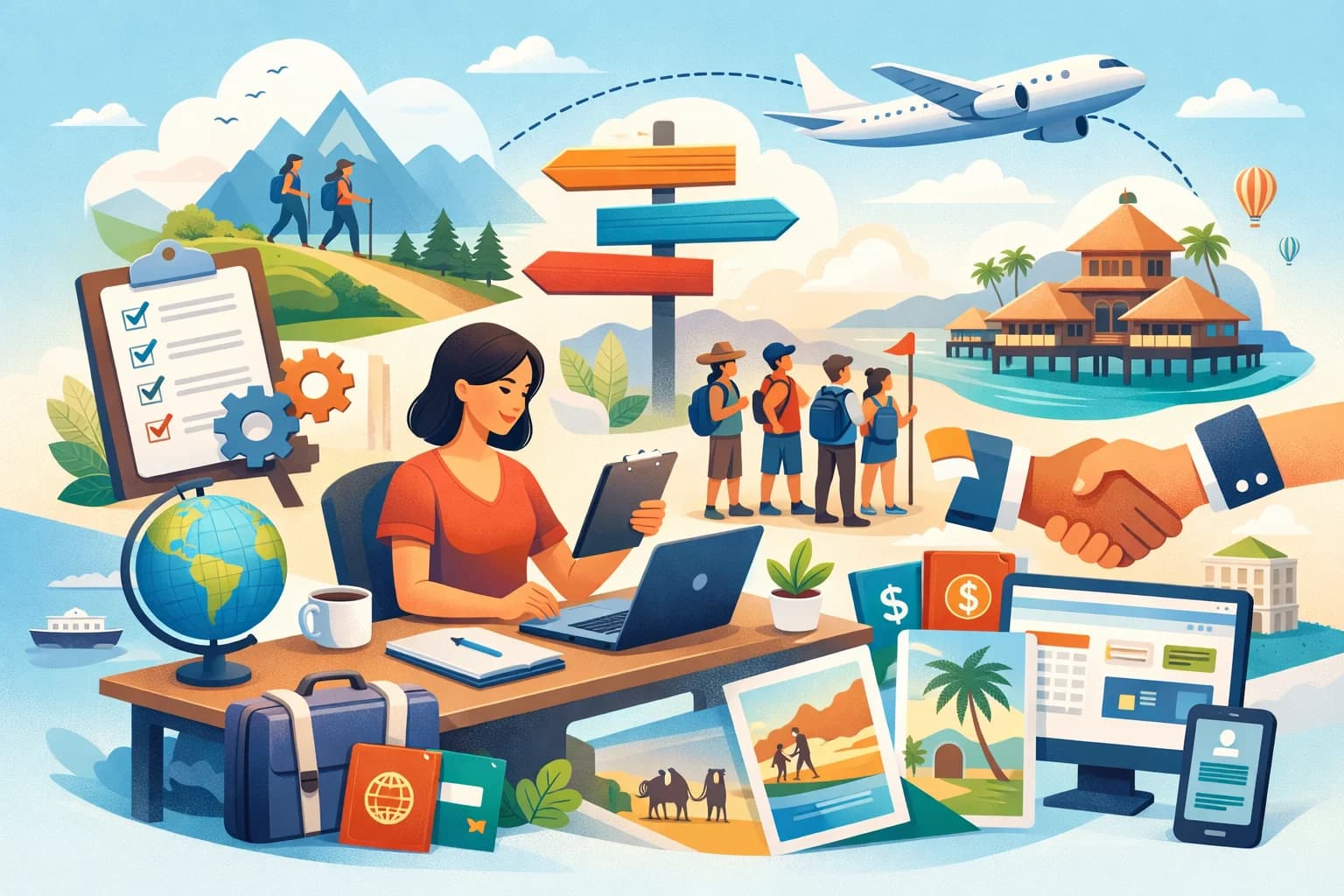
Creating a travel agency today is not just about selling tickets. It is about designing experiences, managing logistics, and building trust with travelers who expect clarity, fast communication, and easy payments.
A modern travel agency typically handles:
-
Trip planning and curation
-
Group coordination and communication
-
Payments, deposits, and refunds
-
Vendor coordination
-
Guest support before, during, and after the trip
Most successful agencies specialize instead of trying to sell everything to everyone. That specialization makes marketing easier and margins stronger.
Step 1: Choose the Right Travel Agency Niche
Your niche defines how easy or hard your business will be to grow. This is the first and most important decision when you create a travel agency.
1. Popular Travel Agency Niches
- Group travel and fixed-departure tours
- Wellness retreats and yoga trips
- Corporate offsites and team retreats
- Adventure travel and expeditions
- Luxury custom travel
- Destination weddings
- Educational or student travel
A niche helps you:
-
Attract the right audience
-
Price confidently
-
Build repeat customers
-
Stand out from generic agencies
2. Questions to Pick Your Niche
-
Who do I enjoy planning trips for?
-
Do I have personal experience in this type of travel?
-
Can I charge planning fees or earn margins beyond commissions?
-
Is this travel recurring or one-time?
Group and retreat-based travel is often easier for new agencies because you control the itinerary, pricing, and experience.
Step 2: Decide Your Travel Agency Business Model
Before you register your business, decide how your agency will make money.
Common Travel Agency Models
-
Commission-based (airlines, hotels, tours)
-
Planning fee plus commission
-
Package pricing for group trips
-
Subscription or membership-based travel
-
Hybrid model (most common)
– Relying only on commissions is risky. Airlines pay very little, and payments are delayed. Many agencies now charge:
-
Trip planning fees
-
Group coordination fees
-
Custom itinerary fees
This creates predictable income.
Step 3: Register and Legally Set Up Your Travel Agency
Once you know your niche and model, it is time to make it official.
1. Basic Legal Steps
-
Choose a business name
-
Register as sole proprietorship, LLC, or private limited company
-
Open a business bank account
-
Get a GST or tax registration if required
-
Register for local tourism or travel trade licenses
Requirements vary by country and state. Some places require travel agency licenses or bonding. Others do not.
Do not skip this step. Clear legal setup builds trust with customers and suppliers.
Step 4: Decide If You Need Travel Agency Accreditation
New agency owners often ask if accreditation is mandatory.
Common Accreditations
-
IATA accreditation (for ticketing)
-
CLIA or cruise associations
-
Local travel trade bodies
If you are not issuing flight tickets yourself, you may not need IATA. Many agencies partner with consolidators or focus on land-based travel, groups, and retreats instead.
For most new agencies, accreditation can come later.
Step 5: Build Supplier and Vendor Relationships
Your suppliers make or break your travel business.
Key Supplier Types
-
Hotels and resorts
-
Local tour operators
-
Transportation providers
-
Activity and experience vendors
-
Guides and facilitators
Start by:
-
Reaching out directly to hotels and DMCs
-
Attending travel trade shows or online supplier events
-
Partnering with vendors who understand group logistics
Clear communication and written agreements prevent problems later.
Step 6: Price Your Trips and Services Correctly
Pricing is where many new travel agencies struggle.
Pricing Tips
-
Include your coordination and support time
-
Account for cancellations and no-shows
-
Build buffers for currency changes
-
Avoid underpricing to “get clients”
For group trips, package pricing works best. Travelers prefer clear totals instead of itemized confusion.
Step 7: Set Up Systems Before You Sell
Do not start selling trips with spreadsheets and inbox chaos. This is how agencies lose money and credibility.
Systems You Need
-
Booking management
-
Guest communication
-
Waivers and documents
-
Schedule and itinerary sharing
Manual tools slow you down and create errors.
Using a platform built for group travel keeps everything in one place and reduces back-and-forth.
Step 8: Build a Simple but Clear Travel Agency Website
Your website is your sales hub.
Must-Have Website Pages
-
Home page explaining who your trips are for
-
About page with your story and credibility
-
Trip or retreat listings
-
FAQs covering payments and policies
-
Contact or inquiry form
Avoid overdesign. Clarity matters more than fancy visuals.
Your site should answer:
-
What trips do you offer?
-
Who are they for?
-
How do I join or book?
Step 9: Market Your Travel Agency the Smart Way
Marketing does not mean being everywhere.
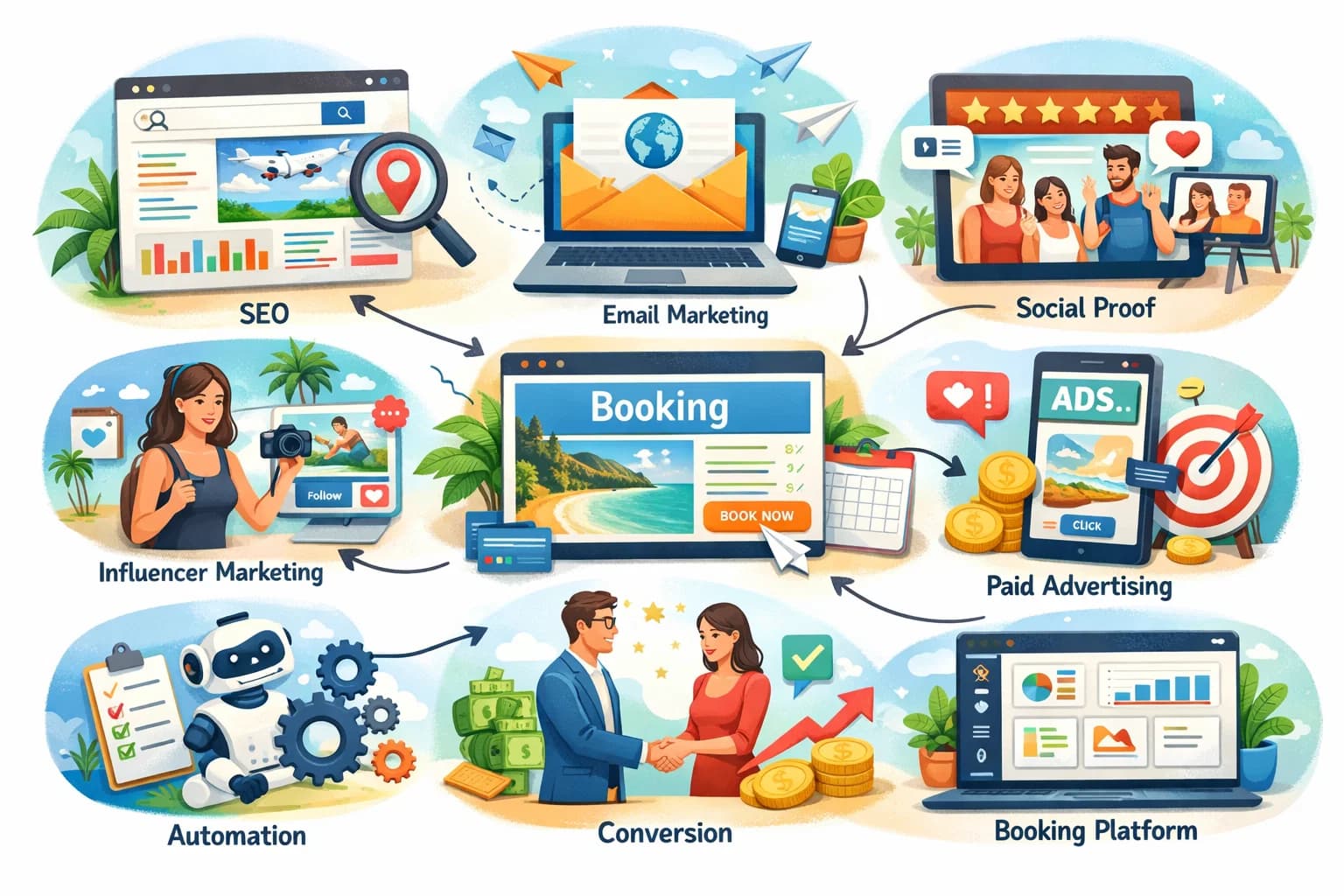
Channels That Work Well
-
SEO content around your niche
-
Instagram and WhatsApp for communities
-
Email lists for repeat trips
-
Partnerships with coaches, brands, or creators
For group travel, trust matters more than reach. Share:
-
Behind-the-scenes planning
-
Past trip photos
-
Testimonials and reviews
Consistency builds confidence.
Step 10: Sell Your First Group Trip or Package
Your first sale is a milestone.
Tips to Close Early Bookings
-
Offer early-bird pricing
-
Limit spots to create urgency
-
Use deposits instead of full payments
-
Communicate timelines clearly
Avoid promising too much. Deliver a smooth experience instead.
Step 11: Manage Payments, Cancellations, and Refunds Clearly
Money issues cause most disputes in travel.
Best Practices
-
Share payment deadlines upfront
-
Use written refund policies
-
Automate reminders
-
Avoid handling cash or manual transfers
Clear rules protect both you and your travelers.
Step 12: Deliver an Organized Trip Experience
The trip itself is your strongest marketing asset.
During the Trip
-
Keep schedules accessible
-
Share updates in one channel
-
Be responsive but structured
-
Document the experience for future promotion
Happy travelers become repeat customers and referrals.
Step 13: Collect Feedback and Improve
After each trip:
-
Ask for honest feedback
-
Note what caused stress
-
Refine your process
Growth comes from small improvements, not big overhauls.
Planning group trips or curated travel? Try SquadTrip to organize bookings and payments in one place.
Common Mistakes When You Create a Travel Agency
Avoid these early mistakes:
-
Starting without a niche
-
Underpricing services
-
Managing everything manually
-
Ignoring legal and payment clarity
-
Saying yes to every type of trip
Focus beats flexibility in the early stages.
How SquadTrip Supports New Travel Agencies
SquadTrip is built for travel businesses that manage groups, retreats, and curated trips.
With SquadTrip, you can:
-
Create trip pages with pricing and deadlines
-
Collect payments and deposits securely
-
Manage guest lists and communication
-
Share itineraries and updates
-
Reduce admin work and follow-ups
Instead of juggling tools, you run your agency from one place.
Scaling Your Travel Agency Over Time
Once your foundation is solid, scaling becomes easier.
Ways to Grow
-
Repeat the same trip format
-
Partner with other hosts
-
Add waitlists for popular trips
-
Increase prices as demand grows
Systems allow growth without burnout.
Final Thoughts
Learning how to create a travel agency is not about copying old models. It is about building a focused business with clear systems, fair pricing, and experiences people trust.
Start small, specialize early, and use tools that support growth instead of slowing you down.
If you are serious about launching or scaling a travel agency focused on group trips, retreats, or curated experiences, SquadTrip gives you the structure you need without the mess.
Ready to launch your travel agency the right way? Try SquadTrip and manage your trips, payments, and travelers with confidence.
FAQs
1. Do I need a license to create a travel agency, or can I start without one?
It depends on where you operate and what you sell. Some countries and states require travel agency registration, bonding, or tourism licenses, while others don’t. If you’re selling group trips, retreats, or land-based experiences through partners, you may be able to start without full accreditation—but legal registration is still essential.
2. Is creating a travel agency still profitable in 2025?
Yes, but only if you move beyond ticket commissions. Travel agencies focused on group trips, retreats, and curated experiences earn higher margins by controlling pricing, charging planning fees, and building repeat travel programs instead of relying on airlines.
3. What’s the easiest type of travel agency to start as a beginner?
Group travel and retreat-based agencies are often the easiest to launch. You manage one itinerary for many travelers, set fixed pricing, and reduce complexity compared to fully custom trips. This model also works well for first-time agency owners.
4. Can I create a travel agency without IATA accreditation?
Yes. Many modern travel agencies don’t issue flight tickets directly. Instead, they focus on land arrangements, group trips, or curated experiences and partner with consolidators or suppliers. IATA accreditation can be added later if needed.
5. How much money do I need to start a travel agency?
Startup costs vary, but you don’t need a large upfront investment. Most early expenses include business registration, basic marketing, a website, and booking software. Group-based travel models are lower risk because you can collect deposits before paying suppliers.