
TL:DR
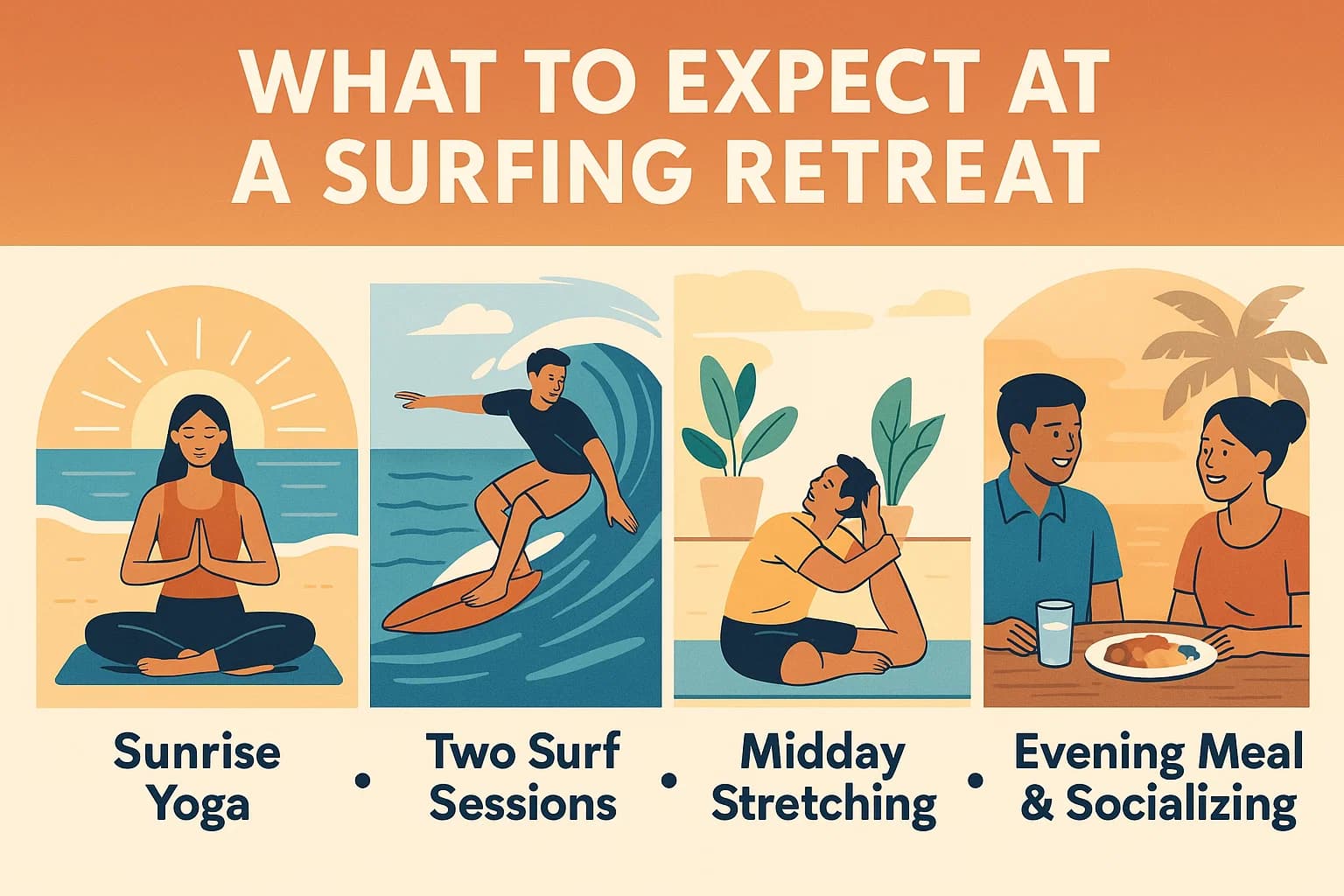
• A surfing retreat runs on a full-day rhythm with sunrise yoga, two surf sessions, structured meals, and relaxed evening activities.
• You’ll spend about 4–5 hours in the water each day, with coaching, drills, and free surf time included.
• Midday breaks focus on recovery with rest, stretching, or optional activities like massage or skate practice.
• Schedules adapt for beginners and intermediates, offering different coaching intensity and session length.
• Non-surfing days include cultural excursions, workshops, and lighter wellness activities.
• Pre-trip prep matters—build stamina, flexibility, and basic surf strength to get the most out of your retreat.
Introduction
Picture this: You’re waking up to the sound of waves crashing just steps from your accommodation, the sun painting the horizon in shades of gold, and knowing that your entire day revolves around perfecting your surf skills in tropical waters. Sound familiar? If you’re considering a surfing retreat but wondering what your days will actually look like, you’re in the right place. Understanding the surfing retreat schedule before you arrive helps you prepare both physically and mentally for an experience that’s equal parts challenging and transformative.
From dawn patrol sessions to sunset beach gatherings, every moment at a surf camp is carefully structured to maximize your wave time while ensuring proper recovery. Let’s dive into exactly what to expect from your surf camp daily routine, hour by hour.
Read More: How to Choose the Right Retreat Venue for Your Next Event
Morning Routine at Your Surfing Retreat (5:30 AM – 9:00 AM)
Your surfing retreat schedule starts early, and there’s a good reason for that. Morning offers the calmest conditions, glassy waves, and cooler temperatures perfect for learning. Most surf camps begin stirring between 5:30 and 6:00 AM, giving you time to prepare your body and mind for the day ahead.
Wake Up Call and Pre-Surf Preparation
The tropical dawn becomes your natural alarm clock at most surfing retreats. You’ll typically receive a gentle wake-up call around 5:30 AM, though many surfers find themselves naturally waking with anticipation. This early start time takes advantage of offshore winds and uncrowded lineups.
Your pre-surf routine includes:
• Hydrating with water or fresh coconut water
• Light stretching in your room
• Applying reef-safe sunscreen (bring enough for multiple applications throughout the day)
• Gathering your surf gear and water bottle
• Mental preparation and visualization of your surf goals
Sunrise Yoga or Stretching Sessions
By 6:00 AM, you’ll join fellow surfers for a 45-minute yoga or stretching session on the beach or in an open-air shala. This isn’t just about flexibility; it’s strategic preparation for your surf camp activities. Dynamic stretches target the shoulders, hips, and core muscles you’ll use in the water.
The morning practice typically includes:
• Sun salutations to warm up the body
• Hip openers for better pop-up technique
• Shoulder stretches to prevent paddling fatigue
• Balance poses that translate directly to board stability
• Breathing exercises to calm pre-surf nerves
Breakfast and Daily Briefing
Around 7:00 AM, you’ll fuel up with a substantial breakfast designed for sustained energy. Quality surfing retreats understand nutrition’s role in performance, offering options like fresh tropical fruits, eggs, whole grain toast, smoothie bowls, and local specialties. Coffee addicts, don’t worry – there’s always strong coffee or tea available.
During breakfast, instructors provide the daily briefing:
• Current surf conditions and forecast
• Which break you’ll surf based on tide and swell
• Skill focus for the day’s sessions
• Group assignments based on ability level
• Safety reminders and local hazards
Your First Surf Session of the Day (9:00 AM – 12:00 PM)
The morning surf session forms the cornerstone of your surfing retreat experience. This three-hour block combines instruction, practice, and real-time coaching to accelerate your progression.
Beach Warm-Up and Safety Brief
Before touching the water, you’ll spend 20-30 minutes on the beach with structured warm-ups and technique drills. Instructors demonstrate proper form for pop-ups, review wave selection strategies, and practice movements on land. Even experienced surfers benefit from these fundamentals.
The safety briefing covers:
• Current conditions and hazards
• Designated surfing zones for each group
• Communication signals in the water
• Emergency procedures
• Respect for local surfers and etiquette
Surf Coaching and Skill Development
Once in the water, certified instructors work with small groups (typically 4-6 students per coach) to ensure personalized attention. Beginners start in waist-deep white water, focusing on timing, balance, and consistent pop-ups. Intermediate surfers work on wave selection, generating speed, and basic maneuvers.
Your coaching includes:
• Real-time feedback on positioning
• Wave selection guidance
• Technique corrections between sets
• Encouragement and motivation
• Safety oversight and assistance
Water Time and Practice
You’ll spend approximately 2 hours in the water during each session, with short breaks to prevent exhaustion. Quality trumps quantity at professional surfing retreats. Instructors ensure you’re catching waves suited to your ability while gradually pushing your comfort zone.
Video Analysis and Feedback
Many surf camps now include video analysis as part of the morning session. Waterproof cameras capture your waves, and instructors review footage with you on the beach or back at camp. Seeing yourself surf accelerates learning by highlighting areas for improvement you might not feel in the moment.
Midday Break and Recovery Time (12:00 PM – 3:00 PM)
The midday break isn’t just downtime; it’s strategic recovery that ensures you’re ready for the afternoon session. This period balances rest with light activities that support your surf progression.
Lunch and Nutrition at Surf Camp
Lunch typically starts around 12:30 PM, featuring hearty, nutritious meals that replenish energy stores. Expect fresh salads, grilled fish or chicken, rice or quinoa bowls, and plenty of vegetables. Surfing retreats in Costa Rica might serve casado, while Bali camps offer nasi goreng. Portugal retreats feature fresh seafood and Mediterranean options.
Hydration stations remain available throughout the day with:
• Electrolyte drinks
• Fresh fruit juices
• Coconut water
• Filtered water
• Herbal teas
Rest Period and Free Time Options
From 1:30 to 3:00 PM, you have flexibility in how you spend your time. The tropical heat peaks during these hours, making it ideal for rest. Some surfers nap in hammocks, while others review morning video footage or journal about their progress.
Popular rest period activities:
• Poolside relaxation
• Reading in shaded areas
• Light stretching or foam rolling
• Social media updates (yes, most camps have WiFi)
• Preparing gear for the afternoon session
Optional Activities During Break Time
For those with energy to spare, many surfing retreats offer optional midday activities:
• Skateboard practice on surf trainers
• Beach volleyball
• Swimming pool sessions
• Massage appointments (usually additional cost)
• Exploring nearby shops or cafes
Afternoon Surf Session Schedule (3:00 PM – 6:00 PM)
The afternoon brings different conditions and new challenges. Wind typically increases, creating choppier conditions that build real-world surfing skills. This session often feels more relaxed, with increased free surf time.
Second Water Session Structure
The afternoon session follows a similar structure to the morning but with adjusted focus. You’ll meet at 3:00 PM for a brief warm-up and conditions update. Groups might reorganize based on morning performance, allowing surfers to progress between levels during their stay.
Advanced Technique Practice
Afternoon sessions emphasize applying morning lessons. Beginners work on consistency and building confidence, while intermediate surfers attempt new maneuvers. The coaching approach shifts from fundamental instruction to refinement and experimentation.
Advanced technique focus areas:
• Bottom turns and generating speed
• Cutbacks and top turns
• Reading waves and positioning
• Duck diving and turtle rolls
• Style and flow development
Free Surf Time
Most afternoon sessions include 30-45 minutes of free surf time where you practice independently while instructors observe from strategic positions. This builds confidence and decision-making skills essential for surfing outside the retreat environment.
Evening Activities at Surfing Retreats (6:00 PM – 10:00 PM)
Evenings at surf camps balance social connection with continued learning. The atmosphere shifts from intensive training to relaxed community building. Just like wellness retreats that focus on community bonding, surf camps create spaces for meaningful connections among participants.
Dinner and Community Time
Dinner service typically begins around 6:30 or 7:00 PM, often the day’s most social meal. Long tables encourage conversation as surfers share waves stories and bond over shared challenges. Meals feature local cuisine with international options accommodating dietary restrictions.
The dinner experience includes:
• Family-style serving encouraging interaction
• Daily wave awards or recognition
• Announcement of next day’s schedule
• Birthday celebrations or special occasions
• Cultural food experiences
Sunset Activities and Social Events
Post-dinner activities vary by camp and day of the week:
• Beach bonfires with acoustic music
• Sunset viewing from scenic points
• Group games and activities
• Local restaurant or bar visits
• Cultural performances or lessons
Surf Theory Workshops
Several evenings each week feature educational workshops covering topics beyond basic technique:
• Ocean safety and rip current awareness
• Wave formation and forecast reading
• Surf etiquette and localism
• Equipment selection and maintenance
• Surf travel planning and destination guides
Recovery and Preparation for Next Day
By 9:00 PM, most surfers begin winding down. Evening recovery routines might include:
• Gentle stretching or yin yoga
• Foam rolling sessions
• Ice baths or cold plunges
• Early preparation of tomorrow’s gear
• Journaling or meditation
What Happens on Non-Surfing Days
Most week-long surfing retreats include one or two rest days, strategically placed to prevent burnout and explore local culture.
Rest Day Activities
Rest days maintain structure while reducing physical intensity:
• Later wake-up time (7:00 AM)
• Extended yoga or meditation sessions
• Surf theory workshops
• Board repair clinics
• Photography lessons
Local Excursions and Cultural Experiences
Surfing retreats often organize cultural excursions:
• Waterfall hikes or nature walks
• Local market visits
• Temple or historical site tours
• Cooking classes featuring regional cuisine
• Zip-lining or canopy tours
• Boat trips to nearby islands
Alternative Water Sports
Staying in the water without surfing keeps you engaged:
• Stand-up paddleboarding
• Snorkeling or diving
• Fishing trips
• Kayaking mangrove tours
• Swimming and breath work
How Surfing Retreat Schedules Adapt to Different Levels
Not all surfers follow identical schedules. Quality surf camps customize daily routines based on experience and fitness levels.
Beginner Surfer Daily Timeline
Beginners often follow modified schedules:
• Extended beach instruction time
• Shorter water sessions (90 minutes vs 2 hours)
• Additional rest breaks during sessions
• Focus on white water waves
• Extra video review sessions
• Earlier evening bedtimes for recovery
Intermediate and Advanced Adjustments
Experienced surfers enjoy schedule flexibility:
• Optional dawn patrol sessions (5:00 AM)
• Access to multiple break locations
• Longer free surf periods
• Advanced technique workshops
• Boat trips to outer reefs
• Video coaching for specific maneuvers
Private Coaching Time Slots
Many surfing retreats offer private coaching slots (usually additional cost):
• Early morning before group sessions
• During midday break
• Late afternoon specialized training
• Personalized video analysis
• Mental coaching and visualization
Preparing Your Body for the Surfing Retreat Schedule
Success at a surf camp starts weeks before arrival. Physical preparation ensures you maximize water time without injury. If you’re planning to organize your own retreat experience, understanding the physical demands helps you prepare participants properly.
Physical Conditioning Tips Before You Go
Start training 4-6 weeks before your surfing retreat:
• Cardiovascular fitness: Swimming, running, or cycling builds paddling endurance
• Core strength: Planks, Russian twists, and bird dogs improve stability
• Upper body work: Push-ups, pull-ups, and shoulder exercises prevent paddling fatigue
• Flexibility training: Daily stretching or yoga maintains mobility
• Balance practice: Balance boards or Indo boards simulate surfing movements
• Pop-up drills: Practice the movement pattern at home
Managing Fatigue During Your Stay
Surf camp intensity catches many by surprise. Manage energy through:
• Proper hydration (minimum 3 liters daily)
• Strategic napping between sessions
• Listening to your body’s limits
• Using rest periods effectively
• Maintaining consistent sleep schedules
• Eating adequate protein for muscle recovery
Recovery Best Practices
Prioritize recovery to maintain performance throughout your stay:
• Stretch immediately after each session
• Ice sore muscles or joints
• Stay hydrated with electrolyte drinks
• Get 7-8 hours of sleep nightly
• Consider booking massages mid-week
• Use foam rollers daily
• Take anti-inflammatory foods like turmeric or ginger
Ready to Experience Your Perfect Surf Camp Schedule?
Now that you know exactly what to expect from a surfing retreat daily routine, it’s time to find the perfect camp that matches your goals and skill level. Whether you’re drawn to the consistent waves of Costa Rica, the tropical paradise of Bali, or the Atlantic swells of Portugal, the right surf camp schedule will transform your surfing abilities while creating memories that last a lifetime.
Browse SquadTrip’s curated selection of surfing retreats worldwide, each offering expert coaching and unforgettable daily schedules tailored to help you progress. From beginner-friendly camps with gentle morning sessions to intensive programs for intermediate surfers ready to level up, we’ve verified each retreat’s schedule to ensure you get the perfect balance of instruction, practice, and tropical relaxation. For those interested in planning group travel experiences beyond surfing, our platform provides comprehensive tools and resources to make your adventure planning seamless.
Don’t wait for “someday” to chase those perfect waves. Your surfing breakthrough is just one retreat away. Start planning your surf adventure today and join thousands of surfers who’ve discovered that the right daily routine, expert coaching, and supportive community can transform your relationship with the ocean forever.
Sign up to SquadTrip’s Free account
FAQs
1. How many hours per day will I actually spend surfing at a retreat?
Most surfing retreats include 4-5 hours of water time daily, split between morning and afternoon sessions. This includes warm-ups, instruction, and actual wave riding time.
2. Do I need to participate in every scheduled activity at a surf camp?
While participation is encouraged, most retreats allow flexibility. You can skip activities if you need extra rest, though surf sessions and meals are typically included in your package.
3. What time do surf retreat days typically start and end?
Days usually begin around 5:30-6:00 AM with yoga or stretching and wrap up by 9:00-10:00 PM after dinner and evening activities. Early starts maximize calm morning surf conditions.
4. How are surf sessions structured for different skill levels?
Groups are divided by ability, with beginners focusing on fundamentals in white water while intermediate surfers work on wave selection and maneuvers in deeper water. Instructors rotate between groups.
5. What happens if surf conditions are poor during my retreat?
Quality retreats have backup plans including alternative surf spots, land-based training, video analysis sessions, or SUP boarding. Some offer partial refunds for multiple non-surf days.